Forty years ago, you needed a good diesel mechanic to service or repair your tractor. These days, it feels like you need a degree just to understand the tractor. Precision farming is the future, and so is the technology that comes with it. What we used to know about agricultural implements and equipment is long outdated.
That’s why Sol-Tech is working hard to train the next generation of tradespeople… or should we say tradeswomen?
That’s right – trades are no longer reserved for a male-dominated world, and a tradesperson is no longer someone who just works in a greasy workshop. At Sol-Tech, students are trained not only to work with their hands but also to use the latest technology.
Whether you want to become an electrician, millwright, or diesel mechanic, Sol-Tech offers high-quality training to ensure that students graduate not only with knowledge, but also with practical experience when they enter the workforce. In addition to technical skills, they are also taught entrepreneurial skills so that they can not only earn salaries but also start their own businesses and contribute to the economy.
It’s this very passion that drives Case IH to get involved with this prestigious technical institute. Case IH has been involved with Sol-Tech for two years already and has, among other things, donated a gym for the residence, some of the latest farming equipment, and a Case IH tractor to the workshop for practical training. Behind the scenes, they are also involved in providing knowledge and advice about what the industry expects from tradespeople today.
Four of these students, however, wear their pink farm-girl shirts with pride, as these four women are pursuing trades in a world that traditionally only welcomed men.
Why Sol-Tech?
Donae van Deventer and Loura Potgieter are currently studying mechatronics at Sol-Tech. Mechatronics is a combination of mechanics and electronics and is especially important for system automation. Melandru Coetzer and Nikki Janse van Vuuren are studying to become millwrights.
Donae says she originally wanted to become a millwright. When she started at Sol-Tech, however, she got the opportunity to study mechatronics and grabbed it with both hands.
“By continuing my studies, I now have the opportunity to learn more about automated systems. So now I can do programming, troubleshooting, maintenance, and installations,” explains Donae, who is already in her third year.
For Loura, the path to mechatronics was similar. Although Donae knew from a young age she wanted to work with her hands, Loura only realized in high school that she enjoyed technical craftsmanship.
Melandru used to work in the garage with her dad as a child and already knew then that she couldn’t see herself sitting in a regular office.
For Nikki, becoming a millwright felt like a natural step in the right direction. Her parents farm with maize, pumpkins, and potatoes in Botswana. She remembers always being in the workshop with her dad, building or repairing something. When they heard about Sol-Tech, they immediately knew it was where Nikki belonged.
Are trades not just for men?
Unfortunately, the misconception still exists that trades are just for men. But that is no longer true. Trades today are highly specialized professions and include scarce skills that are in short supply both in South Africa and around the world.
“The world still sees trades as an industry for men, but the more I learn at Sol-Tech, the more I realize the value of women in trade positions. As women, we look at things differently. I’ve realized you have to play to your strengths. Yes, we are different – there are things men can do that we may not be able to – but we have strengths they don’t,” says Donae.
Loura believes one of the biggest advantages is that women have smaller hands and can more easily fit into tight spaces.
“I don’t think women realize how naturally equipped we are for trades,” she adds.

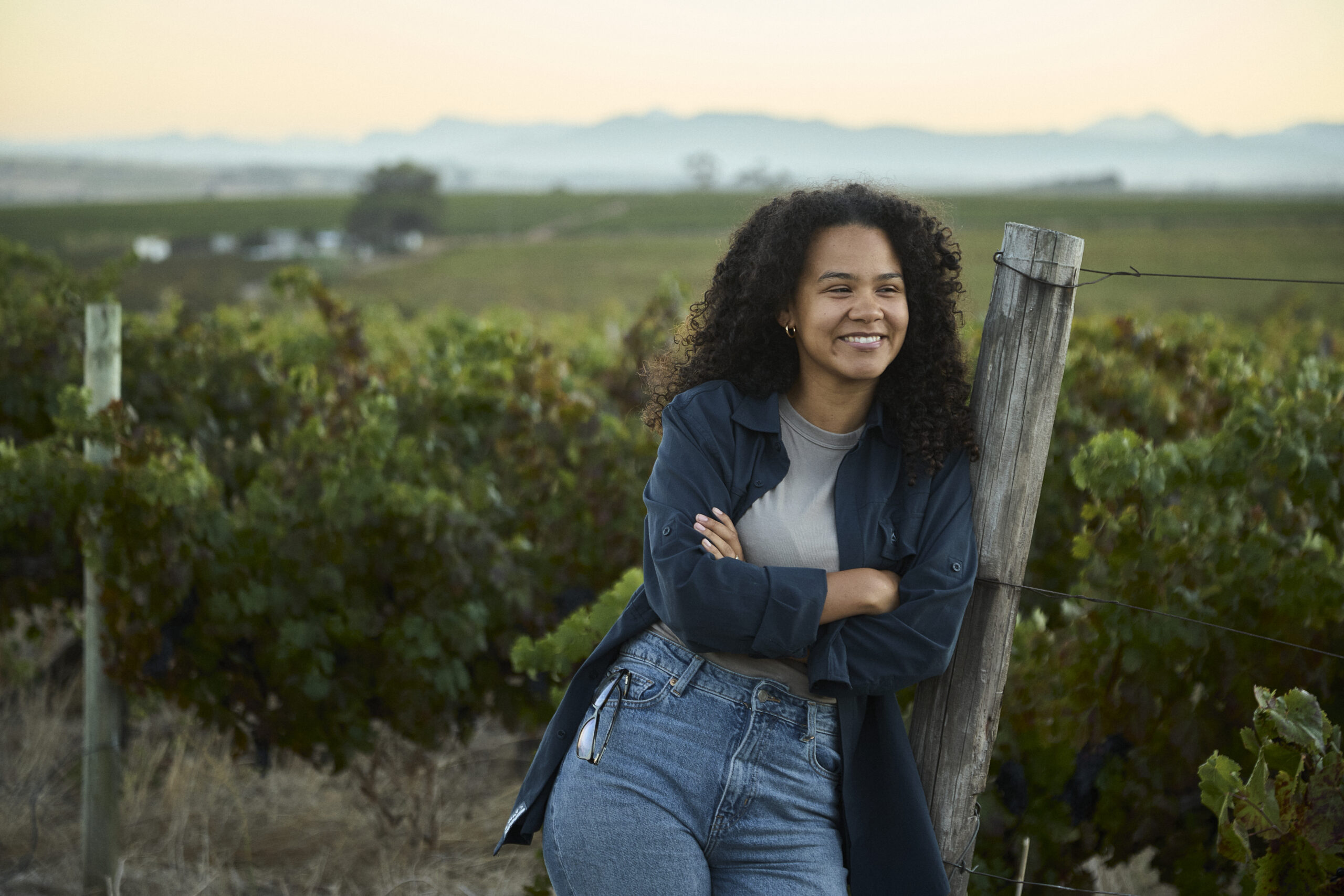
Melandru Coetzer is pursuing her trade to become a millwright.
For Melandru, it’s actually motivating when she’s underestimated. She says that because she’s a woman, she gets noticed more easily. This can be a good thing because people remember a woman in a trade role. But it also has its downsides, as people sometimes underestimate her simply because she’s a woman.
“Personally, it builds my self-confidence and makes me feel good that I can also do what a man can. I think it also shows others that women shouldn’t be underestimated,” she shares.
“I think more women should pursue trades precisely because it’s considered a male-dominated career path,” says Nikki. She enjoys proving people wrong.

Future Sol-Tech millwright, Nikki Janse van Vuuren.
How do trades help the agricultural industry?
While trades can benefit a wide range of industries, there is always a need for skilled tradespeople in agriculture, which is also one of the main reasons Case IH is involved with Sol-Tech.
“Mechatronics is so beneficial for agriculture. With mechatronics, we can build and maintain tractors, improve irrigation and planting technology, and even set up automated packaging processes in warehouses,” explains Donae.
She has already worked with Case IH tractors on farms and at NAMPO and says she wouldn’t mind working for Case IH one day because she knows they would give her opportunities to grow and get exposure to a wide variety of machines and systems.
Loura says she considered the agricultural sector before joining Sol-Tech. For her, it would be a great privilege to one day apply her mechatronics skills in farming.
“I’m really excited for the future. By studying mechatronics, I could one day develop technology that changes the future of agriculture,” she says.
“Case IH has definitely left its fingerprint on Sol-Tech by donating machinery and tractors for us to learn from practically. I think it’s very important for other industries to learn from Case IH,” says Melandru. She also hopes to work in agriculture one day.
Nikki dreams of going overseas and starting her own business, but if that doesn’t happen, she says she would love to work for Case IH. Not only do they have a Case IH combine harvester on their farm, but her dad is also a big supporter of the brand.
“It would be awesome to work for Case IH one day because I’m a huge fan of the brand – my dad loves Case IH. It’s great to know a company like that supports us and supports the industry,” she says with a smile.
More women in trades
Although all four of these women see themselves possibly going abroad to gain more experience, they all agree that it’s important to encourage more young women and girls to enter the trades.
“In 20 years, I’d love to be training others in the trades, but before that, I want to spend enough time in the industry to gain experience so I can help my students become better tradespeople than I ever was. The more women see other women in trades, the more they will want to join. I hope to be a good role model one day – just by being myself and showing other women that where there’s a will, there’s a way – you can do what you love,” says Donae.

Donae van Deventer is now in her third year of mechatronics at Sol-Tech.
Who am I?
“I am a woman who is proud and fully confident in doing what I love.”
— Donae van Deventer, Mechatronics
“I am a woman. I am strong, smart, and building my future with my own hands.”
— Loura Potgieter, Mechatronics
“I am a woman. I am strong, dynamic, determined, and building my future with my own hands.”
— Melandru Coetzer, Millwright
“I am a woman. I am very proud of the choices I’ve made so far, and I’m excited about what the future holds.”
— Nikki Janse van Vuuren, Millwright