To reduce conflict between cheetahs and livestock, Cheetah Conservation Botswana (CCB) trains a local breed of Tswana livestock guarding dogs to protect livestock from any carnivore attacks. Since its inception in 2013, the livestock guard dog (LGD) placement programme has placed over 130 LGDs with farmers in need.
But where do the dogs come from, and what might their lives have been before their arrival at CCB?
From village pups to livestock guardians
“We get puppies from a variety of places. Firstly, we always check with local shelters to see if they have any puppies that would fit the bill,” says Jane Horgan, researcher, Farming for Conservation (FFC) supervisor and PhD candidate at CCB. “Namely, they have to be under three months of age, healthy Tswana dogs with short coats and not too shy and not too boisterous.”
Jane explains that if the shelters do not have any puppies available, CCB reaches out to their network of farmers and community members to see whether there are any unwanted puppies they could purchase. “It’s hard to know what their lives were like before they come to CCB, but we suspect most have just been unwanted village dogs.”
The superpower of the Tswana dogs is that they are perfectly adapted to the Kalahari. “This is a pretty harsh environment, and these small dogs have to contend with temperatures that range from 40 degrees plus to sub-zero temperatures, rocky and sandy terrain and a slew of local diseases, parasites, snakes and carnivores.
According to Jane, the dogs are physically perfectly adapted to this environment. Their short coats help regulate body temperature and prevent excess tick accumulation. Their medium size means they do not have high energy requirements and, as a result, need less food. They are also hardy dogs with strong natural resistance to local diseases.
“Behaviourally, they are also well adapted to this line of work,” explains Jane. “More aggressive breeds like Anatolian Shepherds have been found to have much lower life expectancies and are killed more often by snakes and carnivores like leopards in other LGD programmes in Namibia and South Africa.”
Although CCB still loses some Tswana dogs to snakebites, this happens far less frequently than with Anatolians. The team suspects this is because Tswana dogs tend to be more submissive and less aggressive. They are therefore less likely to chase after snakes or confront larger carnivores, reducing their chances of encountering them.
“They still exhibit strong protective instincts in the face of threats, but they respond in a more defensive manner, rather than with outward aggression. This keeps not only their herd safe, but themselves as well.”
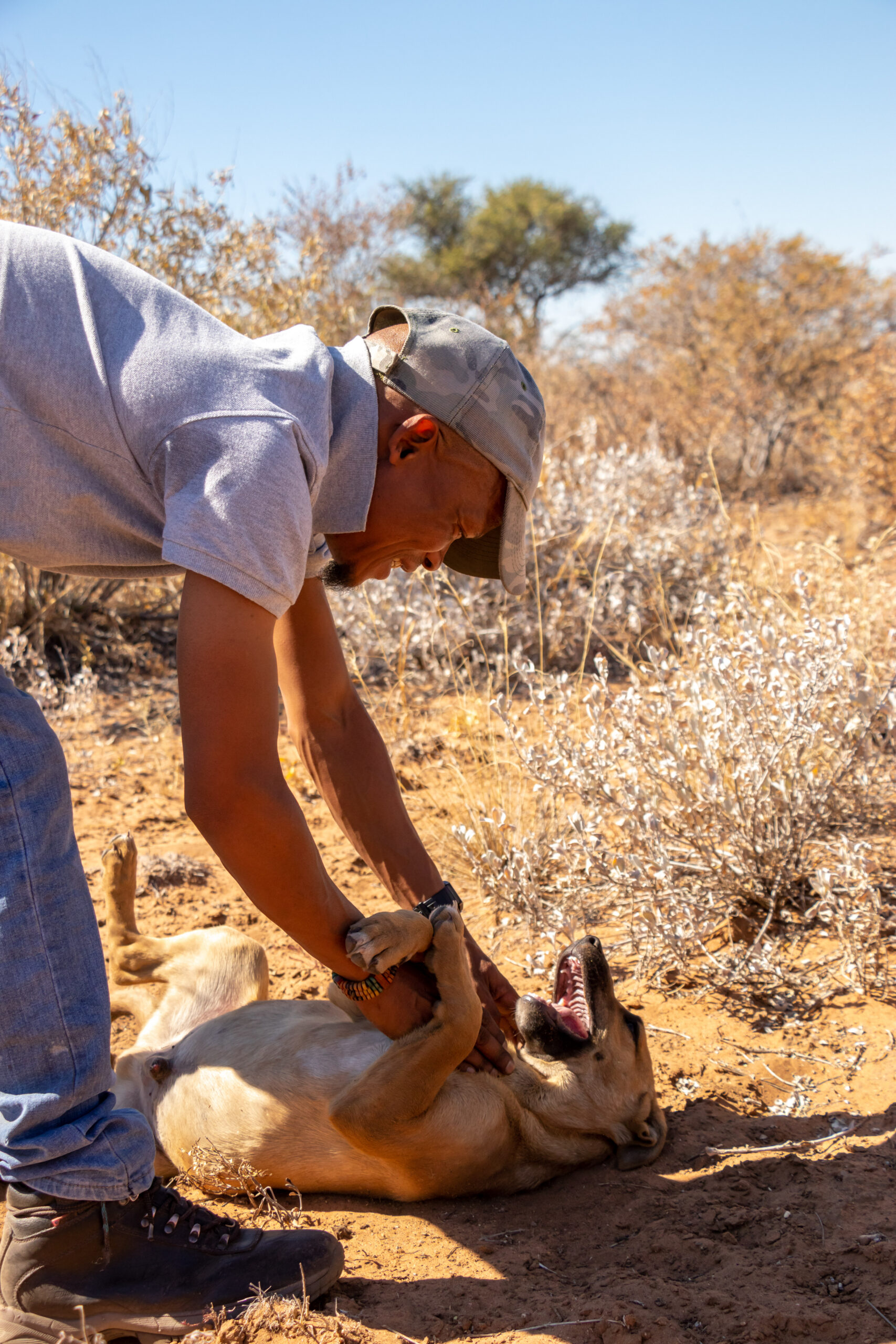
Farmer Abrahm with his muchloved livestock guarding dog.
Building a bond with the herd
Jane explains that the training process is surprisingly simple. Puppies go through a crucial development stage when they are young, during which they form strong social bonds. By introducing them to livestock during this period, they naturally learn to bond with and accept the animals as part of their group.
“Once the bond is formed, they protect the herd instinctively, thereby protecting them from threats as though they are all members of the same family,” she says. “In terms of training, this means the priority really is to keep the puppy healthy and curtail any naughty behaviours if and when they crop up. The rest, including the dog staying with their herd and protecting them, everything just happens naturally.”
There is an adjustment period as the dog transitions its bond from its original herd to its new one, but this usually happens smoothly. Jane explains that the dog is kept in the kraal for a few days to strengthen this new bond before it begins accompanying the herd into the veld.
“Similarly, the farmer must adapt to having a new working member on the farm by making sure they check on the puppy regularly and keep it healthy and well-behaved. We check in on the farmer one month after we place the puppy and make sure the dog is happy, healthy, and working well for the farmer.
The team then checks with farmers three, six and 12 months after placement to ensure that everything is going well, and to assess whether any (if any) livestock losses have occurred, and, if so, how many.
“This also gives us a chance to support the farmer if they have any problems or issues, which is rare. We also have an open-door policy, so if any farmer has questions or concerns, they can contact us, and we can offer advice and support either over the phone or with a farm visit. “
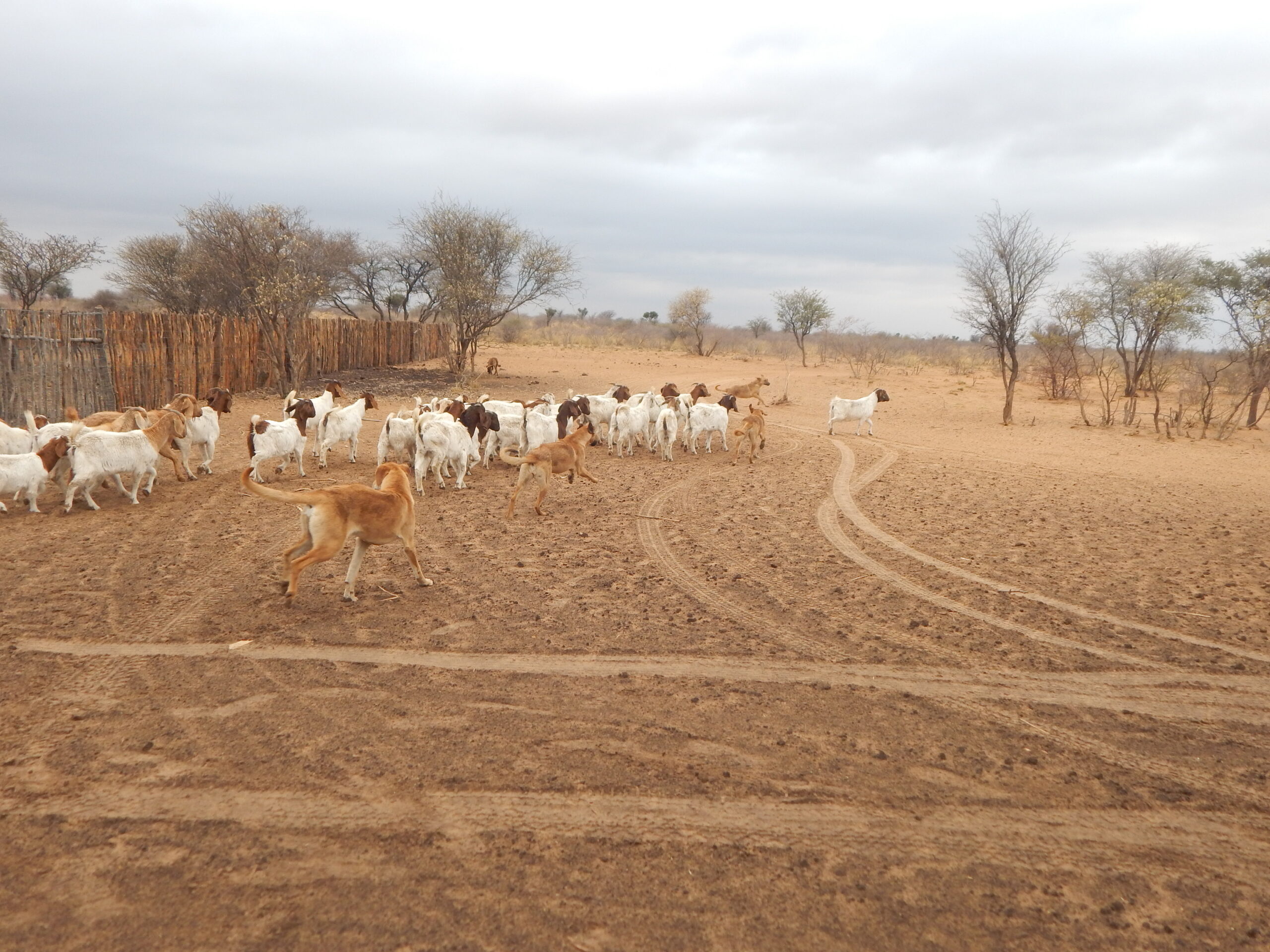
Because the Tswana dogs are trained to use their natural instincts in the best interests of their herd, LGSs respond to an approaching cheetah or other predators by relying primarily on their keen sense of smell to detect danger. They then alert both the livestock and the farmer, giving them time to respond to the potential threat.
“A dog’s superpower is its sense of smell. As such, a dog can smell the approach of a carnivore long before the herd or a herder will,” Jane explains. “When they detect the threat, they bark in warning, which alerts the herd (and the herder, if the farm has one).”
This usually encourages the livestock to gather together. In some cases, the dogs will instinctively herd them into a tight group for added protection.
“When they are tight together in a group, they are much less vulnerable to predation. Most carnivores rely on stealth to hunt, especially the big cats. As such, when the dogs bark and alert the herd to danger, they know they have lost the element of surprise.”
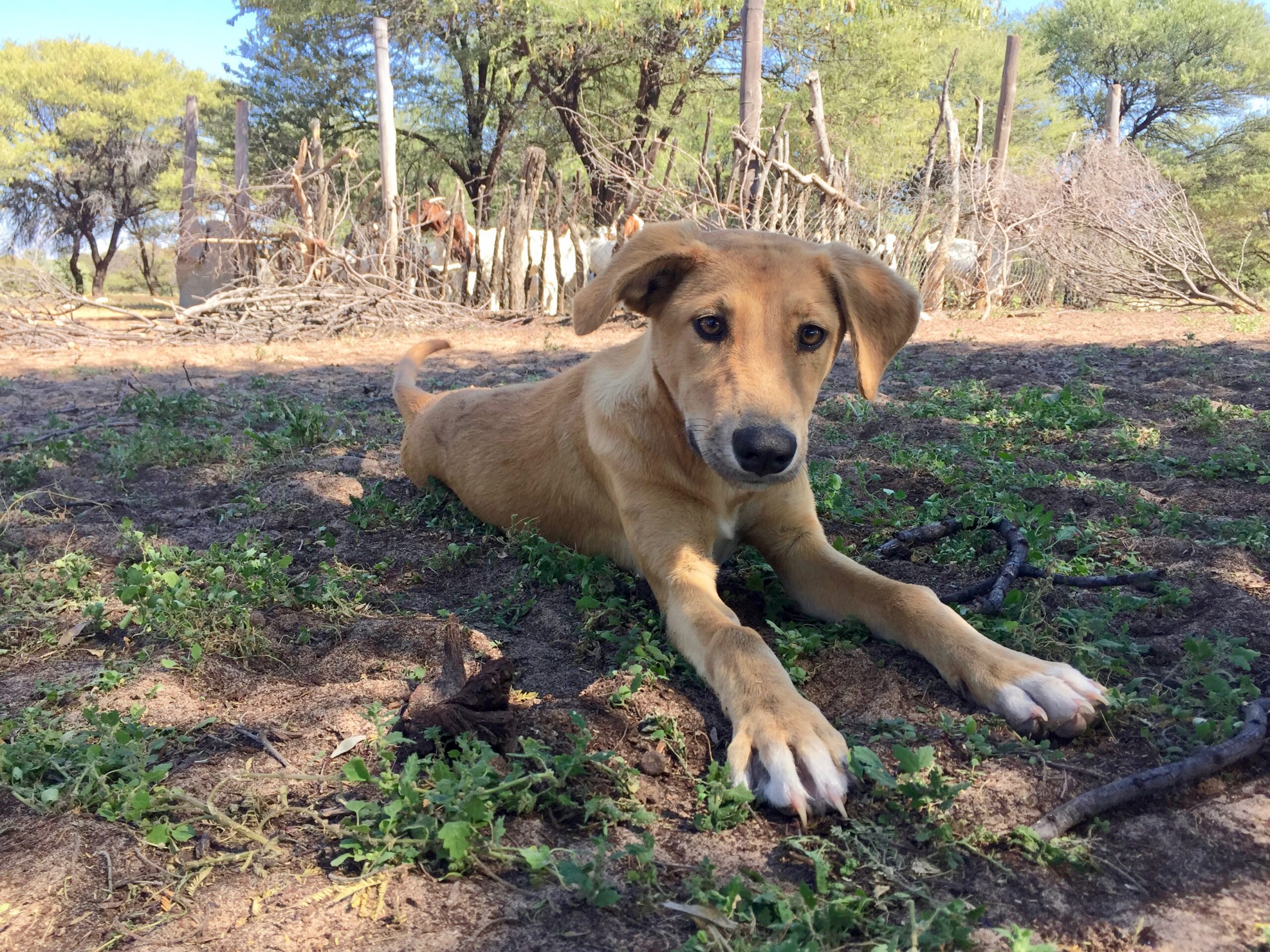
A bright-eyed livestock guarding puppy ready to begin its journey as a protector of its herd.
Protecting livestock and livelihoods
This behaviour, combined with the dog’s loud barking, is usually enough to deter the predator from pursuing the hunt and send it in search of an easier meal somewhere else. “Because of this, an LGD rarely gets into physical altercations with carnivores, which is good for both the dogs and the wildlife!”
Once the bond is formed, they protect the herd instinctively.
Commenting on the efficiency of LGDs, Jane says they deliver remarkable results, both in terms of farm productivity and wildlife conservation. “The farms where we place LGDs have disproportionately high levels of livestock predation and that is one of the qualifiers for these farms receiving LGDs through CCB’s programme.”
Read more about these remarkable dogs and the invaluable role they play in protecting farmers’ livestock. They are a valuable asset on any farm; livestock is an important source of income, particularly where predator attacks have historically resulted in losses. And, as a bonus, they often become much-loved members of the farming family!
This article is part three (a) of a three-article series on the invaluable work of Cheetah Conservation Botswana. For more information and/or enquiries, send an email to info@cheetahconservationbotswana.org or Connie Modise, Farming for Conservation Coordinator, at cmodise@cheetahconservationbotswana.org. Additionally, follow CCB on Facebook and Instagram.