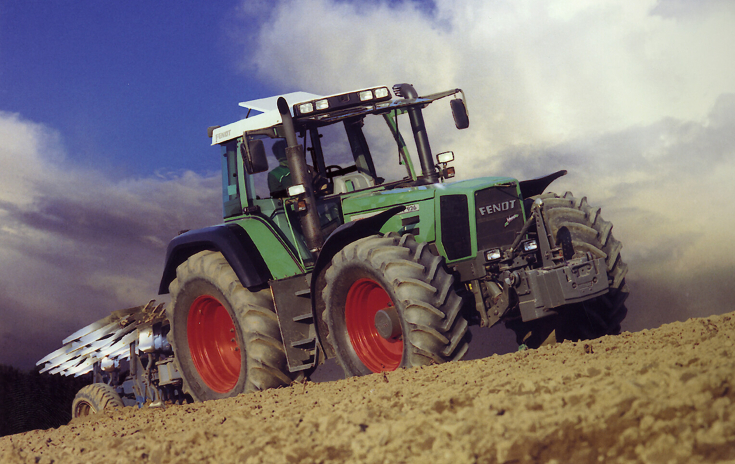
The Fendt 900 Vario will reach two milestones in 2026 In July, the 50 000th unit of the popular series will roll off the production line. The seven generations have now been in use worldwide for 30 years, and Fendt is celebrating this anniversary with a limited special edition.
The history of the Vario transmission and the Fendt 900 series is closely intertwined. In 1996, Fendt introduced the continuously variable Vario transmission in the Fendt Favorit 926 Vario, laying the foundation for the success story of both the series and the Vario transmission. Since then, the series has repeatedly served as a platform for the introduction of new technologies, such as the Vario terminal, the VarioGrip tyre pressure control system and ABS specifically designed for tractors.
In the DLG PowerMix test, the Fendt 900 Vario achieved top scores on several occasions. In the USA, Australia and New Zealand, it acted as a driving force behind the growth of the Fendt brand. Its compact design and high performance impressed both farms and contractors worldwide. And in 2005, the series’ design was honoured with, among other accolades, the Red Dot Design Award.
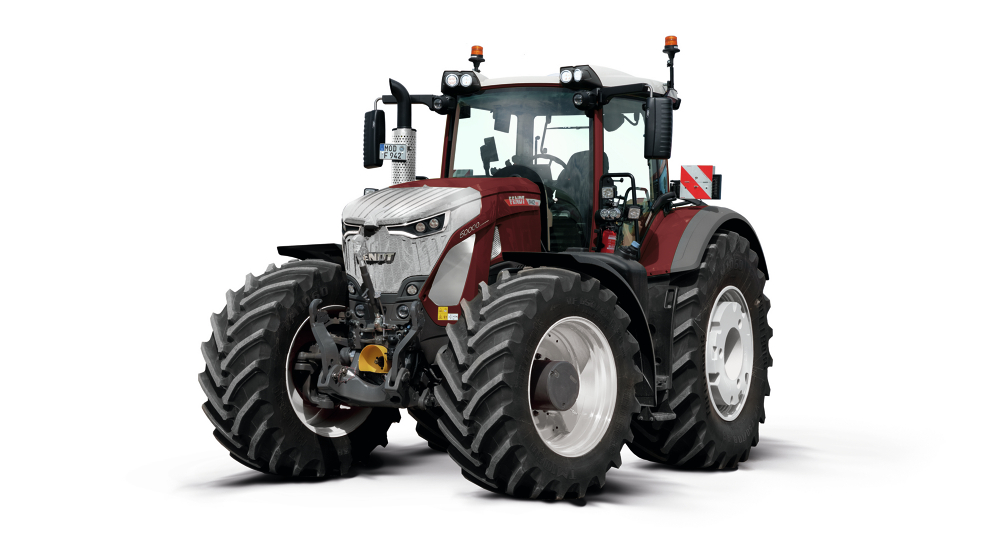
Limited Special Edition Fendt 900 Vario in black.
To mark the anniversary, Fendt is launching a limited special edition that pays tribute to the series’ history. This edition features paintwork in the style of the 2005 Fendt Design Line and includes the chrome package of the original series. Customers can choose between several paint finishes, namely Black, Steel Blue, Fir Green, Black Red and Nature Green.
This version also features the following specifications:
- An engraved door sill
- An embroidered floor mat with the anniversary logo
- A badge on the bonnet with the anniversary logo
- A SuperComfort seat in Titanium Leather with an embroidered headrest featuring the anniversary logo
This special edition is limited to 300 units and can be ordered now from authorised Fendt dealers.
Details of the limited-edition Fendt 900 Vario
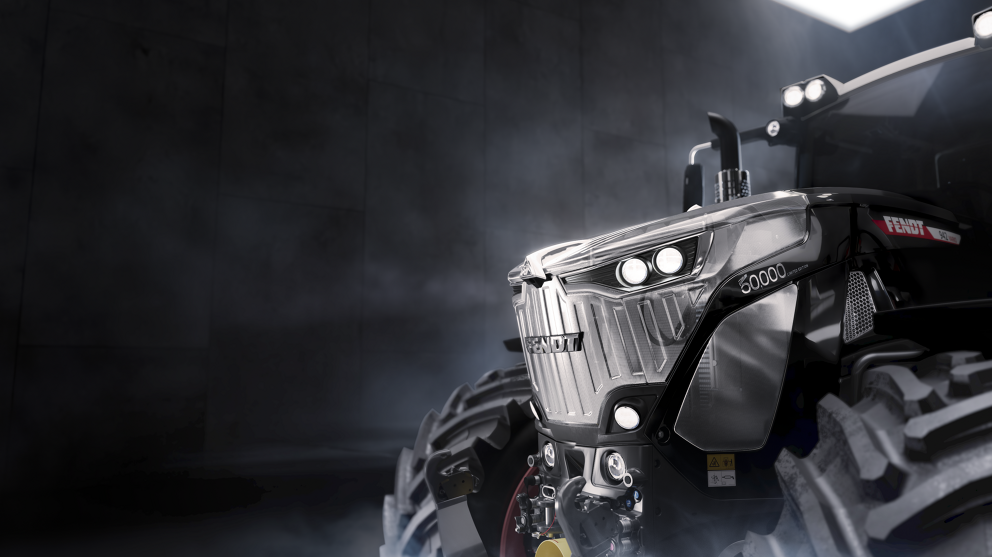
Fendt’s limited-edition special model will be on display at various global trade fairs and events over the coming months. Among other places, will be showcasing its products at the EIMA International 2026, a biennial exhibition of agricultural and gardening machinery, in Bologna, Italy, from 11 to 14 November.
1995: The Fendt Favorit 900 Vario – the world’s first Vario
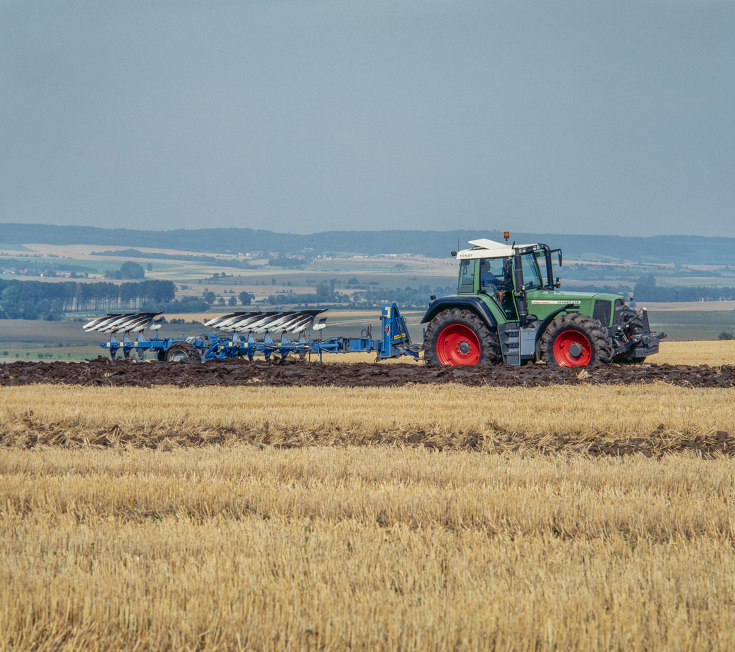
Fendt Favorit 926 Vario.
Agritechnica, November 1995
Fendt unveils the Favorit 926 Vario in Hanover, Germany – the world’s first tractor with a continuously variable, power-split transmission. Industry experts react with scepticism. Can the new ML 200 transmission, with no fixed gear ratios, reliably transfer the power of the 260-PS MAN engine?
The answer comes from the DLG test bench. Measuring at the PTO shaft, the engineers record a fuel consumption of under 200 g/kWh at maximum power. A figure that demonstrates the machine’s efficiency.
Manfred Lober, then Head of the DLG Test Center, also tested the tractive power: “The tractive efficiency of the continuously variable Vario tractor is almost as good as that of the 4-speed powershift transmission in the Favorit 800.” Two advantages prove their worth in practice: the driver can set the desired speed more easily. And, for the first time, the load-limiting function keeps the PTO speed constant at different driving speeds.
Scepticism gives way to recognition. The trade press confirms the measured values in its practical tests. The principle proves its worth: the driver regulates engine speed and, at the same time, continuously controls the transmission via the drive lever. Without fixed gear ratios, the Fendt 900 Vario operates constantly within the fuel-efficient rev range. Seven international awards follow, including DLG gold at Agritechnica, the world’s largest trade fair for technology, in 1997 and gold at SIMA, one of the world’s largest exhibitions for the agriculture sector.
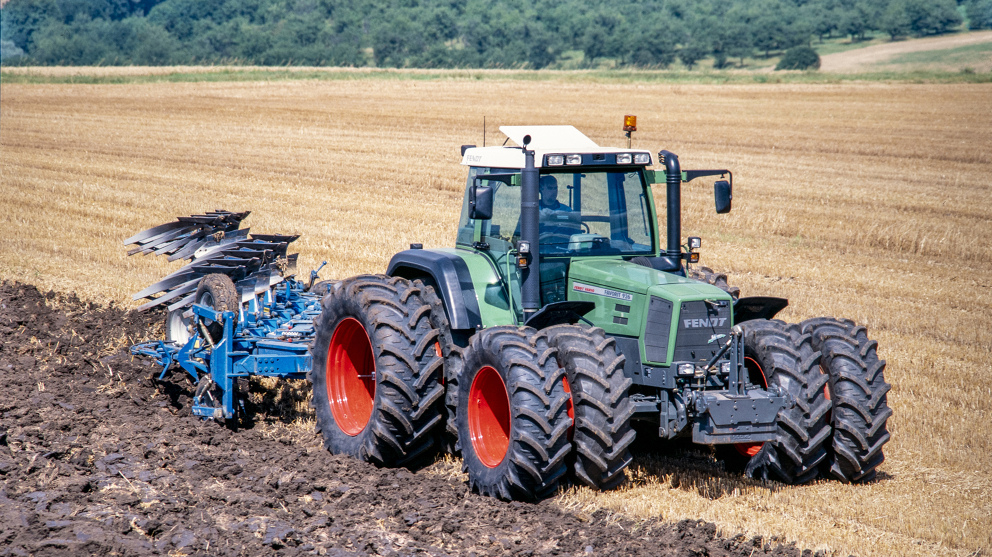
Ploughing, loading, cultivating – the Fendt Favorit 926 Vario in action.
1999: The Fendt Favorit 900 Vario – A new look, a new continent
Four years after its launch, the series was given a facelift: inspired by the Fendt Farmer 400 and Favorit 700 Vario, two low-set round headlights beneath a curved bonnet replaced the square-edged design. Internally, the tractor was quickly nicknamed ‘Froschauge’ (frog eyes or frog face).
The 1999 facelift also introduced a technical innovation: electronically controlled fuel injection and the first Vario Terminal. Using the Variotronic, the driver controls key functions, such as the control units and the speed memory. The upgraded joystick features the so-called ‘cloverleaf’ – four buttons for automatic functions of the power lift and PTO. The ‘cloverleaf’ can still be found on all Fendt tractors today.
The reverse drive system has been available since 1995 and broadens the range of applications; it is particularly popular in forestry. This is a feature that customers can still choose as an optional extra today. Two awards confirm this further development: silver for the Vario Terminal at Agritechnica 1999 and gold for the Variotronic at SIMA 2001.
The square-edged predecessor is the first Fendt Favorit 900 Vario to cross the Atlantic for the American market. With this facelift, the American distributors are introducing a change: silver wheel rims instead of the red ones found on the European version.
One model, two continents
-
- The Fendt Favourite 926 Vario “Frog Face” in Europe.
-
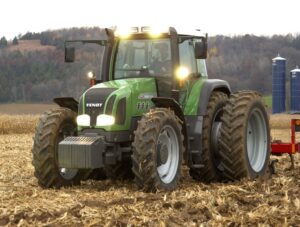
- The Fendt Favourite 926 Vario “Frog Face” with silver rims in North America.
2003: Operating with TMS
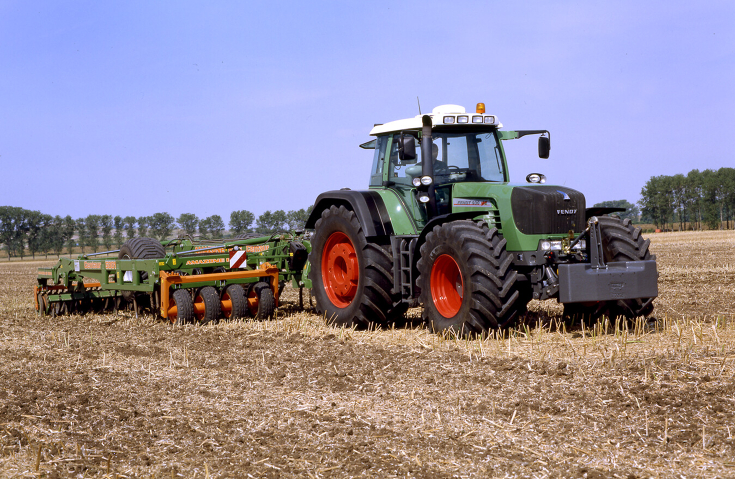
Fendt 930 Vario.
Until 2003, drivers used the drive lever to set the transmission ratio and controlled the engine speed via the accelerator pedal. With the second generation of the Fendt 900 Vario, Fendt introduced an innovation that continues to define the Fendt driving experience to this day: the new Tractor Management System (TMS).
It electronically links the engine and transmission and automatically adjusts the revs to match the power requirement. This allows drivers of the Fendt 900 to control both the Vario transmission and the engine via the drive lever.
Another innovation comes into play at the headland: Variotronic Teach-In. The driver programmes up to 16 work steps: lifting, PTO off, turning and lowering. The system takes over on the next pass. The top-of-the-range model, the Fendt 930 Vario, breaks the 300 HP barrier for the first time with a 310 HP output.
These innovations have earned four international awards: ‘Tractor of the Year 2004’, ‘Machine of the Year 2006’, gold at FIMA, an international trade fair in Spain and DLG gold at Agritechnica.
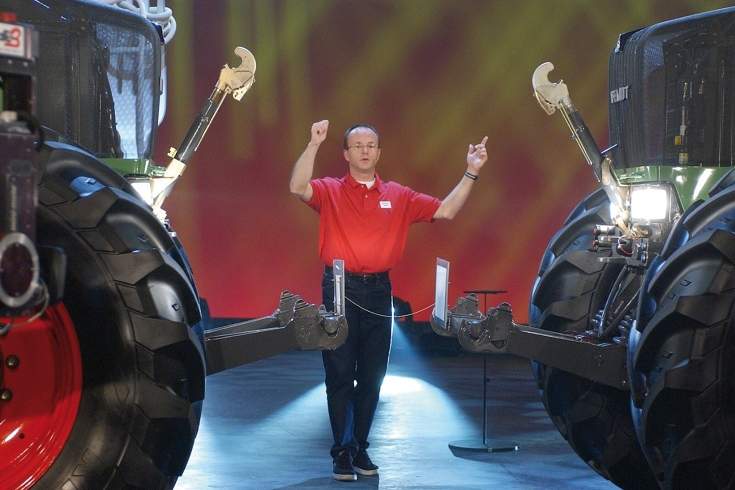
Two Fendt tractors win best bet of the evening on the German game show Wetten, dass..? (Source: ZDF, Carmen Sauerbrei).
The spaghetti bet involving two Fendt 900 Vario tractors
4 October 2003, the German game show Wetten, dass..? (I bet that…)
Two Fendt 900 Vario tractors take centre stage in front of an audience of millions. Prof. Bernhard Göbel from Weihenstephan-Triesdorf University of Applied Sciences comes up with the bet: a 30-centimetre-long piece of uncooked spaghetti is balanced between the two tractors. The task: to transport it eight metres into a saucepan – one tractor drives forwards, the other backwards. The bet is successful and is voted the best of the evening.
2005: The ‘Black Madonna’ takes to the stage
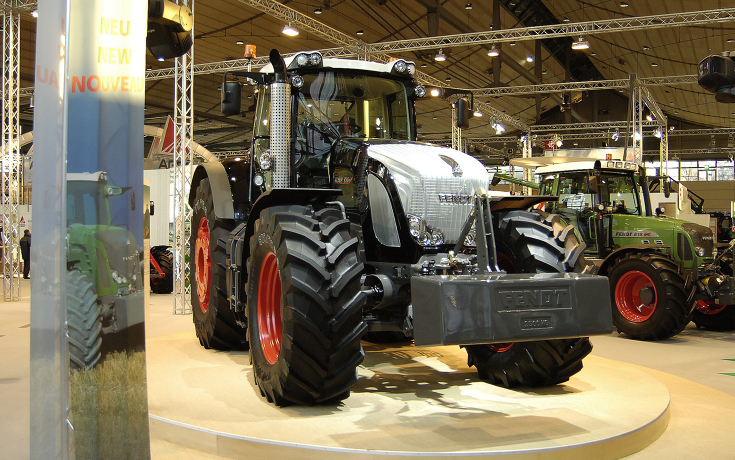
The Fendt 936 Vario – the “Black Madonna”.
At Agritechnica 2005, Fendt unveils the new Fendt 936 Vario. The MAN engine from the previous model is replaced by a Deutz engine delivering 360 HP. Added to this are independent wheel suspension, a new cab and the Power and Profi trim levels. All these innovations make the new Fendt 936 Vario an attractive prospect for farmers worldwide. With 360 HP and a top speed of 60 km/h, it outperforms every other standard tractor on the market in 2005.
However, it is one exhibit at the stand in particular that causes a stir: a Fendt 900 Vario in black instead of the classic Fendt green. The industry immediately christens it the ‘Black Madonna’. This marked the launch of a new range: the Fendt Design-Line. At Agritechnica 2007, the 900 series was on display in black and red; at EIMA in Italy, it was in steel blue. Fir green completed the Design-Line’s colour palette – colours that Fendt would revive in 2026 for its special anniversary edition.
Introduction of the Fendt Design-Line
-
- The Fendt Design-Line in Black Red at Agritechnica.
-
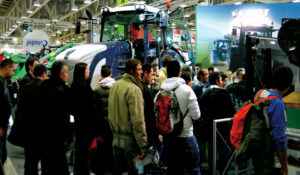
- The Fendt Design-Line in Steel Blue at EIMA, Italy.
The Fendt 936 Vario in black even made it onto the red carpet. The German band Troglauer Buam, known for their Bavarian dialect music, travelled to the 50th anniversary celebrations of the record label Ariola in 2008 not by car, but – as befits their status – in the ‘Black Beauty’.
The impact of the design extends beyond the world of agriculture: in 2005, Fendt received the Design Award of the Federal Republic of Germany and the Red Dot Design Award. In total, the third generation has won 10 awards, including, once again, the ‘Tractor of the Year’ title. In the DLG PowerMix test, the Fendt 936 Vario achieved 261 g/kWh, with 100 HP more power while meeting the stricter COM III emissions standard. No other tractor in this power class consumed less in 2007.
Fendt 936 Vario: Design and Music
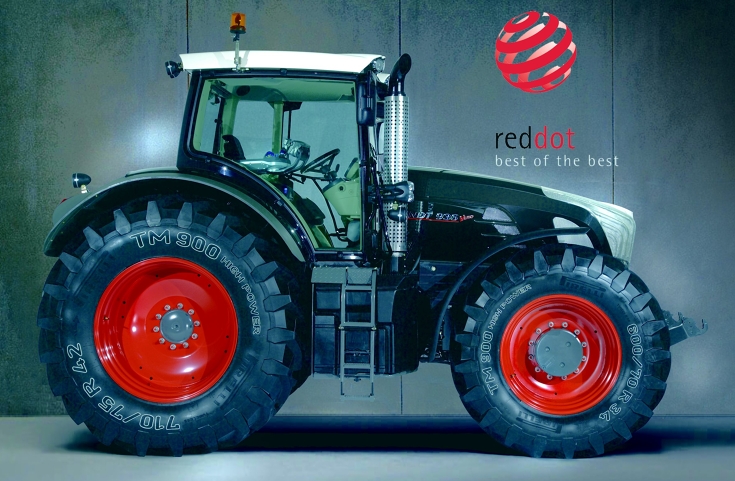
Outstanding design: The Fendt 936 Vario wins the Red Dot ‘Best of the Best’ Award.
-
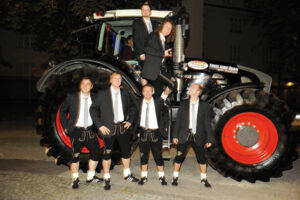
- The German band Troglauer Buam in front of the Fendt 936 Vario.
-
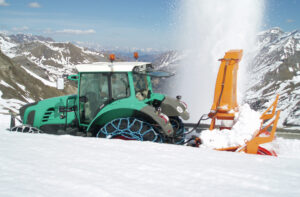
- A Fendt 936 Vario clears the Großglockner High Alpine Road.
The German band Troglauer Buam in front of the Fendt 936 Vario.
A Fendt 936 Vario clears the Großglockner High Alpine Road.
Away from the trade fairs, the third generation proves its worth on extreme terrain. On the Großglockner, the highest mountain in Austria, a Fendt 936 Vario clears the Austrian High Alpine Road for the first time – 48 kilometres, 36 bends, over 2 500 metres of elevation gain.
Every spring, the route must be made passable by 1 May. This means weeks of work with the snow blower, as the clearance team moves around 600 000 cubic metres of snow and, thanks to the Vario transmission and reverse drive system, works in both directions with a full view of the surroundings.
2010: 390 HP and VarioGrip

The Fendt 939 Vario.
The fourth generation takes the Fendt 900 Vario to a new level of performance: the new top-of-the-range Fendt 939 Vario achieves a maximum power output of 390 HP with a 7,8-litre Deutz engine. Added to this comes the integrated VarioGrip tyre pressure control system.
With VarioGrip, drivers can conveniently adjust the tyre pressure via the Vario terminal without having to get out of the cab. In the field, lower pressure reduces soil compaction and increases traction through a larger contact patch. On the road, higher pressure reduces rolling resistance, lowers fuel consumption and extends the service life of the tyres. Thanks to ABS, the tractor brakes safely even at high speeds.
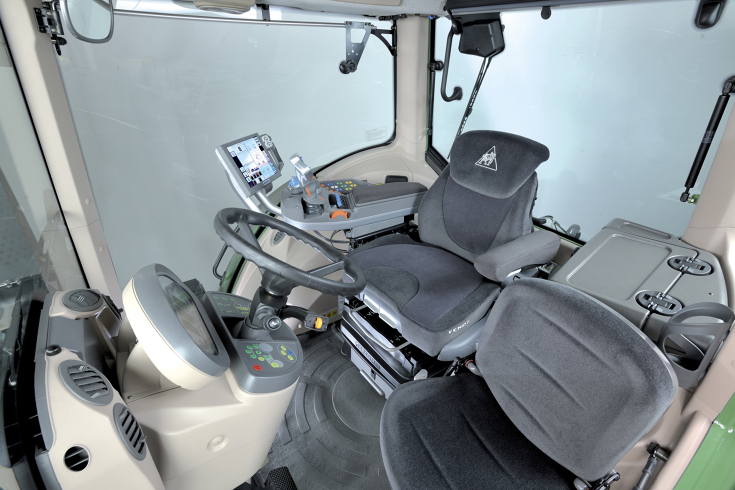
A look inside – the cab of the Fendt 939 Vario.
To control numerous functions, including VarioGrip, the driver uses the Varioterminal, which was first introduced on the 800 Vario. On a 10-inch touchscreen, it displays features such as the guidance system, tractor functions and ISOBUS functions, as well as a camera feed split into four tiles.
In the DLG PowerMix test, the Fendt 939 Vario achieves 240 g/kWh despite its new SCR exhaust after-treatment system. In the 400 HP class, no other tractor in 2010 consumes less.
Highlights of the fourth-generation Fendt 900 Vario
-
- One of these Fendt 936 Vario tractors has clocked up over 81 000 operating hours in Turkey.
Fendt 936 Vario reaches 81 000 operating hours in 16 years
A Fendt 936 Vario, built in 2011 and operating at the large-scale Turkish farm Ceylanpınar, demonstrates just how durable the fourth generation is. The farm is part of the state-owned agricultural enterprise TİGEM and opted for the Fendt 900 Vario at the time due to its low fuel consumption, the Vario transmission and its comfortable controls. The tractor has clocked up over 81 000 operating hours and is still in daily use.

The Fendt 936 Vario in the ‘Fendt meets Wacken’ version.
Fendt meets Wacken
The story of the Fendt 900 Vario is not just set in the fields. Since 2003, Fendt tractors have been part of the German Heavy Metal Festival Wacken Open Air (W:O:A for short). Initially, they were used for the drinking water supply. When torrential rain in 2005 turned the site into a muddy wasteland, Fendt 800 and 900 Varios from a neighbouring contractor rescued vehicles that had become stuck.
In 2011, Fendt had its own stand at the festival for the first time. A black Fendt 936 Vario became a popular photo prop under the slogan ‘Fendt meets Wacken’. During the festival, the artists signed the bonnet with a special airbrush design; after W:O:A, it was auctioned off for a good cause.
Fendt Go East: 4 250 kilometres on the road

A total of 4 250 kilometres, 105 hours’ driving time, 2 300 litres of diesel – that is the tally for the “Fendt Go East” tour. On 18 June 2013, a Fendt 936 Vario set off from Marktoberdorf in Germany bound for Ukraine; the tractor covered the entire route on the road, accompanied by the German trade magazine profi.
On its journey through five countries, the 900 series tractor carried out different tasks in each one: it mowed grassland in the Czech Republic, mulched in Slovakian forests using a reverse-drive system, loosened Romanian soil with a ripper, worked fields in Moldova and spread organic fertiliser in Ukraine.
2013: More power under the bonnet and a world record
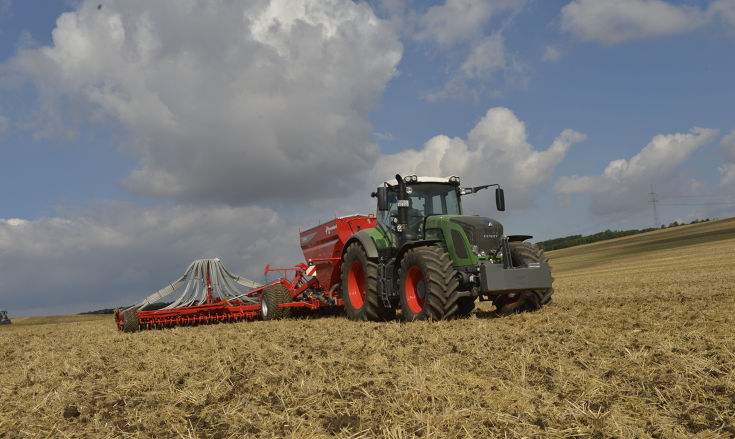
The fifth generation gets an update under the hood. A new Deutz engine, steel pistons and two turbochargers of different sizes, as well as an additional intercooler, replace the previous turbocharging system. The result: the engine responds more quickly and operates more efficiently at lower revs.
Fendt has also redesigned the cooling system for the engine and transmission. An optional reversible fan reduces downtime, the 300-degree windscreen wiper ensures optimum visibility, even of the wheel arch.
In the 2015 DLG PowerMix test, the Fendt 939 Vario achieved a consumption of 242 g/kWh plus 11 g/kWh of AdBlue – the lowest figure in its power class under the stricter Stage 5 emissions standard. Eight awards from six countries followed, including ‘Machine of the Year’ and four gold awards from Germany, Norway, Belgium, the USA, Italy and Spain.
In Brandenburg, Germany, the agricultural co-operative Landwirtschaft Golzow Betriebs GmbH set a world record in 2014 with its Fendt 933 Vario. Within 24 hours, the team applied herbicide to over 1 000 hectares of rapeseed stubble.
2019: Fully continuous variable driving with VarioDrive
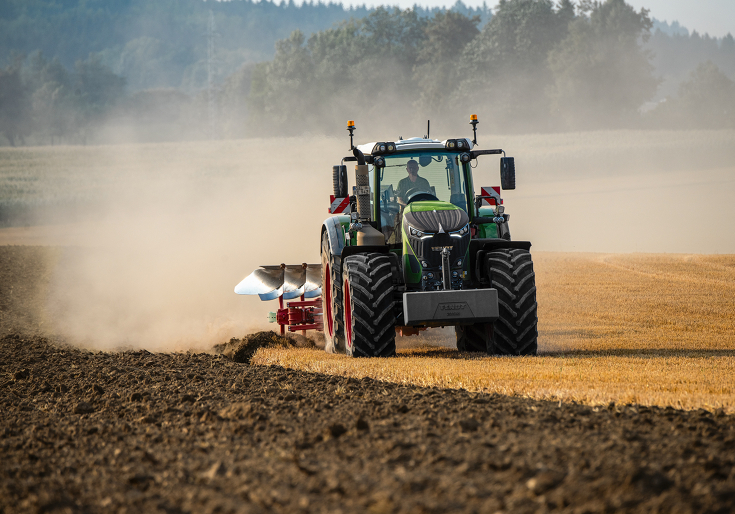
Fendt 942 Vario.
Before VarioDrive, every Vario transmission had two driving modes: field and road. With the new VarioDrive powertrain, these driving modes are no longer needed. VarioDrive also includes a variable four-wheel drive system, which has already proven its worth in the Fendt 1000 Vario.
In the sixth generation of the Fendt 900 Vario, the drivetrain combines a new Fendt Vario TA 300 transmission with a MAN engine tailored to it. With the Fendt iD low-speed concept and a 9,0-litre displacement, this engine delivers a maximum power output of 415 HP in the top-of-the-range Fendt 942 Vario. The maximum tyre diameter on the rear axle has increased to 2,20 metres.
The combination of VarioDrive and Fendt iD further reduces fuel consumption. In the DLG PowerMix Test 2,0, the Fendt 942 Vario achieved a figure of just 237 g/kWh (+32 g/kWh AdBlue). This is the lowest figure in the power class up to 400 HP in 2019 and the fourth-best figure ever recorded in the DLG PowerMix Test (as of June 2026).
The sixth generation has received nine awards: ‘Tractor of the Year 2020’, two ‘Machine of the Year’ titles, three gold medals and an award for the ‘Ready for more’ communication campaign.
Impressions of the sixth-generation Fendt 900 Vario
-
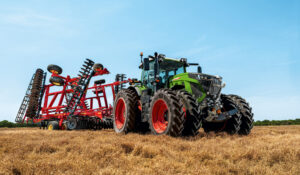
- Fendt 942 Vario with Row-Crop tyres.
-
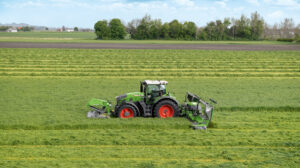
- Row Crop: The Fendt 900 Vario for North America.
With the sixth generation, the Fendt 900 Vario is also row-crop-capable. The series thus meets the requirements of farmers in North and South America, Australia and New Zealand who work with row crops.
One such farmer is Jonathan Raber from Freeport, Ohio. Together with his family, he runs Red Hill Farm, which covers over 4 800 hectares. Alongside a Fendt 716 Vario, the family uses a Fendt 933 Vario, including when pulling a slurry tanker with a capacity of over 22 000 litres. “It’s very fuel-efficient. That’s brilliant given its performance,” says Raber.
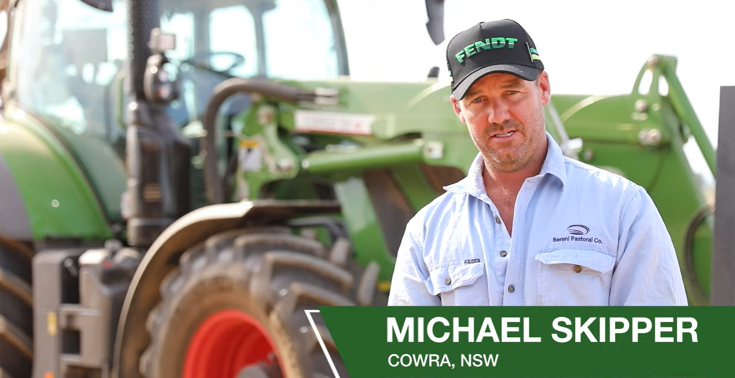
Australian Michael Skipper relies on a Fendt 936 Vario.
The Fendt 900 Vario is also making its mark in Australia. Michael Skipper farms over 1 200 hectares along the Lachlan River in New South Wales. A Fendt demonstration convinced him, and he invested in a Fendt 936 Vario, which he uses for soil preparation and hay production. The low fuel consumption and user-friendly operation were the deciding factors in his decision to also invest in a Fendt rake and two Fendt 716 Vario tractors.
2021: Connected from the office to the field

At Agritechnica 2019, Fendt showcased the Fendt 900 Vario with the previous Vario terminal. Two years later, the update to FendtONE was released, transforming the workflow between the office and the cab: for the first time, the farm manager can plan jobs on the computer and transfer them wirelessly to the tractor. Documentation is generated at the touch of a button, reducing office workload.
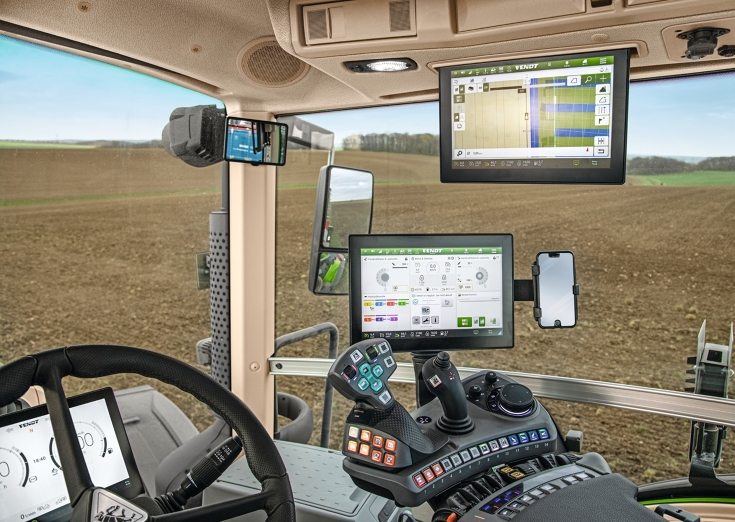
The FendtONE cab.
In the cab, the new 3L joystick expands the range of control options: the driver can freely assign up to 27 functions across three levels, including the control of ISOBUS-compatible implements. Tractor-Implement Management (TIM) automatically adjusts the driving speed depending on the implement’s workload. The driver monitors; the technology controls.
Fendt also relies on automation in the engine compartment: a self-cleaning engine air filter can blow itself clear using compressed air, even whilst the tractor is in motion. The DLG has awarded the solution with a silver medal.
Beyond the field: over 1 000 hours in road construction
The Fendt 942 Vario is making slow progress. The display shows a speed of just 0,1 km/h. Behind it, a specialised soil stabiliser is cutting through the subsoil to a depth of up to 40 centimetres. What is striking is what is missing: dust. No haze in the air, no fine dust.
For the work ahead of the stabiliser, the team adds ballast to the tractor in a targeted manner and uses the tyre pressure control system to increase the contact patch. The Fendt 942 Vario is in use at the environmental services company Höbel, Germany, for over 1 000 hours a year.
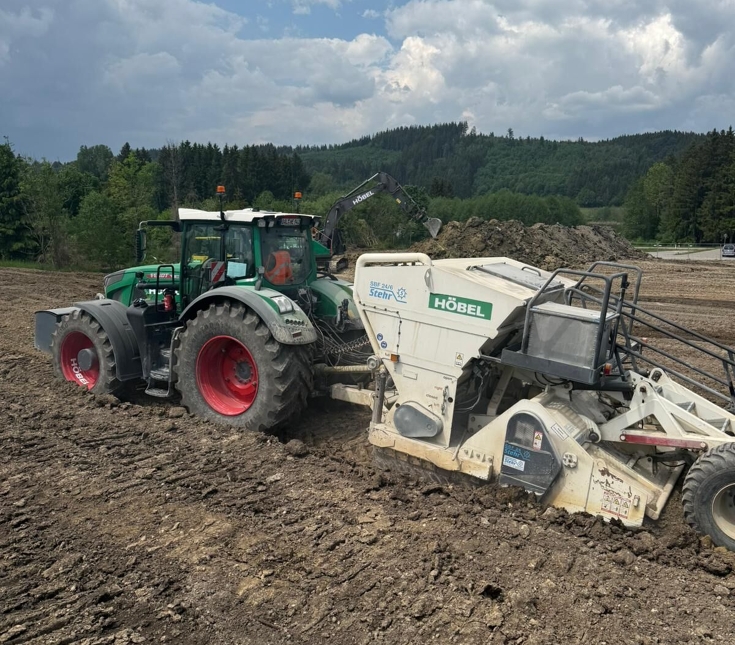
A Fendt 942 Vario in front of a stabiliser.
Steep slopes in Tyrol, Austria
Whether it is a rock crusher, an asphalt stabiliser or a soil stabiliser, working in the Tyrolean Alps demands contrasting qualities from the machinery: heavy enough for traction, yet manoeuvrable enough for the next hairpin bend. Martin Lener has relied on Fendt for this for years. Currently, a 2010 Fendt 936 Vario and a 2025 Fendt 942 Vario are in operation. And an old first-generation Fendt Favorit 926 Vario is enjoying its retirement doing light work on the farm.
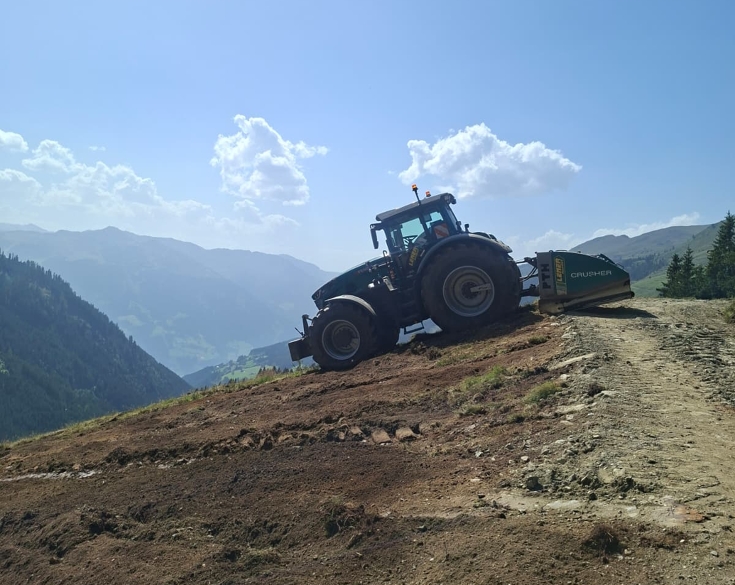
The view is beautiful, but the work is tough for Martin Lener’s tractors in the Tyrolean Alps.
900 series Design-Line on the island of Rügen

Anton Reetz is easily recognisable on Rügen thanks to his pine-green Fendt tractors
The Design-Line, launched in 2005, has found loyal fans on Rügen. “The colour has really become a distinguishing feature,” says Reetz, a contractor on Rügen, Germany. He set up his business there in 2014 and opted for a Fendt 720 Vario in pine green in 2017. Today, he drives the seventh generation of the Fendt 900 Vario, still in the Design-Line.
Also on Rügen: Fendt 942 Vario with duals
Peter Carstens, owner of the Klaus Störtebeker Agricultural Company, relies on a Fendt 942 Vario with Design-Line and duals. He farms his 1 000 hectares partly directly above the venue of the Störtebeker Festival on the German island Rügen.
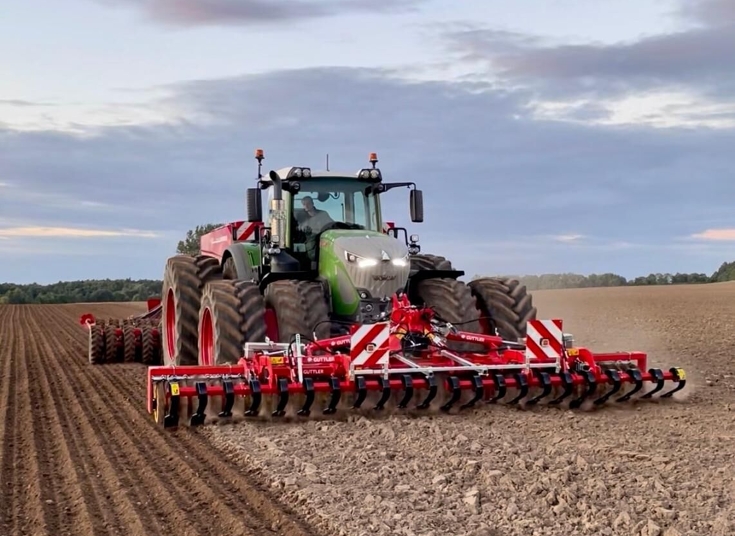
Peter Carstens’ Fendt 942 Vario with duals.
Three Oscars with Fendt
Gerd Nefzer is a trained farmer and Oscar winner. As a special effects artist, he works on international film productions and uses Fendt tractors on set. For the blockbusters Dune: Part One and Dune: Part Two, a Fendt 933 Vario, among other things, generated wind of just the right strength and from the perfect direction. The same tractor helped stage a spaceship crash in the desert landscape of Dune.
In March 2018, Nefzer won his first Oscar for Best Visual Effects in Blade Runner 2049, with two more to follow for the two parts of Dune.

Gerd Nefzer brings Oscar-worthy tractors to film sets worldwide.