The English say “Spice is life” – and in South Africa, the spice industry is a growing niche market. Whether you make your own health drinks or consider yourself a connoisseur, spices add colour to your life and flavour to your food.
For the agricultural sector, spices create new opportunities. Crops such as rosemary, thyme, coriander and chillies are exported to Europe, the USA and the Middle East. Even high-value spices such as saffron are attracting more attention from local farmers.
According to Statistics South Africa, the export value of dried herbs and spices amounted to approximately R250 million in 2023, with annual growth of 6 to 8%. Regions such as the Western Cape, Limpopo and KwaZulu-Natal are active in spice cultivation.
Small and medium enterprises focus on the local market, and the correct equipment makes a difference. Drotsky’s hammer mills are ideal for spice processing – robust, efficient and easy to use.
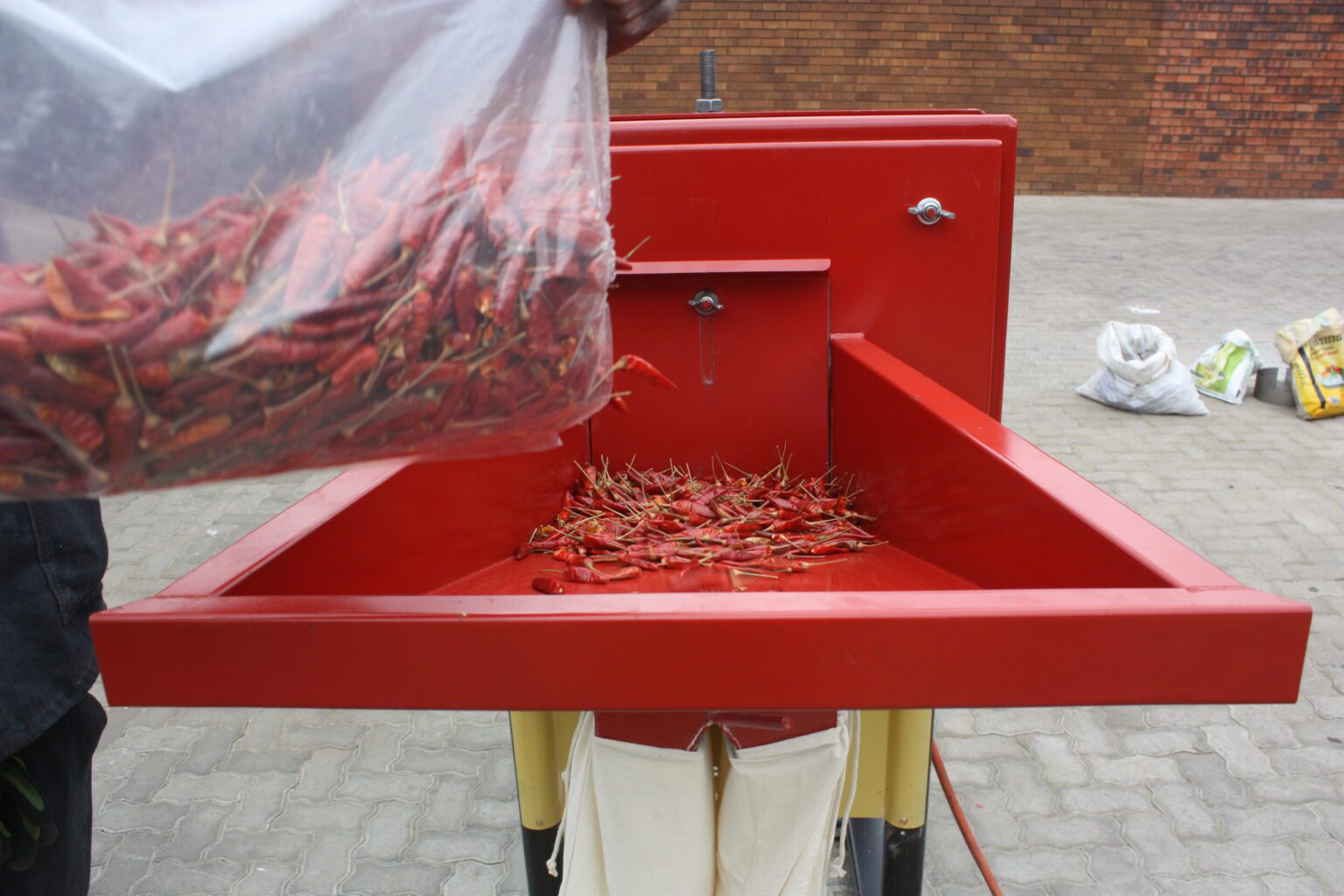
Drotsky’s hammer mill can grind the chillies as finely as you require.
Spices in South Africa
The most commonly cultivated spices include coriander, turmeric, ginger, chillies and rosemary.
Some of the most popular spices:
Coriander (Coriandrum sativum) – a versatile spice harvested for both its seeds and leaves. It grows well in the Western Cape and Free State.
Turmeric (Curcuma longa) – known for its bright yellow colour and health benefits. It thrives in warmer areas such as KwaZulu-Natal.
Ginger (Zingiber officinale) – popular for cooking and traditional medicine. It grows well in subtropical climates.
Chillies (Capsicum spp.) – various types, including peri-peri, are cultivated for local and export markets.
Rosemary (Rosmarinus officinalis) – a hardy herb-spice that thrives in dry, sunny regions. It is used in food and cosmetic products.
Saffron (Crocus sativus) – the most expensive spice in the world. According to NWK Arena, it can fetch up to R200 000 per kilogram, with a yield of 6 to 10 kg per hectare. It grows well in the Lowveld and parts of the Western Cape.
Cloves, cinnamon and cumin – although not grown on a large scale, they are increasingly seen in garden projects and micro-farming, especially for organic and niche markets.
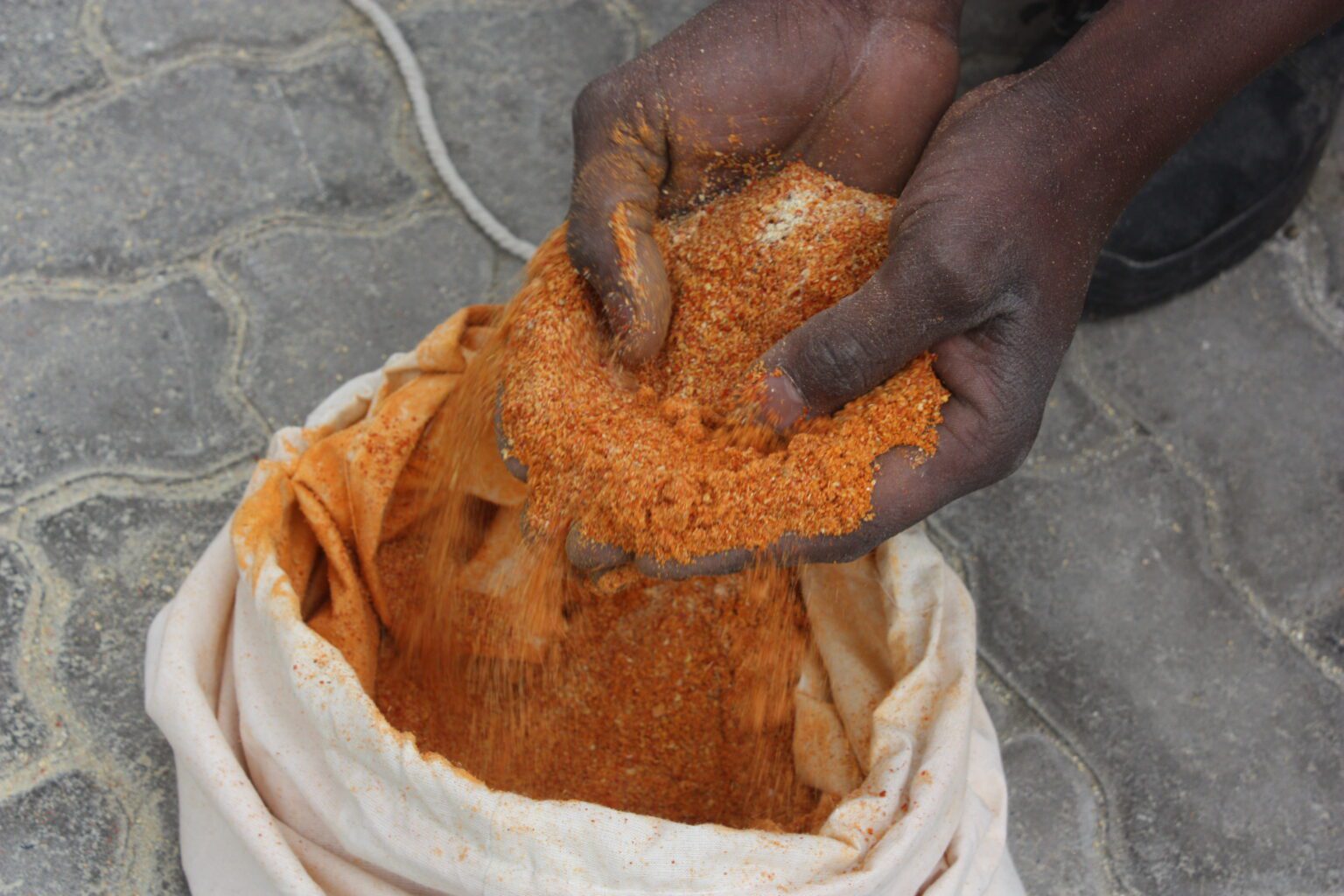
After the chillies have been processed through the Drotsky hammer mill, they become a fine chilli powder.
Why Drotsky?
Drotsky’s S- and T-range hammer mills are designed to grind various spices – from hard kernels like pepper and cloves to softer leaves like rosemary. Adjustable sieves and hammers help achieve uniform fineness, which is essential for releasing flavour and meeting product standards.
Even the finest masala can be ground even finer, as demonstrated with the S8 model. The mills’ airflow reduces heat and preserves flavour, while sieve systems and dust control ensure food safety.
Benefits of using a hammer mill in your spice production:
- Processes large volumes quickly – perfect for commercial production.
- Adjustable sieves and hammers help achieve consistent fineness.
- Finely ground spices have a larger surface area, releasing oils and flavour more effectively.
- A hammer mill can handle various spices, from hard kernels to soft leaves.
- Robust and simple, suitable for rural and industrial use.
- More affordable and easier to operate than other grinding technologies.
- Can be integrated with sieve systems, airflow and dust control for food safety.
- Different sieve sizes determine particle size, which are important for capsules, sauces and blends.
- Some mills use airflow to reduce heat and preserve flavour.
Step-by-step: Grinding spices with Drotsky
- Place the hammer mill on a stable surface and wear your personal protective gear.
- Determine which spices you want to grind and choose the correct sieve.
- Securely attach the sieve to the mill.
- Make sure the mill is connected to a working power source. Test it and switch it off.
- Place a bag or container under the mill to collect the ground product. Pour the raw spices into the feeder. Switch the mill on and let the product pass through. Switch off when finished.
- Collect the ground spices. Blow out remaining particles by switching the mill on briefly.
- Remove the sieve, clean the mill, and store safely.
Available Drotsky models
S-series: S1, S4, S6, S8 – ideal for different volumes and spice types.
T-series: T1 and T2 – perfect for grains, sugar, herbs and spices requiring size reduction.
A hammer mill is therefore not just a grinding machine – it enhances the flavour of your spices, speeds up production, and supports quality control. If you work with spices, it’s equipment that can truly help take your product to the next level.
To purchase your own Drotsky hammer mill or simply see what Drotsky can offer, visit their website at www.drotsky.co.za