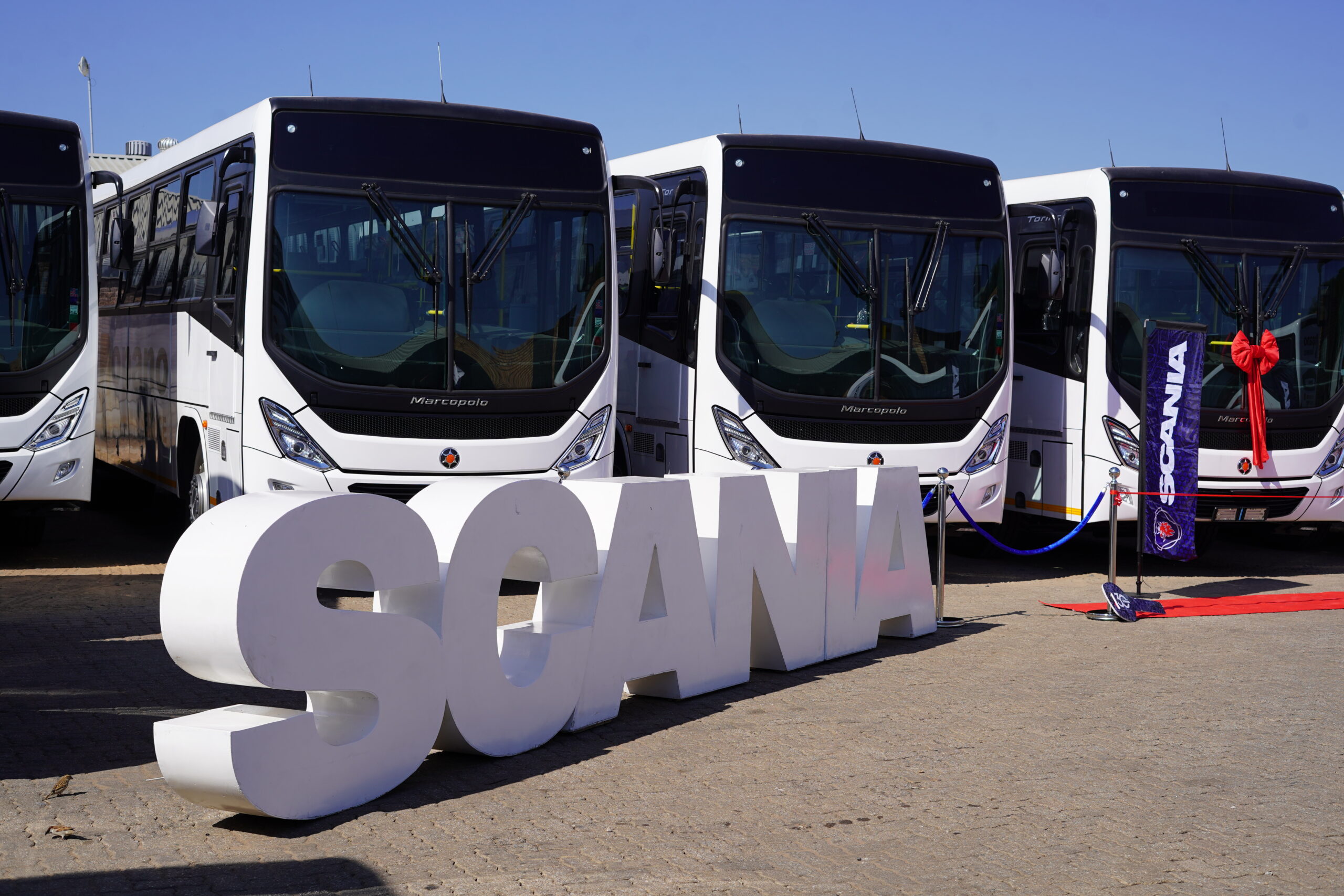
People who rely on public transport in the Capricorn District Municipality can rest assured that they will reach their destination safely, due to Kopano Bus Services and the Mdodi Bus Company’s historic milestone purchase of 40 brand-new Scania buses.
These buses will be split equally between the two companies. This purchase of more than R100 million was made possible by a contract signed between board members of these companies and the
Limpopo Department of Transport and Community Safety (LDTCS).
The delivery of these buses marks more than a commercial transaction; it is the continuation of a deep-rooted, decades-long relationship between Scania and the two public transport companies. Since Madodi was established in 2001 and Kopano followed in 2002, neither company has ever used another manufacturer. For 25 and 24 years respectively, Scania chassis, paired predominantly with Marcopolo bodies, have formed the bedrock of
both operations.
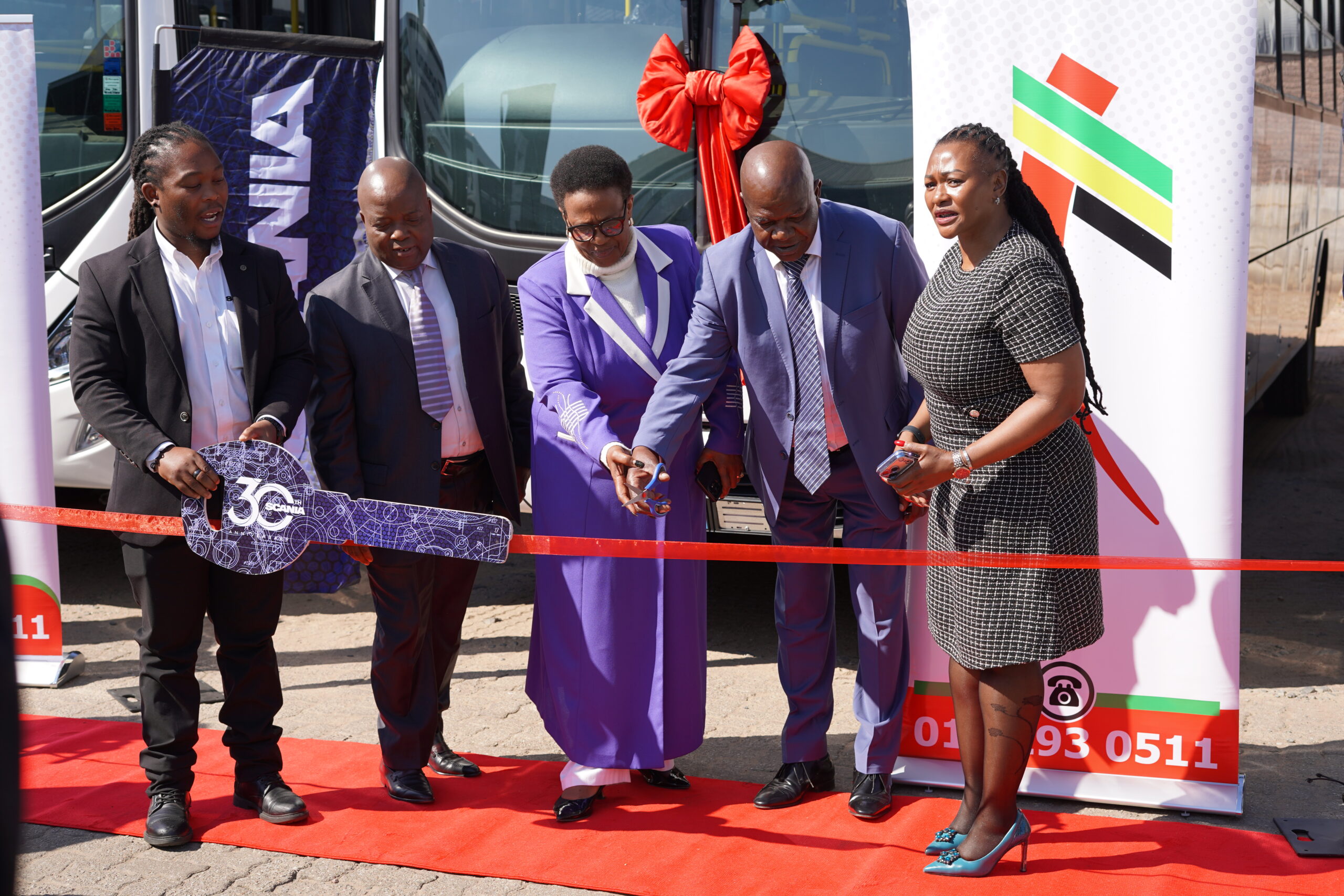
The unveiling of the brand-new Scania buses.
Built for tough conditions
Operating public transport in Limpopo presents unique challenges, with 80% of Kopano and Madodi’s daily routes comprising dirt roads. Sustaining a fleet under these conditions requires vehicles engineered for extreme resilience.
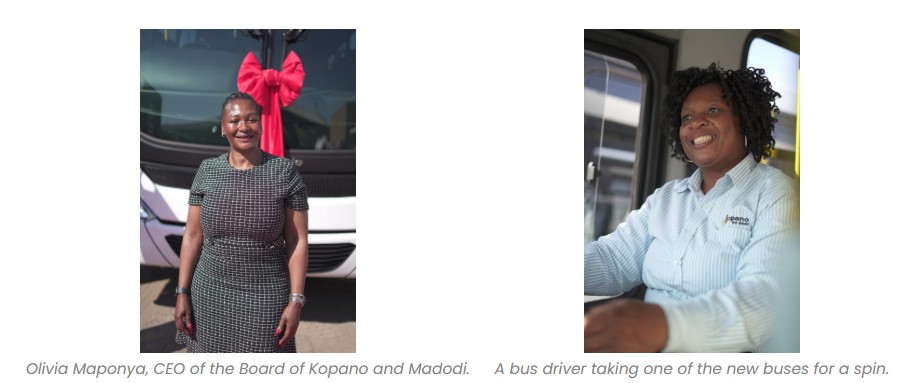
Olivia Maponya, CEO of the Board of Kopano and Madodi, explains that Kopano started as a small subcontractor, which brought 10 small bus owners together. From those humble beginnings, Kopano has grown into a major transport provider operating in Leboakgomo, southeast of Limpopo’s capital, Polokwane.
“This is a huge milestone for us, it shows resilience for the company,” Olivia said. “It hasn’t been easy; it required men and women who are intentional about carrying a vision for the company and who are purposeful in terms of growing the business.
“It’s not only about growth but also about our stakeholders and how we carry them through in terms of journeying with us. Because we are a public transport company, every individual person who uses our services matters to us. That is why we choose Scania buses.”
Reflecting on their journey with Scania, Olivia added: “Kopano Bus Services and Scania’s relationship started from the very first day that the organisation was started. We believed in Scania in 2001 when we started this operation. It is a bus built for the Limpopo environment, and we wanted to test if that is true.
“We can now prove that Scania is robust and can cater to the conditions of our roads. Some of the buses that are currently running are 20 years old, proving that Scania buses are robust and tailor-made for our environment in South Africa.”
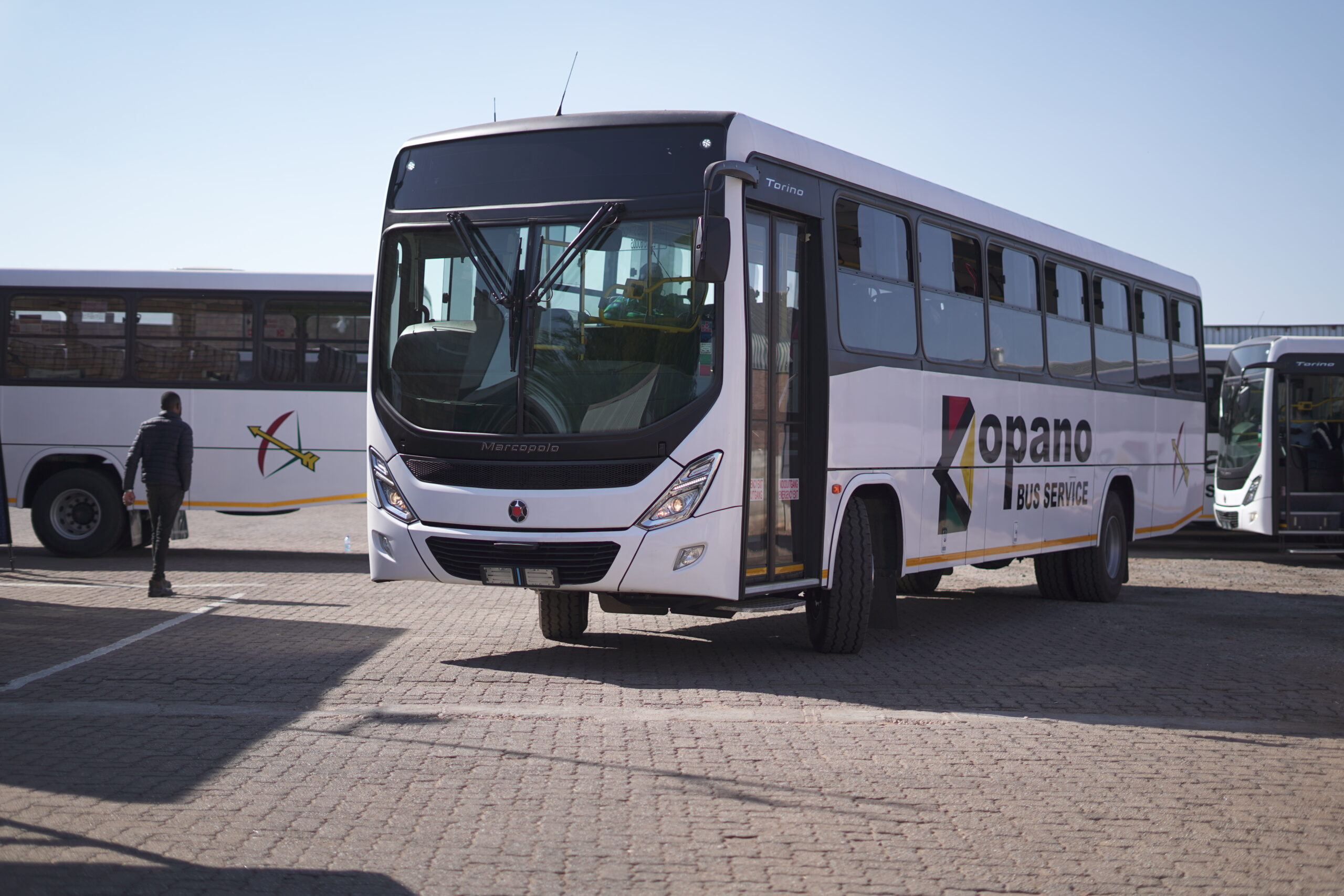
A brand-new Kopano bus going on its first trip transporting passengers.
Investing in quality
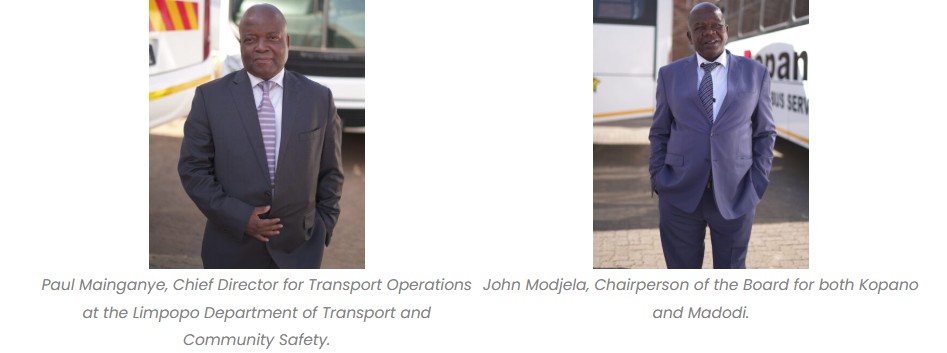
The acquisition of these Scania buses represent a combined fleet value worth millions, an investment made possible by the contract security provided by provincial authorities. Paul Mainganye, Chief Director for Transport Operations at the LDTCS, explained that the department acts as the contracting authority on behalf of the government, managing subsidies based on monthly performance metrics such as trips completed and kilometres travelled.
Paul explained that the department’s contracts impose strict safety guidelines, including a clause prohibiting the
operation of buses older than 15 years. In the past, short-term contract extensions of two or three years made longterm financial planning incredibly risky for operators.
“This new contract provides some sort of a guarantee for the next 60 months, as long as they comply with the conditions, this contract will be there,” he said. “And I think on the basis of that, the company realised keeping old buses means a huge maintenance bill, so they decided to replenish their fleet.
“These 40 buses in the two companies will really go a long way, and we commend them [the Board] for making the right decisions. We are seeing an investment from which we will see a return in the form of quality services to the passengers of the province of Limpopo, particularly in the Capricorn district.”
More than a supplier, a partnership cemented in loyalty
Today, Kopano operates approximately 71 buses, and Madodi runs 60, bringing their combined fleet to over 130
vehicles. The total integration of Scania machinery into their infrastructure means that technicians are experts at servicing these specific chassis, and drivers are fully accustomed to handling them, maximising uptime and reducing mechanical failures.
John Modjela, Chairperson of the Board for both Kopano and Madodi, emphasises the absolute loyalty the
brands share with the manufacturer.
“We have been buying Scania for both Kopano and Madodi since they were started, and we have never bought any other brand for any other company,” he stated. “We are Scania people, and most people call me Scania man, because they say I have Scania blood.
“We are also predominantly using Marcopolo bodies for our buses. We are more than happy to operate Scania buses, and our passengers are more than happy with the vehicles we are using, because we don’t get breakdowns often.”
For John and the Board, the return on this massive vehicle investment goes far beyond numbers on a balance sheet. “Our growth is not all about money. Our vision and strategy are to see the growth of the company and our employees’ salaries. As directors, we don’t look at this company as a source of enriching the directors.
“While this is a big investment with big debts that we are getting involved with, in return, our main focus and main goal is to see our clients, our passengers and our employees happy. Scania has captured us, and we have captured them; we no longer have a client and supplier relationship, we are partners.”
If you would like to learn more about the new Scania Super or talk to one of Scania’s expert team members, visit their website https://www.scania.com/za/en/home.html