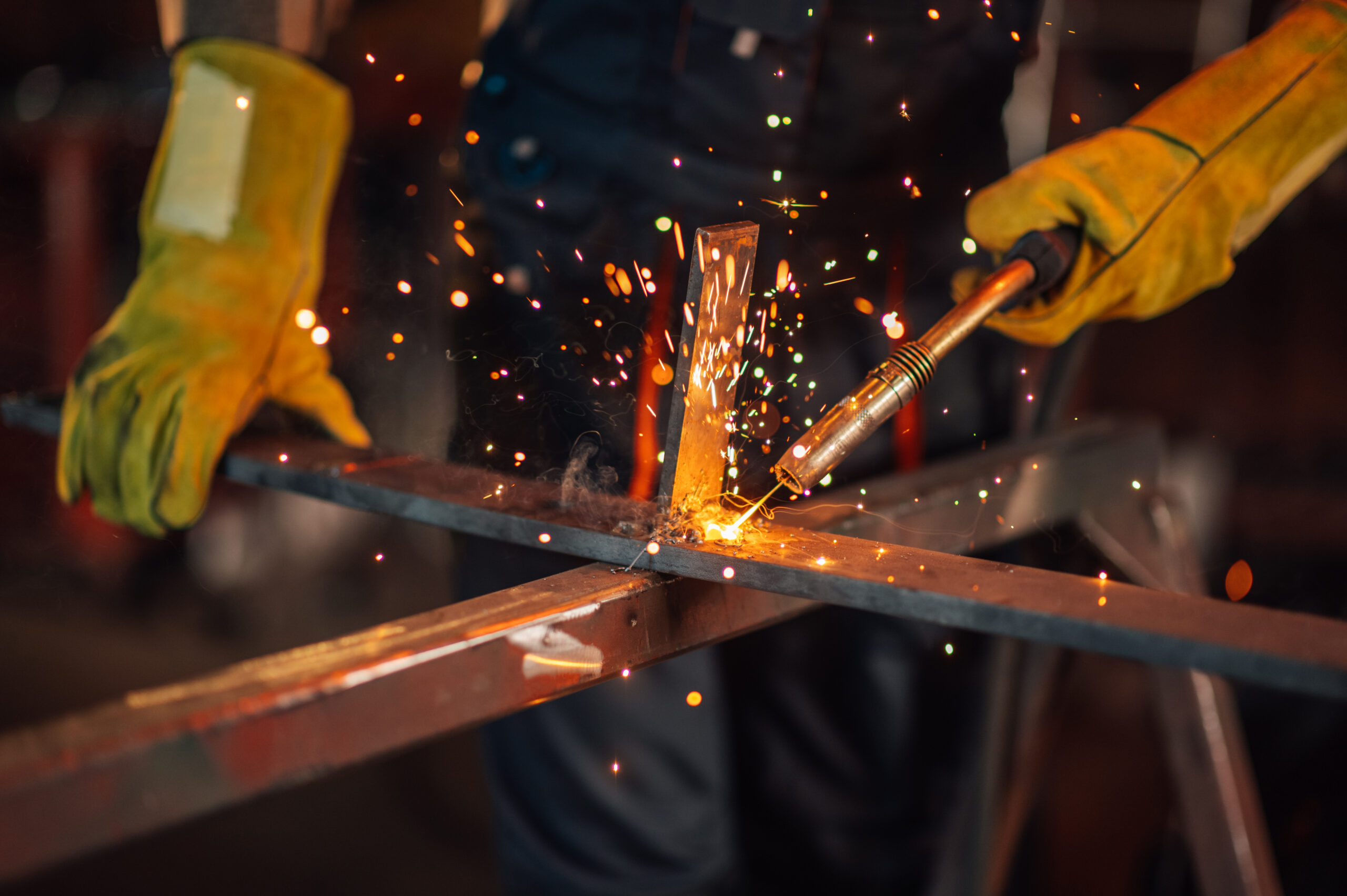
An experienced welder knows that a weld can reveal far more than meets the eye. Small holes, excessive spatter, a groove along the weld or a crack that appears later are not merely cosmetic problems. Each of these defects can indicate that something went wrong during the welding process.
And even a weld that looks neat on the surface is not necessarily a good one.
Whether you are repairing a broken implement on the farm, fabricating a new structure or working in an industrial workshop, weld quality is influenced by a wide range of factors. Material preparation, amperage, voltage, travel speed, shielding gas, filler material and even the condition of the welding equipment can determine the final result.
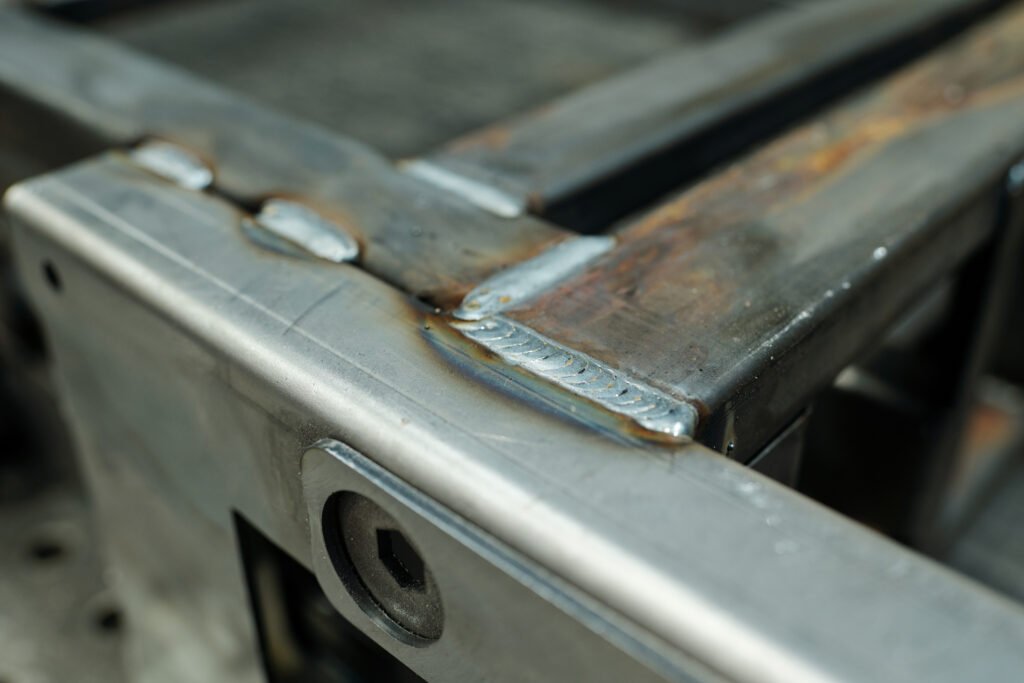
Close-up of metallic welded parts of industrial machine or workbench which is workplace of welder or engineer of manufactory
ESAB’s technical guidelines therefore emphasise that good welding does not begin when the arc is struck – it begins with proper preparation.
- Porosity: Small holes that can mean big problems
One of the easiest welding defects to identify is porosity. It occurs when gas bubbles become trapped in the molten weld metal before it solidifies, leaving small holes or cavities in the weld.
The first place to investigate is often not the welding machine, but the material itself.
Rust, oil, grease, paint, dirt and moisture can all contaminate the weld pool. Moisture in electrodes or filler materials can also cause problems.
In processes that use shielding gas, the gas flow and supply must also be checked. Insufficient shielding gas can allow atmospheric air to reach the weld pool, but increasing the gas flow is not necessarily the solution. Excessive gas flow can create turbulence that draws air into the protected area.
Wind and draughts are another factor that can easily be overlooked when welding outdoors or in an open workshop. They can simply blow the shielding gas away from the weld pool.
What can you do? Thoroughly clean the material, use dry and correctly stored consumables, check the gas supply and ensure that the gas nozzle is clean and free from obstructions.
- Excessive spatter: When the sparks have too much to say
A certain amount of spatter is normal with some welding processes, but when small metal particles are scattered all around the weld, it is worth investigating.
Excessive spatter can be associated with several factors, including incorrect current or voltage settings, improper arc length, polarity, shielding gas and inconsistent wire feeding.
In MIG welding, the problem may originate further back in the system. A worn contact tip, incorrect wire-feed roller tension, a damaged or dirty wire liner, or a kinked welding cable can all cause inconsistent wire feeding.
Before assuming that your welding technique is the problem, examine the entire system.
- Slag inclusion: What gets left behind can weaken your weld
When working with welding processes that produce a hard, glassy or crust-like material known as slag, it is essential to remove it properly between welding passes.
Slag inclusion occurs when some of this material becomes trapped inside the weld. This can happen when the surface is not thoroughly cleaned between passes, although incorrect welding techniques and parameters can also contribute.
Insufficient current, an incorrect electrode angle or unsuitable travel speed can prevent the slag from moving out of the weld pool properly.
The simple lesson is one that experienced welders already know well: do not rush between passes. Clean the welding area thoroughly before depositing the next layer.
- Lack of fusion: A good-looking weld is not always a strong one
This is one of the reasons why a weld should never be judged on appearance alone.
Lack of fusion occurs when the weld metal does not properly fuse with the base metal or a previous weld pass. The surface may appear acceptable, while the joint beneath it is inadequately fused.
Possible causes include insufficient heat input, excessive travel speed, an incorrect electrode or torch angle, and surface contamination.
The solution once again begins with the fundamentals: clean material, suitable welding parameters and a technique that provides enough time and heat for proper fusion.
- Incomplete penetration: When the weld does not go deep enough
Fusion and penetration are easily confused, but they do not describe exactly the same problem.
Incomplete penetration means that the weld does not extend deeply enough into the joint, particularly at the weld root. This can create a joint that appears strong from the outside but is not properly joined to the required depth.
Insufficient amperage, excessive travel speed and inadequate joint preparation can all contribute to the problem. The design and preparation of the joint, including the root gap and joint geometry, also play an important role.
Thicker materials therefore often require more preparation than simply placing two pieces of metal together and starting to weld.
- Undercut: A small groove in the wrong place
Undercut is visible as a groove that forms in the base metal along the edge of the weld and is not properly filled with weld metal.
The problem is that material is removed from a particularly critical area. This groove can create a stress concentration and compromise the integrity of the joint.
According to ESAB’s technical guidelines, factors such as excessive current, excessive travel speed and incorrect welding technique can contribute to undercut.
It is a good example of why more heat or faster welding does not necessarily produce a better weld. The parameters must suit the material, joint and welding process.
- Cracks: A defect that should never be ignored
Of all the visible warning signs in a weld, a crack requires immediate attention.
Cracks can develop during the welding process or only become visible later. Their causes vary and may be related to stress within the joint, material selection, rapid cooling, hydrogen, contamination, joint design and welding parameters.
Simply welding over a crack and hoping the problem has been resolved is therefore not enough. The underlying cause must first be identified and corrected before a proper repair is carried out.
Where a joint is safety-critical, the appropriate welding procedures, inspection requirements and qualified personnel should be used.
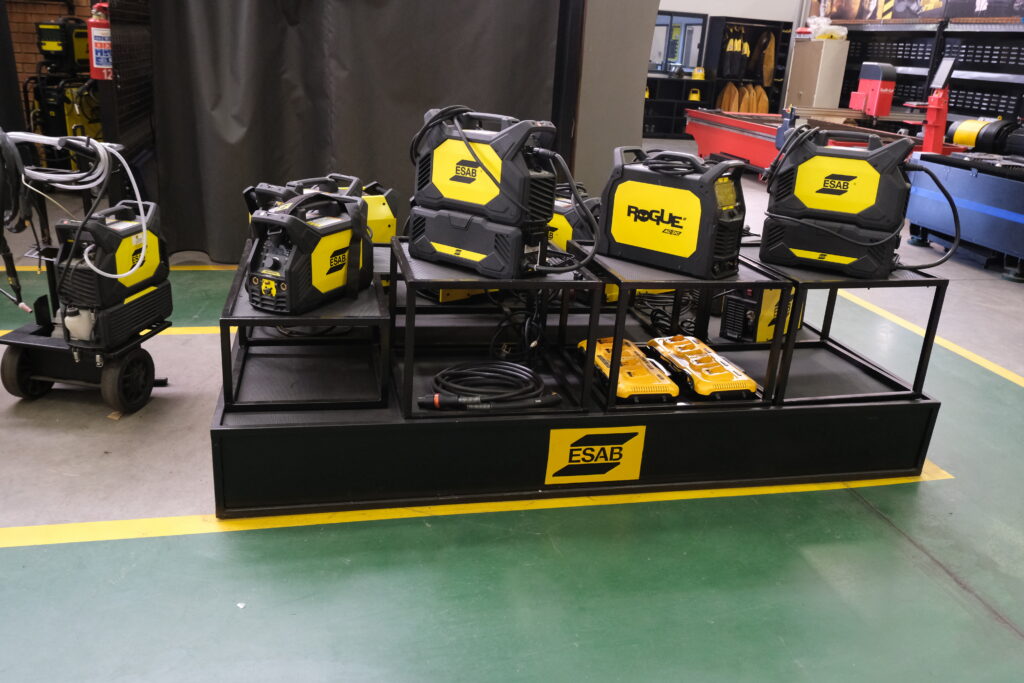
ESAB’s range of portable welding equipment is designed to deliver reliable welding performance, whether in the workshop or when carrying out repairs in the field.
Before you blame the welding machine …
When a weld goes wrong, it is easy to immediately start changing the machine settings. However, the real problem may lie somewhere else entirely.
ESAB recommends testing welding parameters on scrap material of the same type and thickness before starting work on the final workpiece.
Use this opportunity to inspect the entire welding system.
Is the polarity correct? Is the electrode dry and suitable for the application? Is the material clean? Is there sufficient shielding gas, and is it protected from wind? Is the gas nozzle clean? Is the contact tip or wire liner worn? Is the wire feeding consistently? Is the earth connection secure?
Even something as simple as a poor earth connection can cause an unstable arc and poor welding results.
This is precisely why welding troubleshooting involves more than the welder’s manual skills. The process must be considered as a whole.
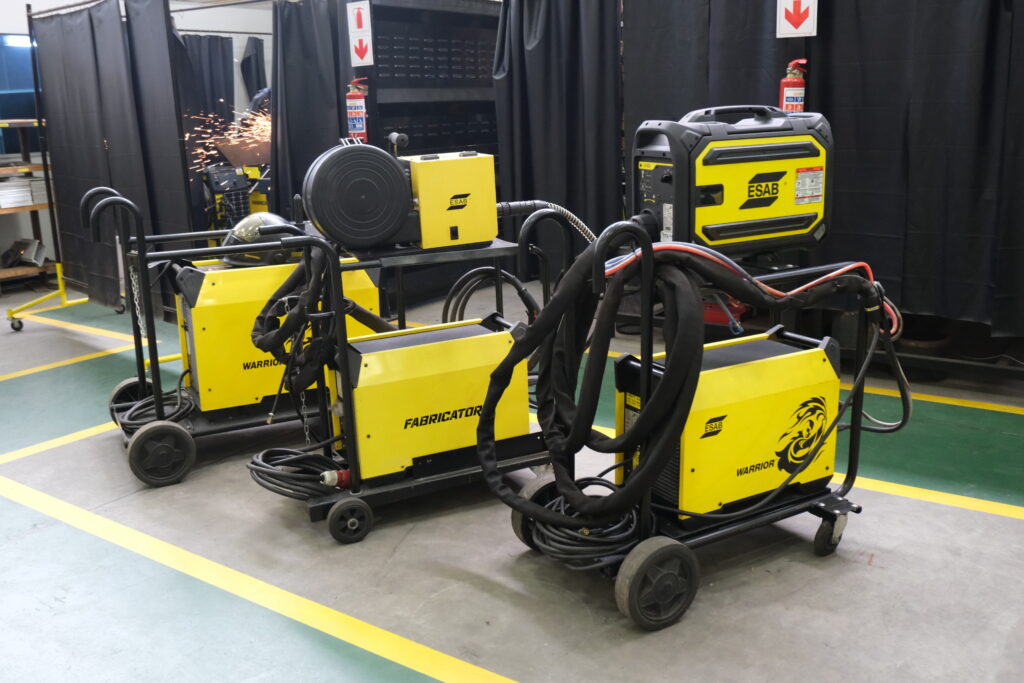
ESAB’s Warrior and Fabricator welding equipment is built for demanding working environments, providing powerful, reliable solutions for professional welding applications across manufacturing, agriculture and heavy industry.
A good weld begins before the first spark
The difference between a weld that merely gets the job done and one you can truly rely on often comes down to preparation:
- Clean the surface thoroughly.
- Choose the correct welding consumables.
- Set up the equipment according to the material and application.
- Check the shielding gas, wire feed and earth connection.
- Make a test weld and see what the weld is telling you.
After all, an experienced welder knows that a problem cannot always be solved with more current, more filler material or another welding pass. Sometimes, the best approach is to go back to the beginning and determine why the problem occurred in the first place.
With the right equipment, consumables and technical expertise, ESAB helps welders take control of every stage of the process – from preparation to the final weld.
For more technical guidelines, welding solutions, equipment and consumables, visit ESAB’s website and ESAB University.