


You need to take care of your investments and a solar system is definitely an investment. Just as tractors and other equipment need to be serviced regularly, you also need to take care of your solar system. After all, it is the light in your life.
Micasa Energy Solutions specialises in smart solutions for all your energy needs. They work with their customers to determine, implement and maintain the right energy solution for you.
But how do you maintain your solar system? Jorica van Heerden, owner of Dynamex Solutions, Reinhardt van Schoor, Micasa Energy Solutions’ Sales and Marketing Manager for South Africa, and Barend Petzer, Micasa Energy Solutions’ Business Development Manager in Africa, share ten things you need to know:
Do I need to wash my panels?
It is recommended to scrub your panels thoroughly two to four times a year. This may need to happen more frequently due to:
- The immediate environment around your solar panels. Do you live on a dusty farm or in the city? Are you near busy roads? Are there trees and bird nests near your panels?
- The slope on which the panels are installed. Flat panels need to be washed more frequently.
- Although rain does not wash panels clean, it does wash away some of the dust deposits if your panel is not installed flat. Installations in summer rainfall regions require fewer washings in the summer than in the winter.
- Where commercial and industrial businesses or farms rely heavily on solar power, it may be necessary to wash the panels more frequently for efficient energy generation.
- Dirty solar panels do not reduce the efficiency of the solar panels, but they have a major impact on the durability of your panels. Mineral deposits can form on the panel and cause damage.
How do you wash your solar panels?
Solar panels can be washed with a soft brush and purified water, also known as RO/DI water. RO/DI is a filtration process that removes all particles and minerals from water.
A water softener can also be used, but this would be a second option.
Additional products can be used to remove cement deposits or paint from panels.
It is important to ensure that the product has been tested and approved by the panel manufacturers, such as Chemitek’s range.

Check the environment around your solar panels
The environment around your solar panels also plays a role. Shadows can definitely affect your panel’s efficiency.
“It is important to make sure that panels stay out of the shade as much as possible during the day to get maximum efficiency,” says Reinhardt.
How often should you check your system?
Your solar system installation should come with good support and the after-sales packages usually determine how often your system is checked.
However, you can look out for smaller things yourself and prevent problems:
- Do your app and inverter show that power is being generated?
- Are the cables to the battery or inverter getting unnecessarily hot?
- Do a solar panel string test at least once a year.
- You can tighten your AC/DC circuit breaker screws twice a year.
- Regularly inspect the condition of your solar panels, looking for cracks, discoloration, et cetera.
- Do a temperature inspection for any hot spots.
- Check for bird nests under your solar panels. Bird nests consist of dry branches, leaves, and feathers that can get hot and pose a major fire risk.
Keep your solar system cool
In a room that can get hot in the summer, an HVAC system can be installed to control the temperature.
Some manufacturers’ warranties also depend on the temperature in which your system operates.
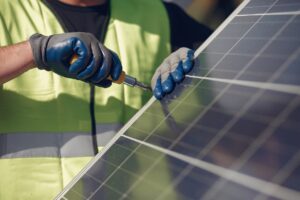

Things to keep in mind before installation
The installation must comply with SANS regulations.
What is a red flag for your system?
- When your system shows no activity (no generation).
- When the battery goes flat quickly without you using much power.
- In the case of more than one battery, if one battery goes flat faster than the other.
- No protection near your inverter and battery to disconnect power.
Where is the weakest place to have your solar panels installed?
The slope and direction of your solar panels are very important for efficiency and do not have them facing south.
What to look for on your inverter
The maintenance of your inverter depends on the manufacturer, but most inverters are guaranteed for five years and this can be extended to ten years.
Also listen to whether your fans are making any noise. This could mean that the system can no longer carry the load.
For the best service and top-quality energy systems, you can visit Micasa Energy Solutions’ website at www.micasa.co.za.


