

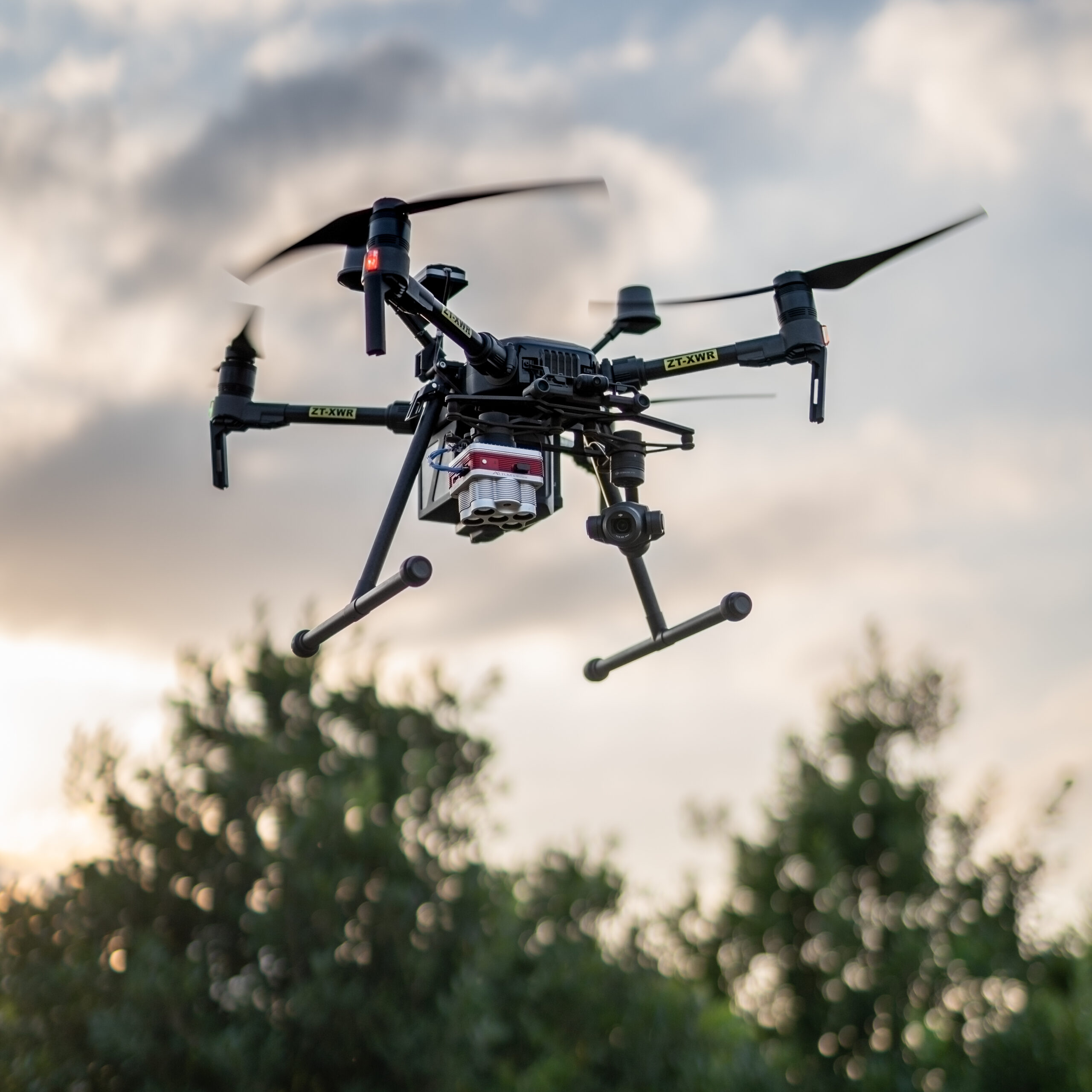
“Drones interest me because they give the farmer a new, advanced layer of visibility. A drone does not replace the farmer, the agronomist, the consultant or the person walking the orchard. But it does help them to see the farm differently,” says Ken Treloar, a worldwide expert in the intersection of plant science, farm management and technology.
Ken holds an MBA in Business Administration and a BTech degree in Landscape Technology and Horticulture. This strong background eventually led him into the *AgTech space, and more specifically into drone-based orchard monitoring.
He is currently with HolmStone (part of the RusselStone Group), where his work has advanced into the broader space of renewable energy, infrastructure and long-term resilience for agricultural and industrial businesses.
“Farmers need better data, better energy systems, better water use, better logistics and better decision-making. All of these things form part of building stronger farming businesses through agricultural technology innovation,” Ken says.
Drone technology in macadamia orchards
“Macadamias are a very good fit for drone technology. Not because drones are trending. Not because the spraying, surveying or maps look impressive. And definitely not because every farmer needs yet another dashboard report.
“Drone mapping and macadamias make for a near-perfect and practical pairing. Trees are long-term, high-value assets that require expert management. In short: every tree matters.”
A weak tree, a missing tree, poor drainage, a blocked irrigation line, uneven canopy development, recurring pest pressure or persistent chlorosis can all carry a cost for several subsequent seasons, Ken says. “Small differences in tree performance become large differences in nut-in-shell outcomes. All things being equal, sound kernel recovery and kernel quality are the big ones.”
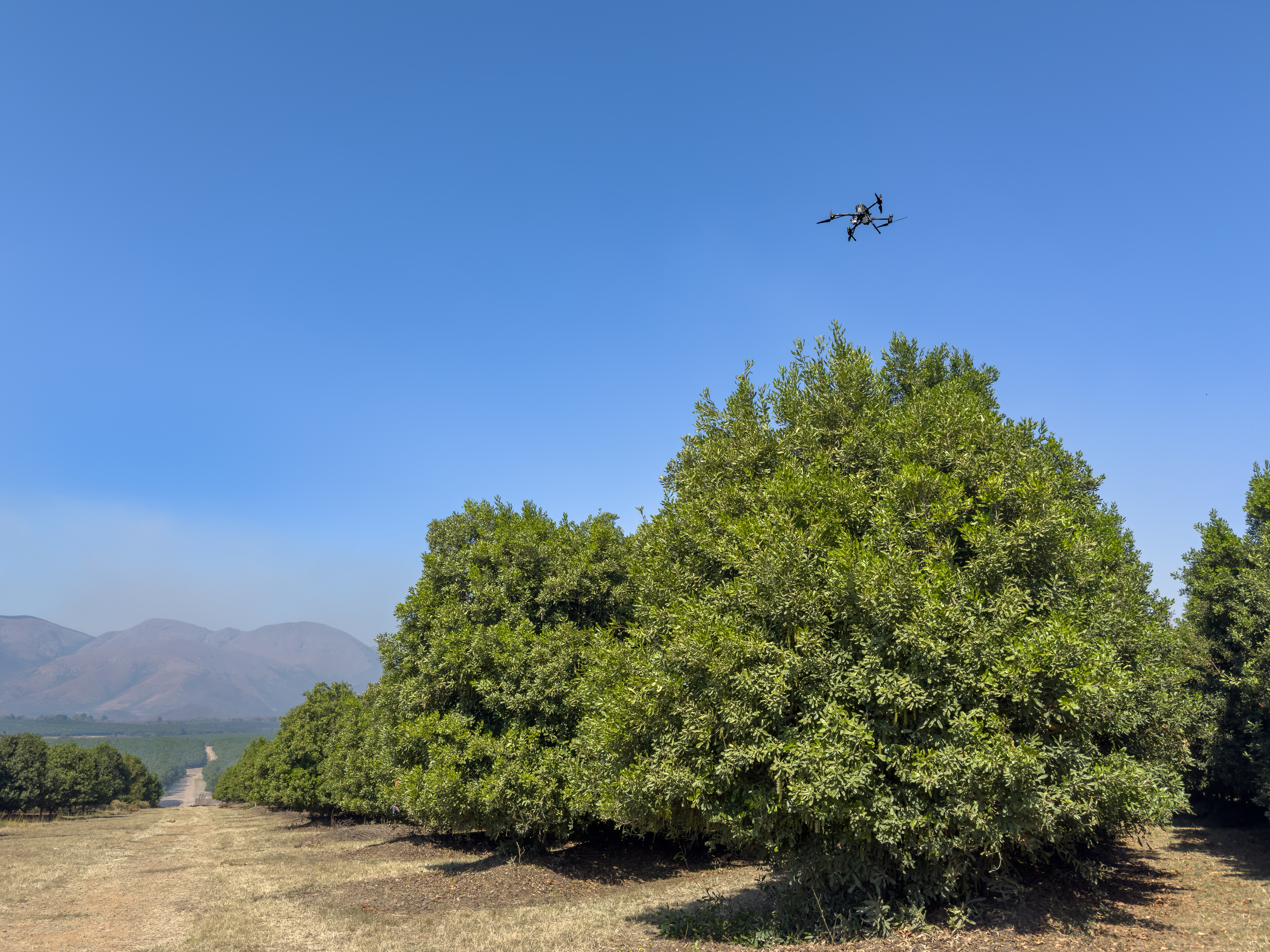
A drone flying over macadamia orchards (Source: Justin Hawley)
Drone mapping
Ken says that all the time and resources spent on reactive corrections will end up eroding margins. And this is where drones start to make practical sense. They provide a new layer of visibility (mapping) and enhanced ways to spray, bait or seed cover crops.
“We see trends and patterns. We see variation red flags and outliers. We see where orchards are uniform, where they are not and where there’s sub-par performance.”
‘A pretty map is not enough’
Let’s not lose focus, though, says Ken. “The point is not the drone. It’s the decisions that follow. A pretty map is not enough. One mistake farmers can make with drone data is stopping at the map.”
According to him, a colourful normalized difference vegetation index (NDVI), normalized difference red edge index (NDRE) and a red, green and blue (RGB) or thermal layer map may look useful, but the real question is always: what
now? He says the same goes for spray applications and asks why not utilise spot spraying or variable rate applications (VRAs) where it makes sense?
“Which block needs attention? Which trees are outliers? Which zone to scout first? Where should we go for leaf and soil samples? Which irrigation lines need checking? Where should we compare yield, cultivar performance, soil type, pest pressures or pruning?” says Ken.
Utilising objective source data comparatively leads to educated decisions and tailored next-steps, he says. It’s a valuable approach, and where drone data becomes a return on investment (ROI) engine for production teams.
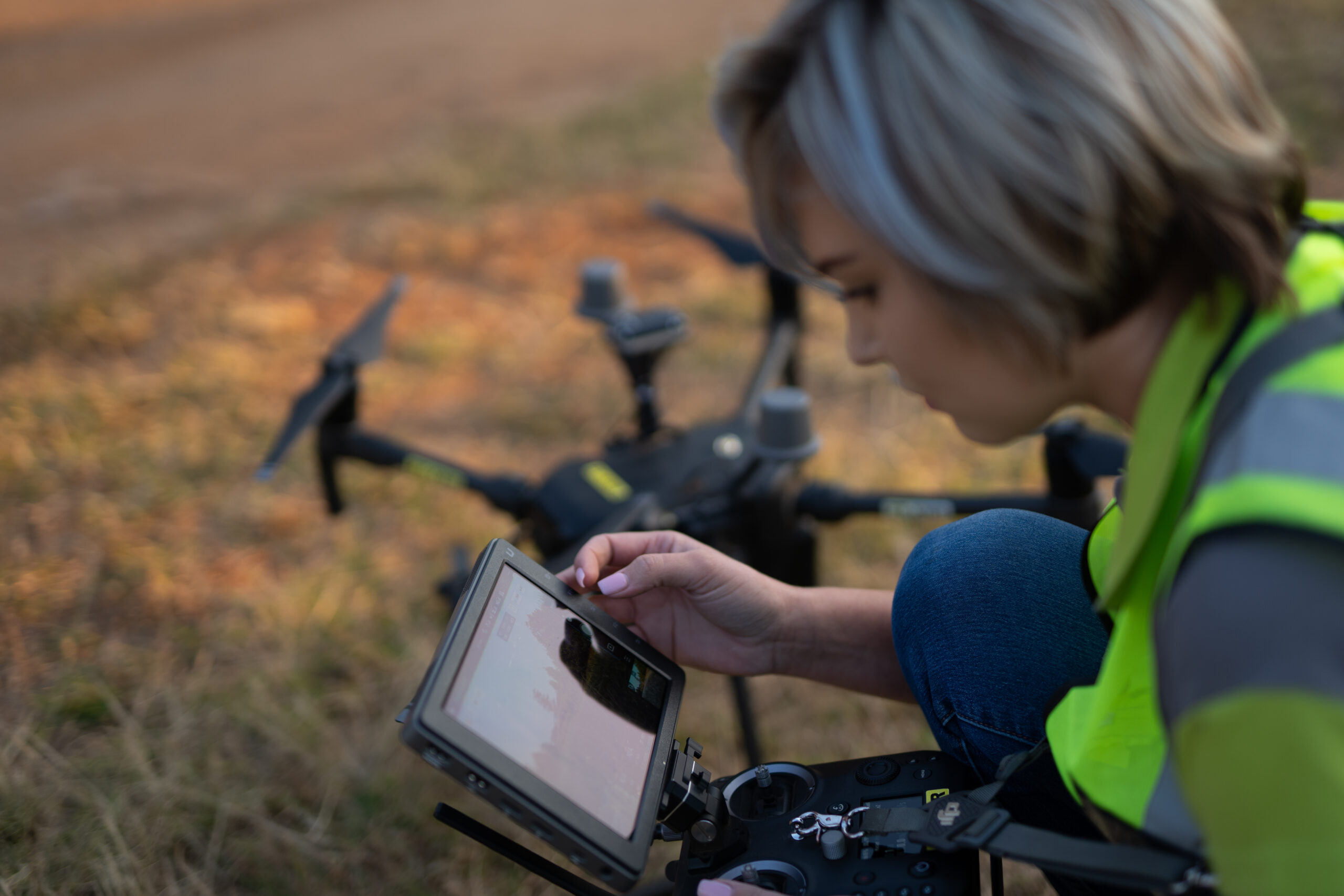
Drone survey for data metrics. (Source: Monique Heydenrych)
What drones can show farmers in macadamia orchards
1. Tree inventory
A drone survey can help identify how many trees are present, where trees are missing and where gaps exist, says Ken. “This is not just a neat counting exercise. Missing trees represent missing productive capacity. In young orchards, this helps with replanting plans, survival-rate checks and nursery orders. In bearing orchards, it helps quantify what the block can realistically carry.”
2. Canopy size and canopy variation
“Canopy tells a story. Uneven canopy development can point to soil variation, drainage problems and phytophthora prevalence as well as irrigation pressure differences, nutritional imbalances, pest pressure hotspots, wind exposure and frost pockets. They can all display in some way through the canopy status metrics, especially when paired with other drone data metrics available. All historic management issues or cultivar-specific growth patterns can also be tracked with drone scans over time.”
According to Ken, a drone does not give the final diagnosis. But it does show where the diagnosis should start.
This is especially relevant in integrated orchard management. “A productive macadamia orchard is not only about yield in one season. It is about keeping the block in a productive stage for as long as possible. It is a sustainability game.
“Once canopies become too dense, inter-row light declines and roots become exposed, spray penetration suffers and production can begin to decline. Drone-derived canopy metrics help farmers and managers see orchard statuses (or changes) early and objectively.”
3. Plant health and vigour monitoring.
Multispectral data, including indices like NDRE and NDVI, highlight differences in canopy condition. These indices should be interpreted carefully. A low value does not automatically mean a specific disease, deficiency or irrigation fault.
But it does highlight trees or zones that behave differently from the rest of the block, says Ken.
“Outliers. Red flags. The areas of concern or focus. Outlier detection, in essence, allows us to move from broad observation to targeted inspection.”
4. Irrigation and water-stress insight
Thermal data can help show where transpiration patterns differ across an orchard. In practice, patterns often point to water stress, over-irrigation, blocked emitters or pressure variation.
Drainage issues, shallow soils or root-zone problems (among others) are also possibilities. Macadamias rely on a healthy, active root zone in a big way. Feeder roots, soil moisture, soil structure, pH, organic matter, drainage and ground cover. These factors influence whether a tree can take up water and nutrients effectively and efficiently.
“Drone data shows the above-ground pattern. Soil probes, irrigation records, soil maps and field inspections help explain the below-ground reasons. This is why drone data should not be viewed in isolation.”
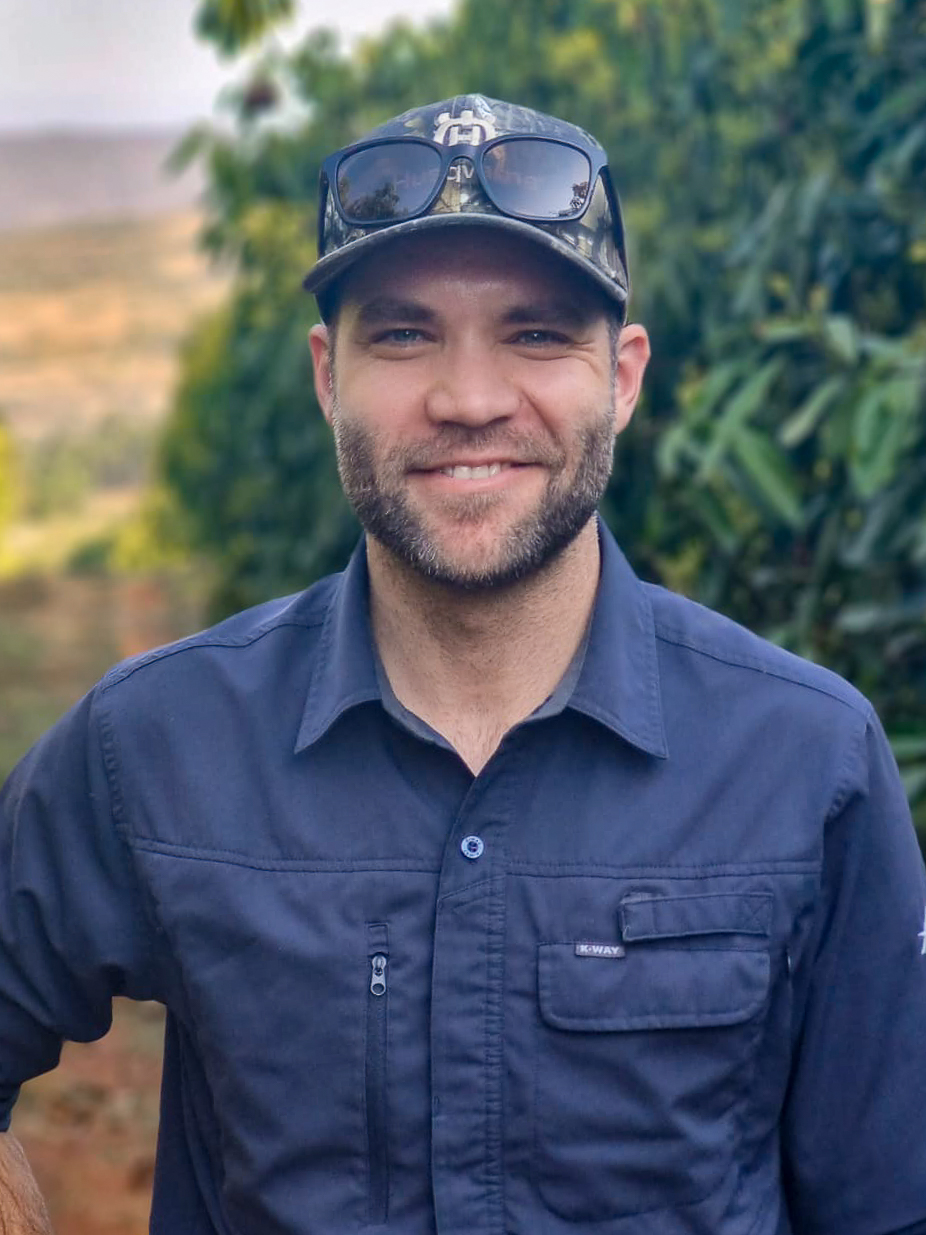
Ken Treloar
Phenology matters
Timing is everything in macadamias. Drone surveys during flowering, nut set, nut drop, shell hardening, oil accumulation or harvest time may all tell a different story, says Ken.
“The same block can look vastly different depending on cultivar, season, crop load, recent rainfall, heat stress, pruning, irrigation scheduling and stage of growth. That is why farmers and managers should not only ask, ‘What does this map show?’ They should ask, ‘What does this map show at this point in the season?’ Timing is important.
For example, a weak zone during flowering may affect nut set, he says. “A stress pattern during shell hardening or oil accumulation may raise different questions about water, nutrition and crop load.
A canopy map before pruning may support contractor negotiations, or row access decisions, groundcover management, access routes and spray penetration discussions. “The value improves when drone data is placed inside the macadamia calendar in a strategic way.”
Better scouting, sampling and pest focus
Macadamia orchards are rarely uniform. Some trees are stronger. Some are weaker. Some rows sit on slightly different soil. Some areas carry more water. Some dry out faster. Some zones are more exposed to wind. Some blocks have cultivar differences that affect flowering, nut set, nut drop and harvest timing, he says. If sampling ignores this variation, the results can be very misleading.
“Drone data can guide smart sampling by identifying representative areas, weak areas and strong areas. This is useful for leaf analysis, soil checks, pest scouting, nut counts, yield estimates and block comparisons. It also improves scouting.
“Instead of walking randomly or only inspecting the areas that already look poor from the road, a farmer can inspect outliers. These are the trees or zones that differ most from the rest of the orchard.”
This is useful where pests such as macadamia felted coccid, stink bugs, thrips or other orchard issues may be developing in pockets. Drones do not replace proper pest monitoring. They help focus attention, says Ken.
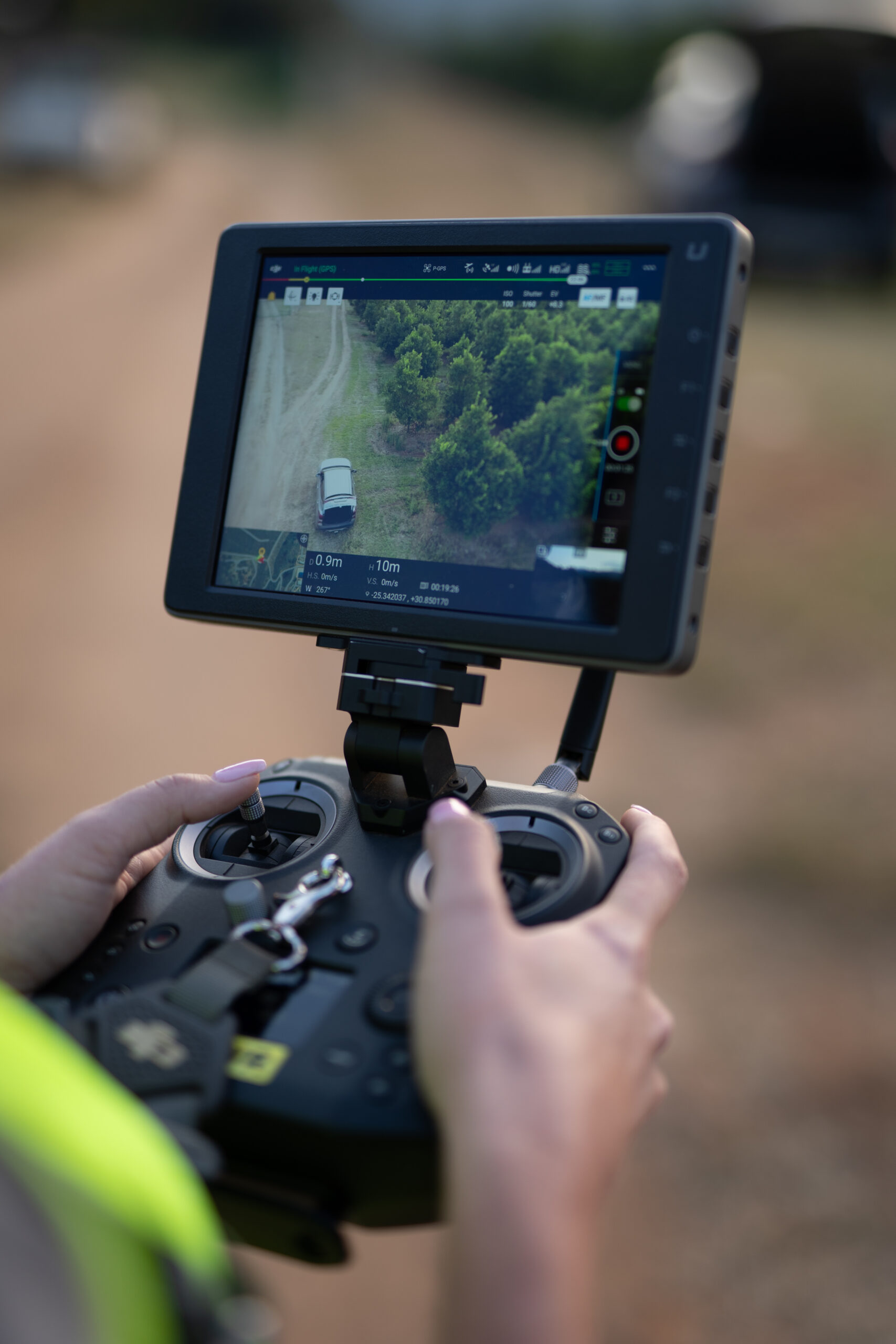
Drone survey for data metrics. (Source: Monique Heydenrych)
Yield, quality and records
According to Ken, macadamia farmers think in terms of NIS, dry-in-shell (DIS), saleable kernel recovery (SKR), quality, crack-out and long-term block performance, and this is where he believes drone data is still underused. “A block that looks good from the road is not always the block that performs best. A large canopy is not automatically a profitable canopy. A strong-looking tree may carry poorly. A smaller tree may be efficient. The real value comes when drone data is compared with yield records, cultivar, tree age, soil type, irrigation design, pruning history and processor feedback.”
He says one survey gives a snapshot, but several surveys over time show direction. Ken emphasises the importance of asking questions.
“Is the weak zone spreading? Are young trees catching up? Did the intervention work? Is the canopy closing too quickly? Is ground cover disappearing in shaded inter-rows? Is the same area underperforming every season? That is where the data becomes powerful.”
From monitoring to application
Drone data also becomes useful when it feeds into application decisions, Ken says. “In summary, a scan can identify weak zones, strong zones, stressed areas, canopy variation, missing trees or possible irrigation-related patterns. This information supports VRA either through ground-base equipment or through spray drones, where appropriate and legally compliant.
“In practice, spraying may include spot-spraying, targeted foliar applications, micro-element programmes, pest or disease interventions or specific orchard applications such as sunburn protection products.”
The right approach depends on the product label, crop need, canopy structure, timing, terrain, spray coverage requirement and operator capability, Ken says.
“I would not position spray drones as a blanket replacement for conventional sprayers or mist blowers. But I do see a clear role for them in precision application work. Especially true where access is difficult, soil conditions are challenging, terrain is uneven or the treatment area is specific.
“The same thinking can apply to seeding drones. In younger macadamia orchards with open inter-rows, drone seeding may have a role in establishing cover crops where access, timing or wet soil conditions make conventional equipment less practical. Cover crops and living ground cover support soil structure, reduce erosion, improve orchard-floor conditions and contribute to the biological functioning.
Technology must serve the farmer
“Can it help me identify weaker trees? Can it help me find irrigation problems earlier? Can it improve sampling? Can it help my team prioritise scouting? Can it support pruning decisions? Can it reduce waste? Can it protect yield,
quality or margin?” A farmer makes decisions today that may only show their full result years from now. That is especially true in tree crops such as macadamias, says Ken.
A poor decision around planting, irrigation, pruning, drainage, nutrition or pest control can echo for many seasons. A good decision can build value for decades. “That’s why I have so much respect for agriculture. It is not just production. It is stewardship. It is business. It is risk management. It is science. And it is also deeply human.”
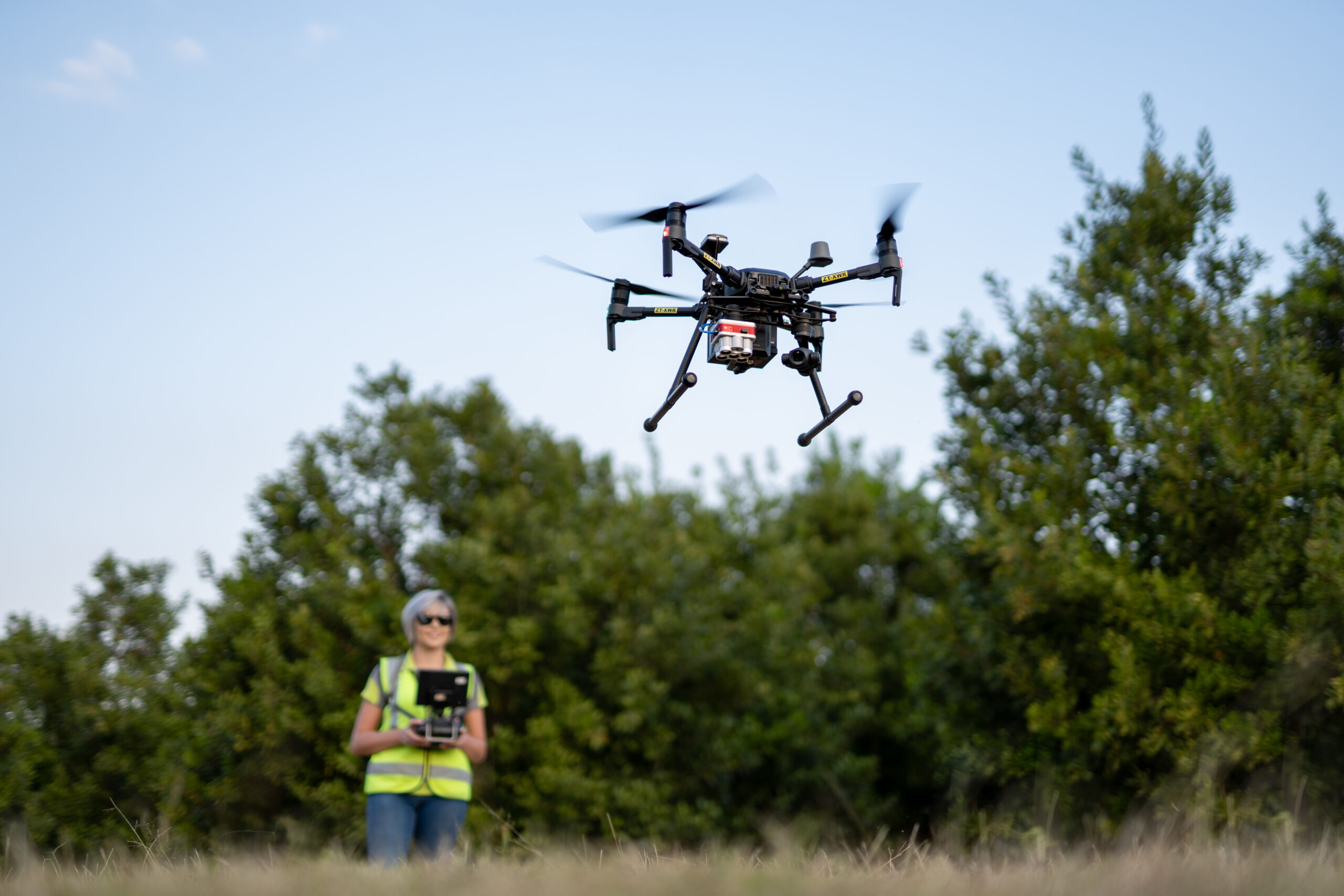
(Source: Monique Heydenrych)
Do not start with the drone. Start with the problem.
*AgTech, or agricultural technology, refers to the use of innovative tools, software and systems to successfully improve the efficiency, productivity and sustainability of agriculture.
Ken Treloar is a writer, consultant, speaker and strategist, focused on precision agriculture for perennial crops. He helps farmers and agribusiness teams to read drone data with clarity and act on insights with purpose. His work has appeared online, in various industry publications and at live presentations. He is also an AgTech consultant, focusing on drone data implementation, results, interpretation, sustain-able practices and agribusiness management.
Ken’s first book, Drone Data Metrics for Orchard Farming, focuses on helping farmers and industry professionals practically understand drone-derived data. He is currently working on his second book, focused on drone use for macadamia orchard management specifically. It is designed to be as accessible and practical as his previous book. Anyone who would like to enquire about advanced copies of the new book, or more information, is welcome to contact Ken at agtech@kentreloar.com (Source: iStock)
“Where are my weak trees?” is better than “I need a drone survey.” “What is causing variation in this block?” is more useful than “Can I get another map?”
“Good farming has always required observation. Drone technology, in essence, gives us another way to observe. A different perspective. And in macadamias, where every tree is a long-term investment, improved observations lead to better decisions.”
*AgTech, or agricultural technology, refers to the use of innovative tools, software and systems to successfully improve the efficiency, productivity and sustainability of agriculture.
Ken Treloar is a writer, consultant, speaker and strategist, focused on precision agriculture for perennial crops. He helps farmers and agribusiness teams to read drone data with clarity and act on insights with purpose. His work has appeared online, in various industry publications and at live presentations. He is also an AgTech consultant, focusing on drone data implementation, results, interpretation, sustain-able practices and agribusiness management.
Ken’s first book, Drone Data Metrics for Orchard Farming, focuses on helping farmers and industry professionals practically understand drone-derived data. He is currently working on his second book, focused on drone use for macadamia orchard management specifically. It is designed to be as accessible and practical as his previous book. Anyone who would like to enquire about advanced copies of the new book, or more information, is welcome to contact Ken at agtech@kentreloar.com


