When you need a professional and ecofriendly large-scale installation of HDPE products, you call Gundle Geosynthetics immediately.
Gundle Geosynthetics specialises in irrigation dams, leach pads, tailings dams, landfills, canal linings, aquaculture, cappings and even golf courses. With 21 years of experience, they have perfected the fine art of balancing cost-effectiveness with quality control, market-leading material and knowledge.
While they are well known for their HDPE Geoliners, Gundle Geosynthetics specialises in a variety of HDPE products, such as HDPE Geopipes and Guntex Geotextiles, among others.
HDPE Geopipes
HDPE Geopipes are used for leakage detection, drainage, and the conveyance of fluids, cables and solids. Gundle Geosynthetics provides various grades of these geopipes to suit your specific needs. These include Kableflex, used for underground buried cable conduits and accessories; Drainex, a flexible slotted drainage pipe with a smooth bore; and Wastex, which is used for drainage pipes in the collection of leachate in solid waste landfills and environmental containment systems.
What are HDPE Geopipes?
HDPE geopipes are heavy-duty plastic pipes specifically designed for subsoil drainage and fluid conveyance. They usually come in two main styles: perforated (slotted), which has tiny holes that let water into the pipe from the surrounding soil, and a solid wall, which is used to carry water away once it has been collected.
-
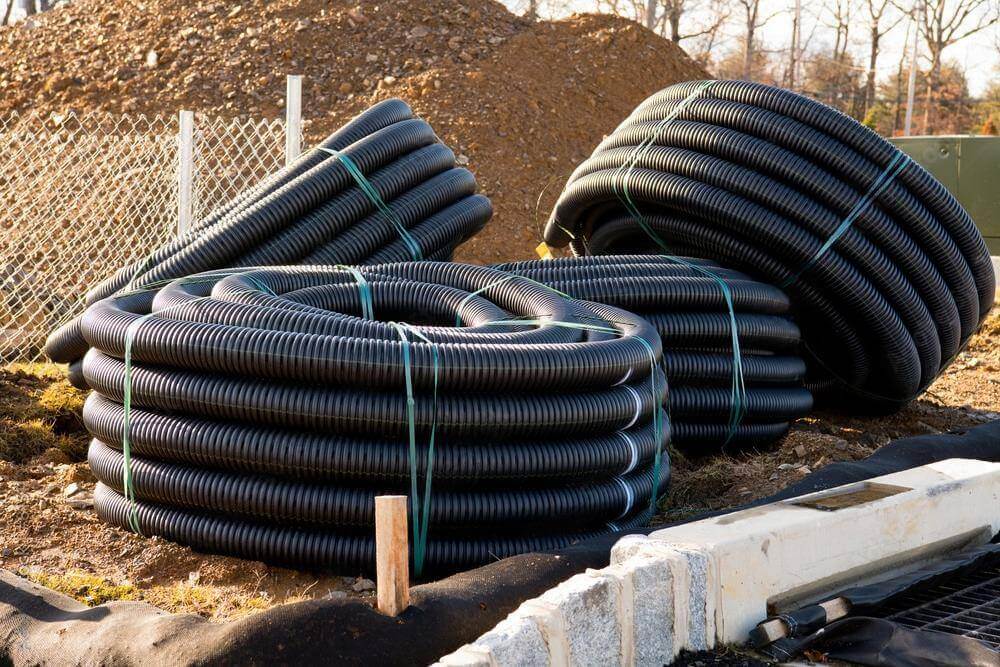
- HDPE Geopipes are bendable and don’t crack.
These pipes can be used:
- In the mining and landfill sectors, to collect leachate and prevent it from contaminating groundwater.
- In the agricultural sector to prevent waterlogging.
- In the civil sector to drain water away from road foundations and embankments to prevent soil erosion.
Engineers choose HDPE pipes over traditional cement or metal pipes because, unlike metal, they won’t rust, and unlike concrete, they don’t degrade when exposed to acidic or alkaline products.
Because they are bendable and shift with the ground, the pipes don’t crack when the earth shifts. The pipes have smooth inner walls, resulting in, little to no mineral buildup inside, and they enable water to keepmoving freely.
These pipes are UV-resistant and won’t become brittle in the sun, and they are much easier to work with than other heavy-duty materials. They are lightweight and don’t require massive machinery to install, and they can be joined via welding. This method creates a monolithic joint that is stronger than the pipe itself.
Overall, these pipes are better, stronger, easier to install, and will save you time and money in the long run.

HDPE Geopipes can be welded together to create a strong and lasting joint.
Guntex Geotextiles
Guntex Geotextiles are used for soil protection, filtering, separation, drainage, stabilisation and reinforcement requirements. These pipes start at a weight of 120 g and a length of 1 500 g/m². They are manufactured from recycled polyester non-woven needle-punched geotextiles, virgin polypropylene non-woven needle-punched geotextiles or woven polypropylene slit-film geotextiles.
While the geopipes are the veins that carry water, Guntex is the skin that protects it.
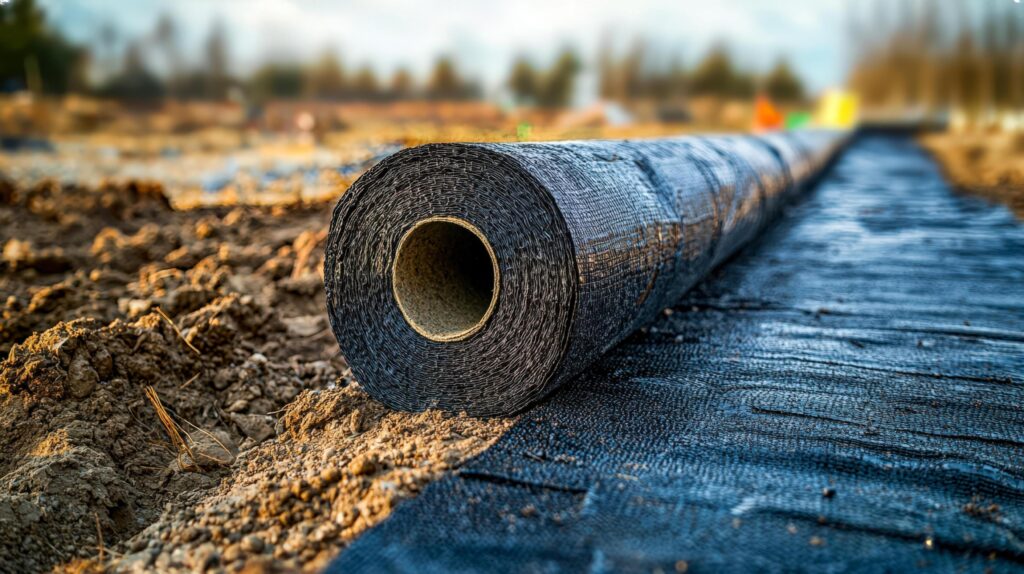
To prevent soil erosion,Guntex Geotextiles can be used.
What are Guntex Geotextiles?
Guntex is a range of high-performance filter fabrics that are availablein two varieties depending on the job. Non-woven (needle-punched) fabrics look like thick felt and are made from recycled polyester or virgin polypropylene fibres; they are designed for drainage and filtration. Woven slit-film fabrics have a heavy-duty plastic weave appearance and are built for massive strength and soil reinforcement.
These protective layers are used in subsoil drainage to wrap the HDPE geopipes, allowing water to enter while keeping soil out to prevent clogging. In road reinforcement, the material is placed under gravel roads or on mine haul roads to stop heavy stones from sinking into the ground.
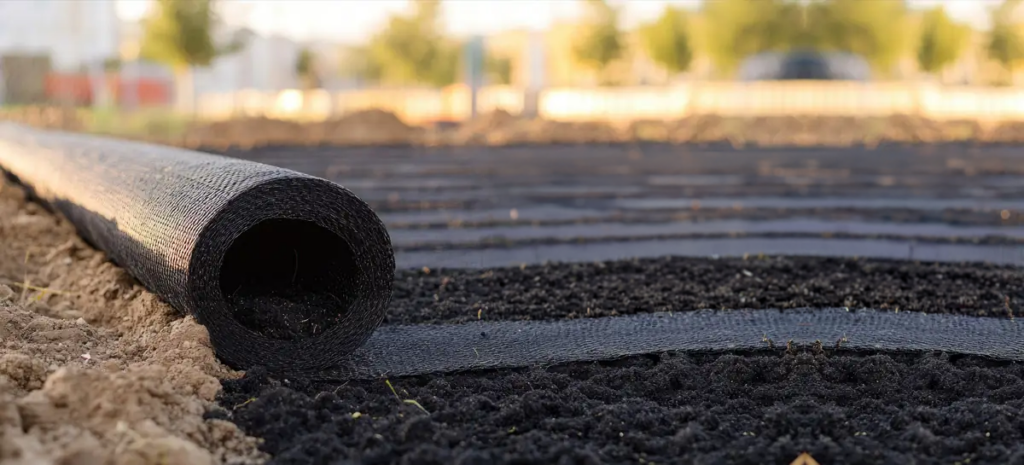
Guntex geotextiles can be used for separation to keep the structure of different soil layers intact.
This material is also very effective for preventing soil erosion, as lining riverbanks or slopes can keep the soil from washing away during storms. Additionally, when you want to prevent different layers of soil and stone from mixing and losing their structural integrity, Guntex geotextiles can be used to separate the layers.
Guntex is a durable, UV-stabilised, and cost-effective material that is available in different weights to suit the job. It’s easy to handle, can be cut to size, and doesn’t need to be welded or glued together. Simply overlapping the sheets will do the job perfectly.
Whatever HDPE project you are looking to complete, Gundle Geosynthetics can assist you. Visit their website at www.gundlegeo.co.za to learn more about their services and product offerings.