Pandamatenga is an agricultural district located in the northern part of Botswana, encompassing over 40 000 hectares of farmland. The area is enclosed by 150 km of game fencing, which helps minimise conflicts between humans and wildlife in the surrounding wilderness. From 1999 to 2025, Pandamatenga has grown into the region that produces most of the country’s grain. Today, it is known as Botswana’s breadbasket.
In the mid-1980s, the government of Botswana invited experienced farmers from neighbouring African countries to start grain production in the northern region, which was still pristine wilderness with rich black clay soil. A few years later, other farmers joined this initiative as the farming area expanded.
Sorghum, sugar beans, sunflower, maize, wheat, millet, soybeans, chickpeas, black-eyed beans, and mung beans are just some of the grains grown in Pandamatenga. Besides grains, a variety of vegetables and fruits are also produced in the region.
A few farmers in Pandamatenga share their experiences
Pandamatenga has had its own farmers’ association for over 26 years, where farmers – both young and old – represent the agricultural industry. These men and women are known as the ‘Pandamatenga farmers’ and are the guardians of Botswana’s ‘food basket’.
Kallie Viljoen is the chairperson of the Pandamatenga Farmers’ Association. He farms with both grains and vegetables using centre-pivot and drip irrigation systems, and also grows grain on dryland.
Dean Hatty farms with wheat and sorghum on dryland and under centre-pivot irrigation. Dean and his family moved to Botswana from Zimbabwe in the early 2000s, after their farm was expropriated as part of the country’s sudden land reform programme.
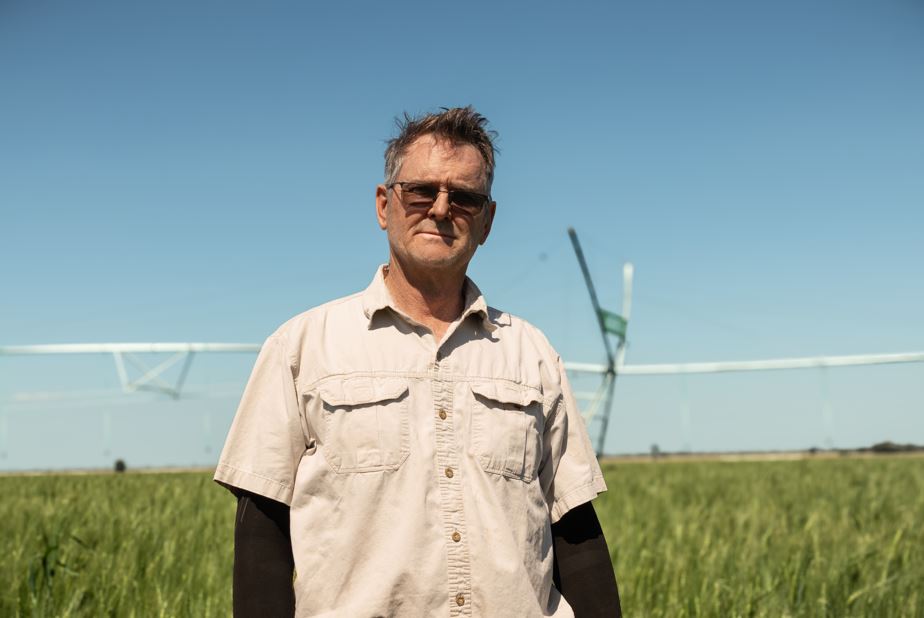
Dean Hatty stands in an exceptionally beautiful wheat field. The wheat crop looks promising despite the extreme cold they experienced during winter.
Fred van Vuuren (Jnr) farms with potatoes and offers valuable insights into the agricultural industry in Botswana. He believes one of the biggest differences between farming in Botswana and in South Africa is that farmers in Botswana market their products directly to consumers. Besides potatoes, the farm also grows several types of grain and uses borehole water at its disposal to irrigate the fields with centre-pivot systems.

Fred van Vuuren (Jnr.) and Theo van Staden (Agrico Nylstroom manager) in a cheerful mood in the potato packing shed on Fred’s farm. Panda Potatoes is a well-known name in Botswana’s stores, and here you can see where the potatoes are grown and packed.
Piet Strachan is a grain farmer who has been farming in the area since the early 1990s. Locally known as “Uncle Piet”, he talks about his experience at Pandamatenga in the early days. He mentions how wild the region was when they started farming there and how the development has expanded over the last decades.
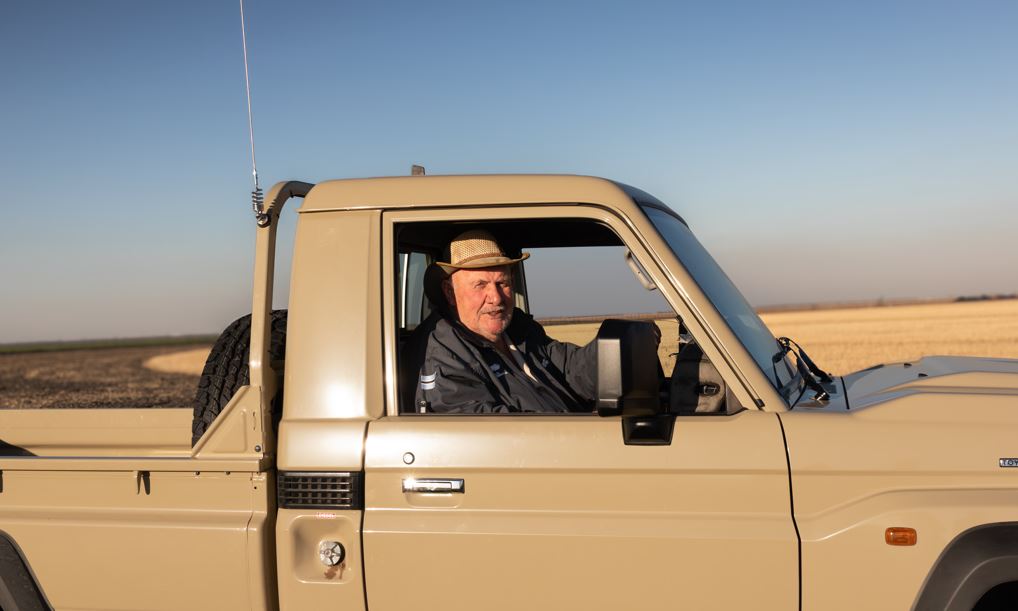
Uncle Piet chats about farming in Pandamatenga while driving between the centre-pivots on his farm.
Keep an eye on Agrico’s social media channels over the next few months to learn more about each of the farmers in the district.
Botswana’s unique challenges
Judging by the equipment left in the fields overnight without locks or security, safety and theft are not necessarily as big a challenge as they are in South Africa. There are, however, other challenges that strengthen the bond and sense of camaraderie among the farmers.
In a remote area such as Pandamatenga, the support and facilities of nearby towns are a challenge – and a burden that all the farmers in the region must contend with. Pandamatenga is located about 400 km from Francistown, 800 km from Gaborone, and 1 000 km from Pretoria. The quality of the farmers’ equipment is therefore of utmost importance, as they cannot simply drive to town to buy spare parts if something breaks down.
Furthermore, the area’s producers rely on alternative energy sources due to a shortage of electricity supply on their farms. Power is generated by solar panels, and diesel generators are used for equipment such as centre-pivots that require higher and more consistent kilowatt output.
For a company to succeed in this environment, the importance of quality products, user-friendliness, and excellent after-sales service cannot be underestimated for a company to succeed in this environment. That is why farmers can rely on Agrico.
“For the past 15 years, Agrico Nylstroom has been actively involved in the region, and the loyal support of the farmers in the area ensures our ability to deliver high-quality service and products,” says Theo van Staden, regional manager of Agrico in Limpopo.
The farmers of Pandamatenga prove that there are abundant opportunities even in challenging conditions, provided there is enough passion and determination. Solutions can often be found by applying creative thinking within a supportive community – and with the assistance of companies such as Agrico.
To learn more about the solutions Agrico offers, visit www.agrico.co.za or email info@agrico.co.za