GUIDELINES FOR RAM INTAKE & GROWTH TESTS
1. Purpose
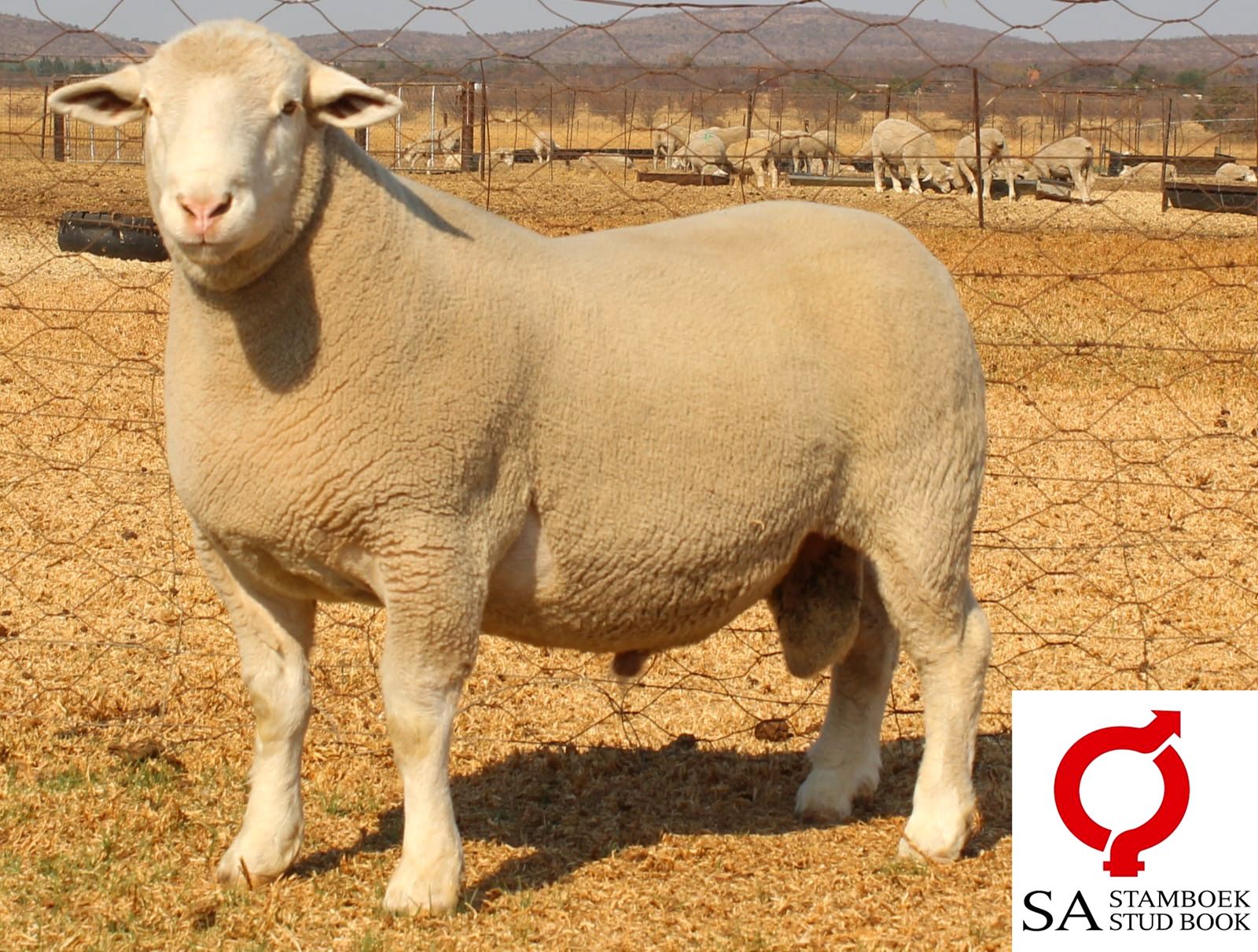
The purpose of Ram Intake & Growth tests is to evaluate genetic potential for growth and efficiency of rams scientifically and as accurately as possible in realistic commercial environments and South African production systems. Animals must preferably be evaluated in the environment its offspring are expected to perform in. Ram growth tests additionally serve as a controlled raising process of young rams.
2. Type of Evaluations
– Ram growth test with feed intake (Feed efficiency of individual animals)
– Farm ram growth test (extensive, semi- intensive)
– Single or multi- herd tests
– With electronic apparatus or in individual pens
3. Work Flow in a Ram Intake & Growth Test
Rams must have an adaptation period before the growth test begins. For the determination of feed efficiency during the growth test, individual intake is measured at an electronic test station, or each ram can be placed in a pen where its intake can be measured. More than one breeder’s animals can be evaluated simultaneously. The ages and weights of the rams must fall within certain limits to obtain meaningful results in evaluations. This allows a more objective evaluation for breeding value estimations and indices by complex scientific methodology, which allows breeders to select rams on genetic merit.
4. Participation
Members of Breeders’ Societies that make use of SA Stud Book’s services can enter rams in a Feed Intake & Growth Test.
5. Ram Requirements
– A complete list of all animals with birth notifications, correct identification, birth dates and relevant weights must be recorded on Logix. The birth- and raising status of the animals must also be indicated.
– Weaning weights must be submitted on Logix prior to the test. This can be in Logix electronic, farm software or paper format.
– Rams must be selected according to breed standards prior to the test by the breeder.
– Rams must be treated for internal and external parasites.
– Rams must preferably be immunized against pulpy kidney and Pasteurella before the test.
– Rams with abscesses, scabby mouth, enflamed claws, ringworm, foot rot or any otherobservable disease will not be accepted.
– Age at start of test: ± 2 – 5 months (60 – 150 days) (after wean)
– Age difference: Less than 2 months (60 days)
– Weight difference at start of test: Rams should differ less than 15 kg in single herd evaluations and less than 12 kg in a multi-herd evaluation.
– Group size: As large as possible, with a minimum of 10 rams and preferably progeny of more than one sire.
– Animals that are injured or become sick during the project must be removed from the group.
6. Test Procedures and Requirements
– Test procedures, feed and management must be planned thoroughly to ensure maximum growth and efficiency.
– Tests must be carried out in collaboration with a SA Stud Book Advisor for official performance data and breeding values to be released.
– With the help of SA Stud Book, rams must be divided into groups according to birth date and initial weight at the start of the test.
– The following method is used for the identification of animals:
Reg. stud / HDM + Year of birth + Sequence = ID
5573 + 26 + 0123 = 5573260123
SWV + 26 + 0123 = SWV 260123
– The ration must be a Ram Growth Ration and not a fattening or feedlot ration.
– Length of adaptation period: minimum of 14 days and maximum of 28 days. An adaptation period is important to allow animals to become familiar with the environment and procedures and to adapt the micro-organisms in the rumen to the feed. It also gives the animals time to recover from any stress they experienced.
– Test length: 28- 42 days
– Rams must be weighed on a regular basis (monthly or every two weeks dependent on the length of the test). Initial, final and at least 3 additional interim weights are needed for processing of results.
– Weight gain: the average of the group must be a minimum of 10 – 12kg for the test period to receive official recognition.
– Feed intake of each ram must be recorded accurately. The total feed intake must also be recorded.
– Scrotal circumference is measured at the end of the test.
– The SA Stud Book Advisor measures the Real Time Ultrasound (RTU) measurements (optional).
– The SA Stud Book Advisor will upload the data on Logix at the end of the test for processing.
7. Duties of SA Stud Book
– Ensure that the test is conducted in a scientifically sound way.
– Provide results after the test, such as indices, breeding values, catalogues, etc.
– The above service will only be rendered by SA Stud Book to breeders if complete registration and weaning information of the participating animals were correct and on Logix before the start of test, complete information of all participating rams for evaluation were received from the breeder or manager and services are not suspended.
8. Contact Details
Logix website:
www.logix.org.za
Electronic data:
Production measurement smallstock@studbook.co,za
Registration of births edata@studbook.co.za
SA Stud Book website:
www.studbook.co.za
SA Stud Book Tel:
051 4100 900 (Herman Labuschagne, Marietjie Delport, Wendy, Nicola of Andrea)
Genetic Analyses:
Dr Bernice Mostert bernice@studbook.co.za
9. SA Stud Book Technical Advisors
Nasionaal Herman Labuschagne herman@studbook.co.za 082 495 9764
NK OVS NW Gerdus De Klerk gerdus@studbook.co.za 072 691 3600
OVS Oos-Kaap Johan Venter johan@studbook.co.za 083 231 5164
GT Thalia Brameld thalia@studbook.co.za 071 493 1111
LP GT NW Andries Riekert andries@studbook.co.za 082 465 0671
MP GT Suretha Francis suretha@studbook.co.za 083 584 0814
MP KZN O OVS Kabelo Phaka kabelo@studbook.co.za 076 235 3304
Data Dynamics Siebert Vermeulen siebert@studbook.co.za 082 548 4608
Oos- Wes Kaap Erick Joosten erick@studbook.co.za 082 204 2379