President Cyril Ramaphosa made the long-awaited announcement during his 2026 State of the Nation Address: Foot-and-Mouth Disease (FMD) has officially been declared a national disaster.
“We have classified FMD as a national disaster and will mobilise all the necessary capacity within the state to manage this crisis,” Ramaphosa said.
The disease, which has now reached all nine provinces, after the Western and Northern Cape were also placed under quarantine measures this week, has placed immense pressure on farmers over the past year. Ramaphosa announced that the government aims to vaccinate 14 million cattle over the next 12 months. This means approximately 38 000 animals must be vaccinated per day, every day, for a full year.
What does this announcement mean for farmers?
When FMD is declared a national disaster, the government gains additional powers and resources to control the disease more rapidly and effectively. The situation shifts from a provincial challenge to a centralised, nationwide response.
Practical implications for farmers:
- The government can import and distribute vaccines without going through lengthy tender processes.
- All provinces will operate under a single strategy. Farmers are no longer expected to manage the crisis alone – support will come from the National Disaster Management Centre.
- Vehicles, equipment, disinfectants, and emergency funds can be released rapidly.
- The police, military, and traffic authorities may be deployed to enforce roadblocks, checkpoints, and inspections.
- Animal movement will require health declarations.
- Newly introduced animals must be isolated for 28 days.
- Non-compliance may result in fines or even imprisonment.
- A new system will electronically monitor animal movements and vaccinations.
- Farmers remain responsible for preventing the spread of the disease on their own farms.
Trade restrictions: Export bans and limited market access remain a major financial challenge.

Why is this important?
- Faster response: Testing, tracing, and vaccinations can be better coordinated.
- Emergency funding: Funds can be redirected to strengthen veterinary services and containment efforts.
- National cooperation: Heavily affected provinces, such as KwaZulu-Natal, will now receive additional support.
The disaster declaration empowers the government to act faster, more decisively, and in a more centralised manner against FMD. For farmers, this translates into stricter controls and documentation, large-scale vaccination campaigns, and the mobilisation of national resources and personnel. It also means greater responsibility, higher costs, and a temporary loss of market access.
While the plan appears sound on paper, implementation poses a formidable challenge. Vaccines must be available, personnel and infrastructure must be ready, and every step must proceed exactly as planned. Farmers know all too well that this is far easier said than done.
 Photo: Getty Images |
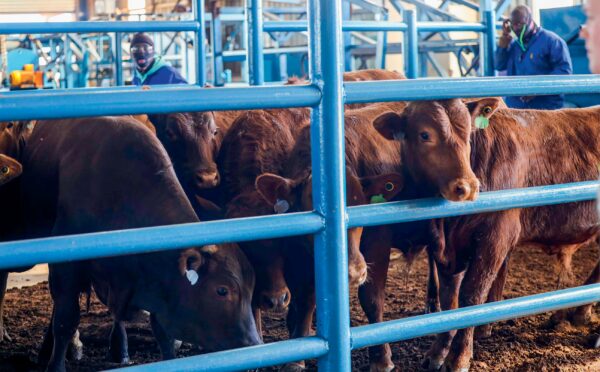 Photo: Gallo Images/OJ Koloti |
Reaction from the agricultural sector
Agricultural organisation AgriSA says it welcomes the disaster declaration, but stresses that rapid, well-coordinated action is now critical.
Johann Kotzé, Chief Executive Officer of AgriSA, says: “AgriSA’s expectation is that this step will create the enabling regulatory environment required for a better coordinated national response.”
Farmers in affected areas are already feeling the pressure: movement restrictions, delayed market access, higher biosecurity costs, and the inability to sell animals when necessary. This damage does not affect individual farms alone – it extends throughout the entire value chain, from feedlots and abattoirs to transport and retail. Small towns and rural communities that depend on livestock-related employment will be particularly hard hit if the outbreak is not brought under control swiftly.
The national task team appointed by the president will report monthly, but ultimately, the success of the response depends on what happens on the farms themselves.