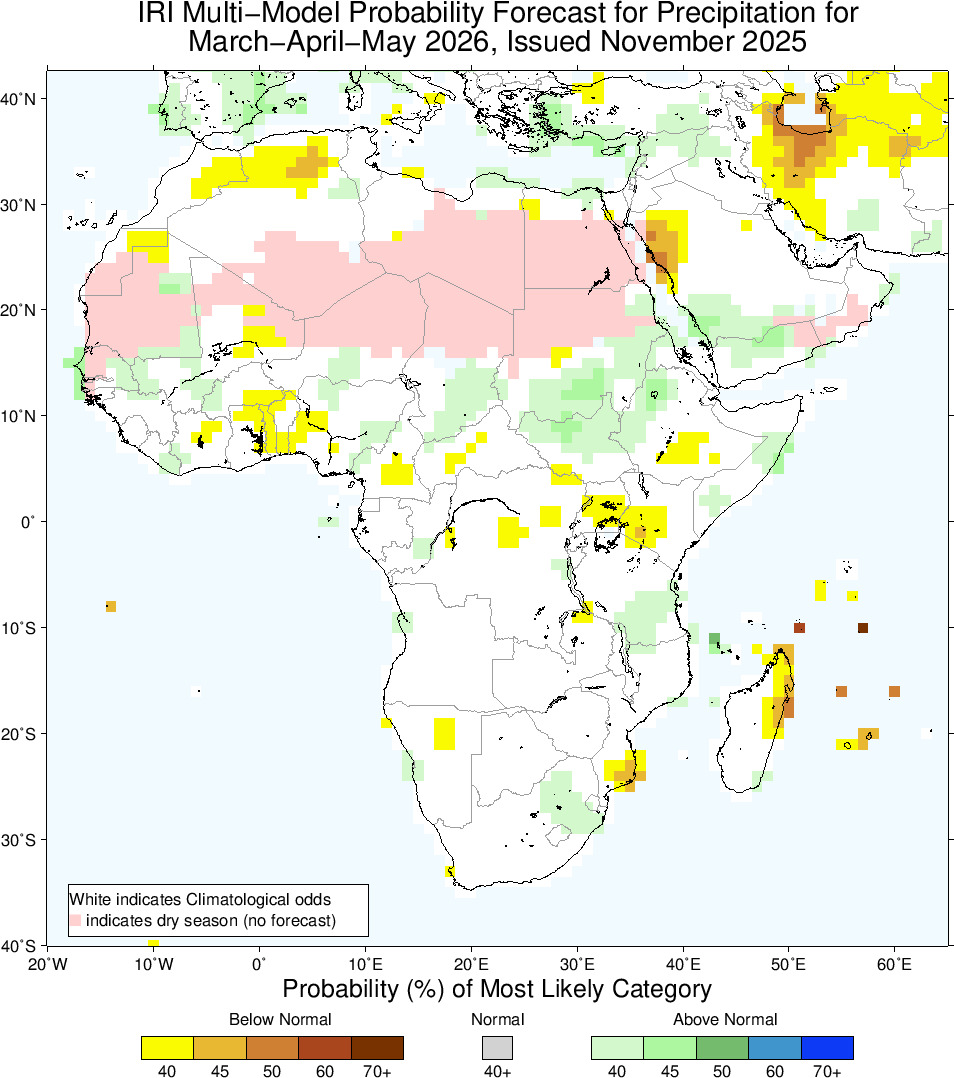
Although you cannot predict the weather 100%, ProagriMedia has tried to give African farmers a glimpse of what the predicted weather in
Africa will be in 2026. Weather predictions allow African farmers to plan their harvest.
Significant weather patterns affecting Africa
One of the main climate influences that will be affecting Africa is the El NiñoSouthern Oscillation (ENSO). This means the weather changes between El Niño and La Niña with neutral weather in between.
El Niño is often linked to dry conditions in southern Africa, while La Niña typically brings wetter, rainier weather. ENSO is neither El Niño nor La Niña which means the weather tends to be closer to average.
For the 2025 to 2026 season, forecasters have been seeing a La Niña weather pattern forming this will likely persist into early 2026. This may mean more rain in many parts of southern and central Africa during the summer cropping season. La Niña’s influence has already been noted by regional weather services and climate outlooks.
However, forecasts also suggest that neutral conditions later in the season, especially after January and February 2026. This means rainfall could reduce later in 2026 or settle into more normal patterns.
What weather models are predicting for 2025/’26
Rainfall expectations across seasons
The Southern Africa Regional Climate Outlook Forum (SARCOF-31), a collaboration of meteorological agencies, has released a detailed seasonal forecast that covers October 2025 to March 2026.
This forecast is as follows:
October to December 2025: Most of southern Africa is likely to see normal to above-normal rainfall. Only the western fringes of Namibia and some island states, such as the Comoros, may receive below-normal rain.
January to March 2026: Rain is still expected to be normal to above-normal in most places, but northern parts of the region (e.g. Angola, DRC, Tanzania) may see normal to below-normal rainfall. This means many farming areas, including maize belts in South Africa, Zimbabwe, Zambia and Mozambique, can expect helpful rain through most of the growing season.
Temperatures
Temperatures are forecast to be mostly above long-term averages across the region during this rainy season, except in some central areas where temperatures may be closer to average.
Warmer temperatures can increase evaporation, leading to water loss from soil and plants and potentially speeding up crop development. So, good rain will continue into the heart of the season.
What does this mean for farmers?
With La Niña’s influence and the regional outlook, early-season rains that lasted until December 2025 should have helped with soil moisture and planting. Good early rains are also vital for crops such as maize, sorghum and groundnuts.
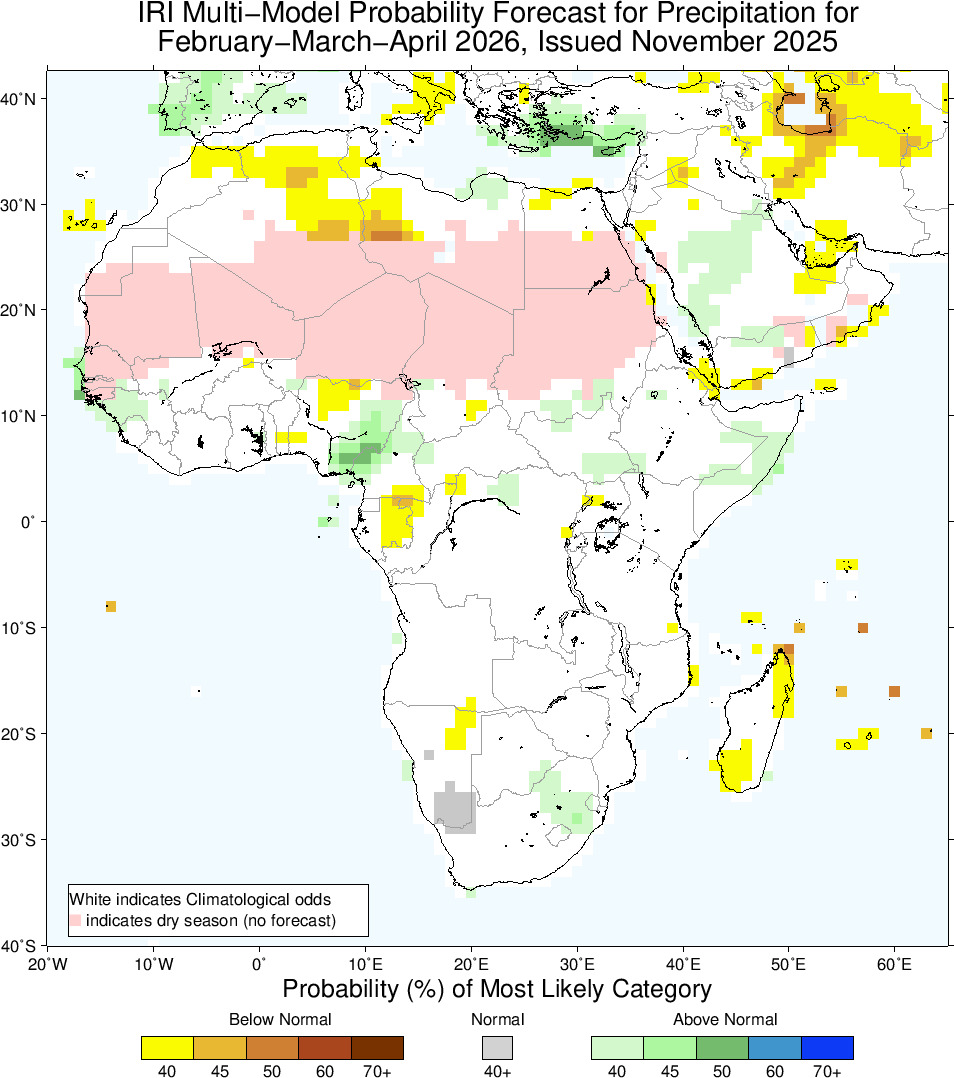
Mid-season, from January to March 2026, is also likely to see helpful rain across large parts of southern and central Africa, which supports crop growth and filling of grains.
Some areas, especially those farther north or on the western edges, might see less rain than hoped for, which means these farmers should be ready for possible dry spells.
Although rain can be an answered prayer, heavy rain is not always good.
Too much water can cause:
• Flooding in low-lying fields
• Soil erosion
• Crop damage
• Difficulty harvesting on time
As rain increases, so does the chance of flooding in areas such as river valleys and poorly draining soils. Many farmers should plan for drainage or field layout that avoids waterlogging.
The South-West Indian Ocean cyclone season that occurs between November 2025 and April 2026, overlaps with the rainy season.
Cyclones, which are strong tropical storms, can result in very heavy rain and destructive winds. These storms can affect parts of eastern and southeastern Africa, especially coastal regions as well as islands.
Farmers in coastal and near-coastal regions should be alert to cyclone warnings and know where to find updates locally.

Rainfall forecast for December 2025, January-February 2026
Zone 1: Bulk of DRC, Angola and western fringes of Namibia
Normal rainfall with increased chances of below-normal rainfall (Confidence)
Zone 2: Eastern half of Tanzania, southernmost DRC, Malawi, Zambia, most of Mozambique, southeastern Angola, Botswana, Zimbabwe, South Africa, Lesotho and Eswatini Normal rainfall with increased chances of above-normal rainfall (Confidence)
Zone 3: Eastern half of Tanzania and most of northeastern Mozambique. Normal rainfall with increased chances of below-normal rainfall (Confidence)
Zone 4: Comoros – Normal rainfall with increased chances of below-normal rainfall
Zone 5: Northern Madagascar – Normal rainfall with increased chances of below-normal rainfall
Zone 6: Central Madagascar – Normal rainfall with increased chances of below-normal rainfall (Confidence)
Zone 7: Southern Madagascar – Normal rainfall with increased chances of above-normal rainfall
Zone 8: Mauritius – Normal rainfall with increased chances of above-normal rainfall
Zone 9: Seychelles – Normal rainfall with increased chances of above-normal rainfall
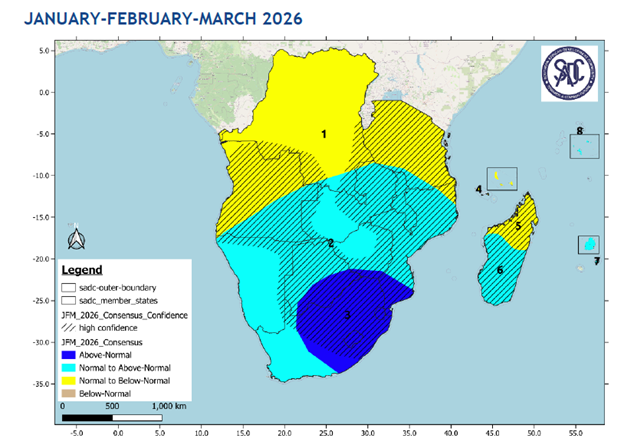
Rainfall forecast for January-February-March 2026
Zone 1: DRC, Angola, northern tip of Zambia and Tanzania
Normal rainfall with increased chances of below-normal rainfall (Confidence)
Zone 2: Southern DRC, southeastern Angola, most of Zambia, Malawi, most of Mozambique, most of Zimbabwe, most of Botswana, Namibia and western South Africa. Normal rainfall with increased chances of above-normal rainfall (Confidence)
Zone 3: Southeastern Botswana, extreme south of Zimbabwe, most of South Africa, Lesotho, Eswatini and southern Mozambique
Increased chances of above-normal rainfall
Zone 4: Comoros – Increased chances of below normal rainfall
Zone 5: Northern Madagascar – Normal rainfall with increased chances of below-normal rainfall
Zone 6: Bulk of Madagascar – Normal rainfall with increased chances of above-normal rainfall
Zone 7: Mauritius – Normal rainfall with increased chances of above-normal rainfall
Zone 8: Seychelles – Normal rainfall with increased chances of above-normal rainfall
Tips for farm planning in 2026
With the right planning and preparation, farmers can be prepared for heavy rain and dry seasons. Here are some tips to keep in mind.
Before or at start of season
• Check soil moisture before planting.
• Plan your planting dates around early rains.
• Use improved seeds that are suited to wetter conditions if available.
During growing season
• Prepare to manage water pooling in the case of heavy rains.
• Watch for pests and diseases that thrive during moist weather (e.g. fall armyworm).
• Monitor crop health often, especially after big rains.
Late season and harvest
• Keep an eye on forecasts for dry spells late in the season, especially if La Niña weakens.
• Harvest earlier if heavy rain is predicted.
• Protect harvested grain from moisture damage.
What to look out for and where to get updates
The weather can change fast, and local conditions may vary from larger regional forecasts. Here’s where farmers can find regular updates:
- National Meteorological Services (official weather forecasts and warnings).
- Local radio and SMS alerts from agricultural extension services.
- Farm groups and cooperatives that share weather info.
- Seasonal forecasts give you a broad roadmap, but daily and weekly weather predictions can help you make shorter-term decisions.
The 2025/’26 rainfall season looks cautiously hopeful for many African farming regions.
With La Niña expected to influence weather patterns, above-normal rains in many areas can boost crop growth and farm yields.
At the same time, farmers must be prepared for heavy rain, potential flooding, and storms – and be aware that rainfall may change later in the season as conditions shift.
Use forecasts to guide planning, but combine them with what you see on your own land.
Your experience and careful timing are as important as the weather outlook itself.
 |
 |
Sources:
www.apanews.net
www.agricultureportal.co.za
www.anticipation-hub.org