


The sound of a mosquito wakes you up. Again. Your damp sleepshirt clings to your sweat-soaked body as you lay listening to your baby’s coughing.
You are tired, as if you haven’t slept at all. Your three-year-old son’s delirious malaria dreams kept you up; you worried about your five-year-old daughter’s diarrhoea.
Soon you will have to get up and try to restart the fire, boil the last of the water in the bucket for porridge.
You will have to fetch more water from the borehole three kilometres away. On the way you will have to gather firewood. Then you will work in the vegetable garden, take care of the goats and cook an evening meal for your children.
You are not alone. Like millions of people in Africa, you live in a one-bedroomed house built with concrete blocks with one door, no windows.
Link between a healthy home and healthy children
In 2023, researchers from the African Population and Health Research Centre with an interest in urbanisation and population dynamics set out to study the link between housing and children’s health.
They did research in six African countries, including Burkina Faso, Cameroon, Ghana, Kenya, Nigeria and South Africa and found that diarrhoea, acute respiratory illness and fever had serious consequences for child health and wellbeing.
Diarrhoea and acute respiratory infections are the leading causes of disease and deaths in children younger than five, especially in developing countries like these. The study found that healthy housing usually decreased the chances of these children falling ill with diarrhoea, acute respiratory illness and fever.
Their definition of healthy housing took into consideration different aspects, including sanitation, drinking water sources and housing characteristics.
If homes provide protection against heat, cold, rain and wind, provide enough space for everybody, and used clean cooking fuels, children are healthier.
This group of researchers found that parents can improve the wellbeing of their children by doing things a bit differently. This includes
- Using clean energy for cooking to reduce indoor air pollution and consequently reduce the incidence of acute respiratory illnesses.
- Using clean drinking water, hand washing and improving sanitation can help reduce cases of diarrhoea.
Better homes for healthier children
More recent research done in Tanzania showed that a better designed home could further ensure healthier children.
Research has shown that malaria, diarrhoea and pneumonia in young children can be prevented. These diseases are transmitted in and around the home where young children spend most of their time with their mother or another adult taking care of them.
Diseases that kill young children
Three diseases are killing young children in Africa and their causes:
- Malaria – most cases of malaria (80%) occurs when people inside their homes are bitten by mosquitoes carrying malaria.
- Diarrhoea – a runny tummy is caused by food and water that has been contaminated by faeces (poo).
- Pneumonia – inflamed lungs are caused by too many people living in a room with little fresh air and where an open wood fire is used for cooking.
Where do these diseases come from?
The team first had to find out where the diseases come from or what caused them around the traditional homes.
Malaria: Mosquitoes found people mainly by smell. When far away, they smell the carbon dioxide people breathe out. When they come closer, they follow the smell of the bacteria on human skin.
Diarrhoea: In houses where there is clean water for cleaning, washing the body and hands and a clean place to prepare food, as well as fly proof kitchens and latrines, cases of diarrhoea are reduced.
Pneumonia: Where clean air flow through a house and the kitchen is not filled with smoke, the lungs are not damaged and diseases of the airways, including colds, flu, bronchitis and pneumonia occur. This is spread through air-borne pathogens and is made worse by smoke-filled kitchens which damage the lungs. All these diseases cause fever which, if not treated, can kill children younger than five.
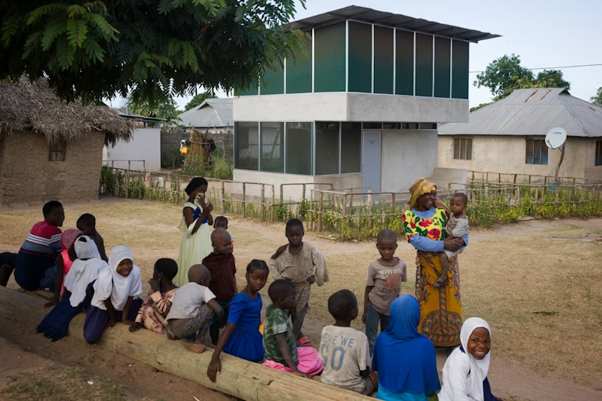
A Star home consists of two storeys with better ventilation for fresh air, while shade netting or fly screens keep mosquitoes and flies out. (Source: Courtesy Julien Lanoo, https://theconversation.com/better-designedhomes-could-cut-three-major-child-diseases-by-up-to-44-tanzania-trial-281890)
Star homes
The researchers then designed a house that can help prevent these diseases in children.
They designed a home that they called a Star home with the following features:
- A double-storey house with bedrooms on the upper floor, away from mosquitoes, which are most abundant at ground level.
- Cross-ventilation, where air passes across the room. To increase air movement, the inner walls were made of shade netting instead of solid walls.
- These net walls made the sleeping areas cooler and kept the mosquitoes away from the sleeping people.
- Mosquito screens on doors and windows kept mosquitoes and flies out.
- Self-closing doors help kept mosquitoes and flies out.
- Clean water harvesting by catching rainwater in tanks and better pit latrines helped to keep hands and food clean to prevent diarrhoea.
- Improved stoves kept the air clean and helped prevent pneumonia.
What happened?
After three years it was found that children living in Star homes had about half (44%) less malaria, about three times (30%) less diarrhoea, and about five times (18%) less pneumonia than those living in traditional homes.
Because the children didn’t get these three diseases,
- they were a lot healthier;
- they grew taller than children living in traditional houses.
Also:
- Because of better ventilation the Star homes were cooler and more comfortable;
- It cost less money to build the Star homes;
- The Star homes were a lot healthier for the environment.
Time to build new homes
Africa’s population of 1,5 billion people is expected to increase to 2,7 to 3,7 billion by 2070. According to the researchers, millions of new homes need to be constructed, and this is a good time to build healthier homes for healthier people.
They belief governments can help their people to build better homes by:
- Assuring that people get ownership of their homes so that they can borrow money for building;
- Reducing import taxes on fly screening
- Providing advice and support with the construction of healthy homes.
In this way, governments can help communities to build healthier homes for people who do not earn a lot of money. If better homes can improve the health of people, they will need less medical care, which can save the government more money.
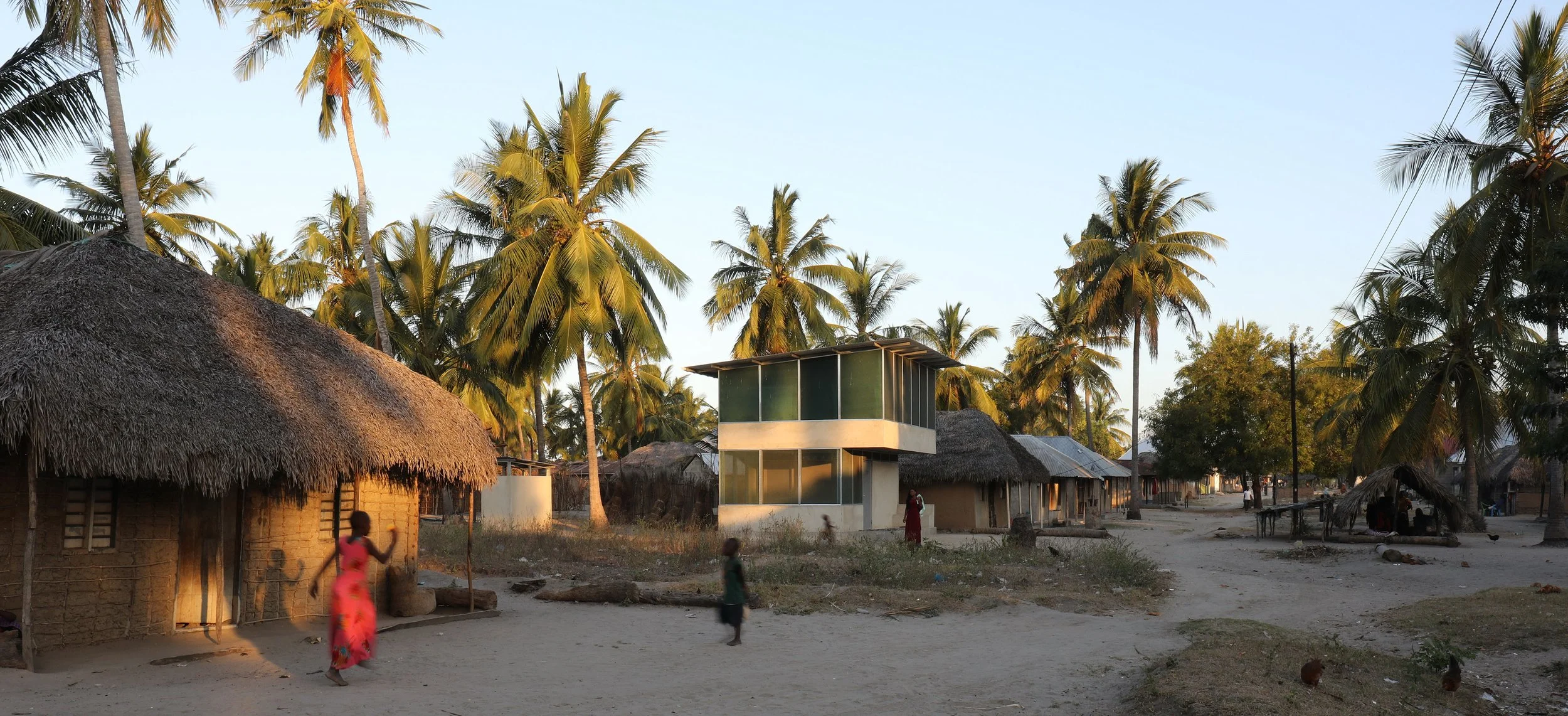
Photo: Lorenz von Seidlein
Source references
Lindsay, S., Knudsen, J.B., Von Seidlein, L., Mshamu, S.A. (2026) Better‑designed homes could cut three major child diseases by up to 44% – Tanzania trial The Conversation
Gitau, H., Mberu, B., Muindi, K., Iddi, S. (2023) Health risks at home: a study in six African countries shows how healthy housing saves children’s lives


