


August marks National Women’s Month, a time to honour the trailblazers who break barriers, challenge legacy systems and construct new pathways for future generations.
Within the transport sector, an industry historically defined by male dominance, few stories encapsulate this transformative spirit quite like that of Olivia Maponya.
From managing a single filing cabinet to steering multi-company operations as Executive Chairperson and taking the helm as the President of the South African National Bus Operators Council (SABOA), Olivia’s journey is a masterclass in resilience, strategic vision and relentless self-improvement.
From one file to a growing fleet
Every major movement starts with a single step. Olivia entry into the transport world began in 2002.
“I joined Kopano Bus Services in 2002. I was the first person who really opened the first offices for Kopano Bus Services. I opened the very first file.”
At its inception, the operational footprint was lean: only 10 buses with Olivia managing the entire administrative foundation while her co-shareholder, John Modjela, directed technical and operational affairs.
Together, they laid the groundwork for steady, sustainable growth. As the fleet expanded and staff numbers grew, Olivia’s role evolved alongside the enterprise, eventually propelling her to CEO and shareholder.
Growth, however, demands strategic evolution. By 2014, to stay competitive and sustainable in an evolving market, Kopano Bus Services collaborated with Madodi Bus Company. The boards agreed to pool human and physical resources to minimise operational costs, a move that saw Olivia step into the role of Group CEO across both entities.
By 2025, a major contract award from the Limpopo Department of Transport required a Special Purpose Vehicle (SPV) model uniting three distinct companies. Today, Olivia serves as the Executive Chairperson of the Board for Capricorn Bus Alliance (CBA), guiding high-level governance for this combined force.
That same year, she achieved another historic milestone by becoming the first female President of SABOA, providing a unified voice for bus operators across the country.
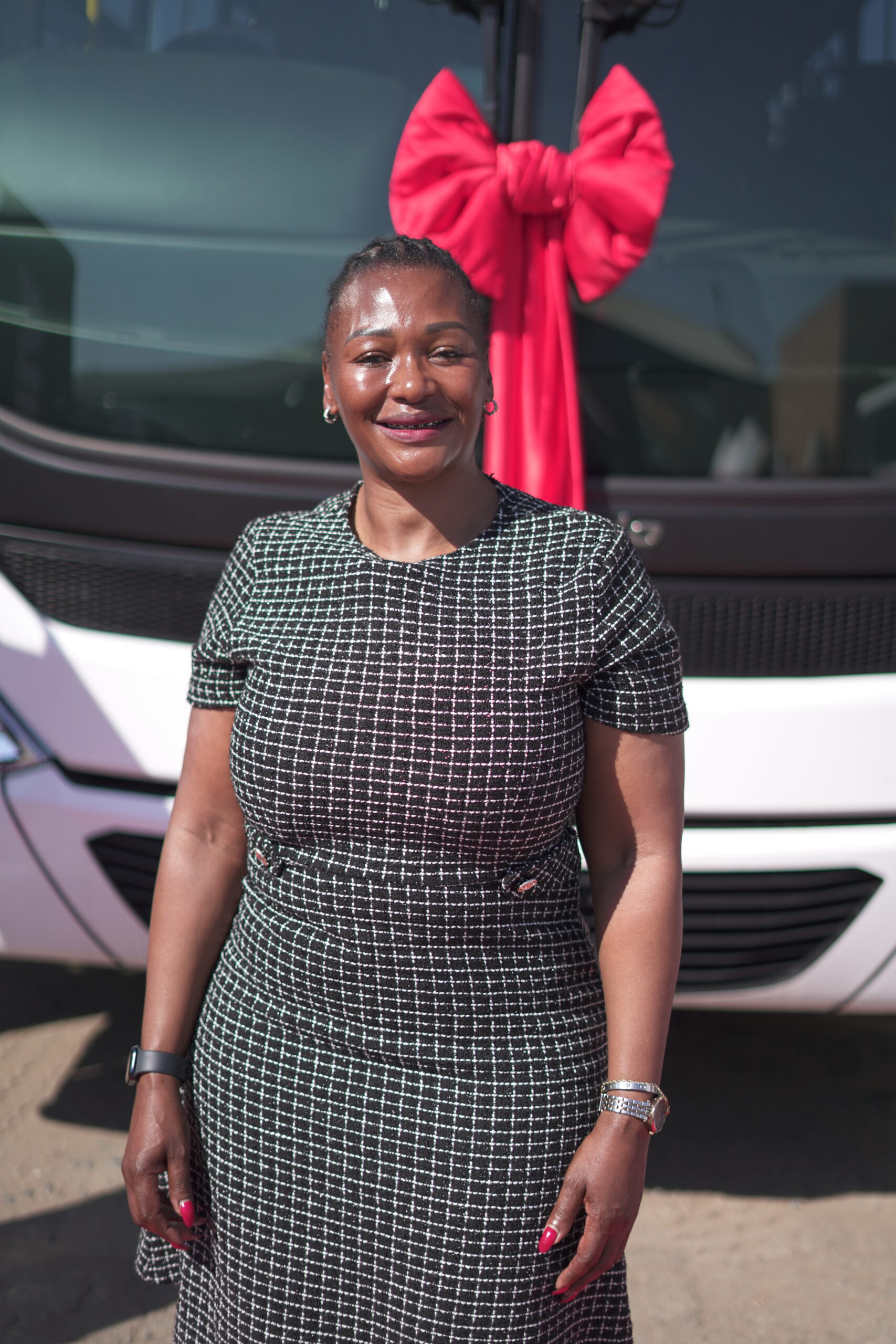
Olivia Maponya.
The power of continuous upskilling
Olivia’s trajectory was not an overnight shift; it was built on deliberate, steady growth driven by an unyielding passion for education. Recognising that managing complex, multi-entity organisations demands top-tier capability, she systematically built her expertise by earning transport degrees, completing executive leadership programmes, and achieving an MBA.
Far from stopping there, she is already registered for a global degree with plans to pursue her PhD.
“Skills and learning evolve with time, it is not a stagnant environment. To be agile and responsive to our market, we need to learn new trends and modern management tools that empower us to stand out.”
This dedication to operational excellence has solidified Olivia and Madodi as trusted industry leaders in Limpopo, backed by dedicated teams who bring energy and skill to the daily operations.
Navigating the industry and empowering the next generation
Entering a traditionally male-dominated space presents distinct structural and cultural challenges. While government initiatives have unlocked vital opportunities for female participation, barriers still remain and female leadership is still too frequently undermined, Olivia says.
-

- Olivia Maponya’s journey is a powerful reminder that determination, continuous learning and strong leadership can drive lasting change across the transport sector.
-

- One of the new buses Kopano Bus Services recently acquired.
Her response to these systemic hurdles is clear: resilience, patience and preparation:
- Upskill relentlessly because authority and influence stem from deep industry knowledge. When you master your domain, your voice commands the room.
- Maintain balance, because success requires balancing professional demands, continuous study and family life. Perseverance and consistency are non-negotiable.
- Lead with agility because modern leadership relies on adopting evolving management strategies and empowering the workforce behind you.
To young women looking to enter the transport and logistics sector, Olivia offers grounded, inspiring advice:
“Don’t get tired. Make yourself relevant in terms of upskilling yourself and making yourself relevant to the sector. That is where your voice will be louder, because you’ll be talking about things that genuinely matter in changing this environment.”
Olivia’s story proves that while the road may not initially be built for women, those armed with vision, persistence and continuous learning can construct their own highways and drive the entire industry forward.


