For Cheetah Conservation Botswana (CCB), protecting the cheetah begins not in a fenced reserve, but on the farms where people and predators share the same landscape.
This extraordinary organisation aims to preserve the nation’s cheetah population through scientific research, community outreach, and environmental education by working with rural communities to promote coexistence with Botswana’s rich diversity of carnivore species.
“Founded in 2004 by Rebecca Klein, Ann-Marie Compton and Dr Kyle Good, CCB has been working alongside the Botswana Government since its inception, helping to facilitate coexistence between rural communities and carnivore species,” says Jane Horgan, researcher, Farming for Conservation (FFC) supervisor and PhD candidate at CCB.
“With a focus on empowering locals to mitigate human-wildlife conflicts and a passion for practical and effective programmes, CCB has been able to help thousands of Batswana live peacefully with wildlife,” Horgan says.
CCB is headquartered in Botswana’s capital, Gaborone, and operates two field camps in the wildlife-rich Ghanzi District, at Bere and Ghanzi. The field camps house the organisation’s various departments, whose teams work directly with communities across Botswana’s western Kalahari.
The FFC and Human-Wildlife Coexistence (HWC) departments translate findings from the Scientific Research department’s work into practical interventions that benefit farming communities, such as developing conservation-friendly husbandry practices, rangeland management, horseback patrols, and training and providing livestock guarding dogs (LDGs) as non-lethal carnivore deterrents, says Horgan.
“Through mobile and resident farmers’ workshops, the FFC department facilitates peer-to-peer learning platforms to strengthen collective resilience.
“The Communities for Conservation (C4C) department provides support for livelihood diversification initiatives, including early childhood development education, veld product harvesting and trade and craft production. This department enables community members to build security beyond livestock- and wildlife-based economies.”
Alarming decline in cheetah numbers
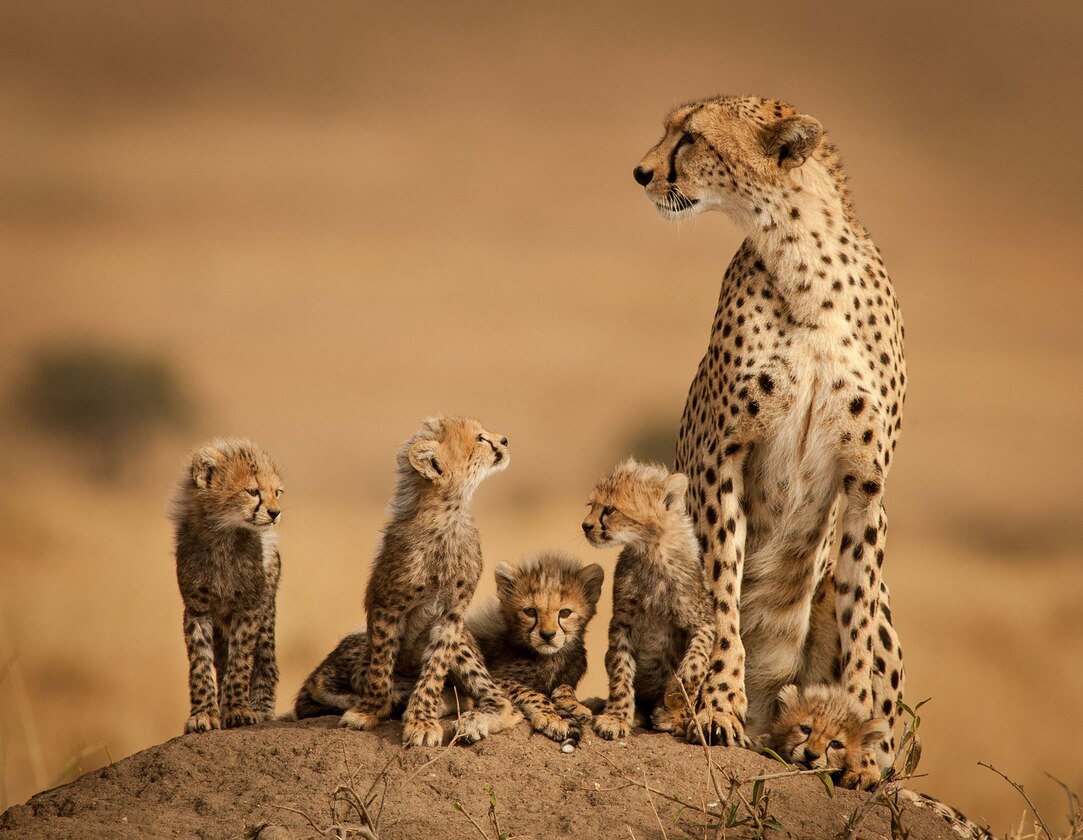
“Botswana sits at the centre of the world’s largest connected cheetah population, the one that spans southern Africa from Angola and Namibia to Zambia, Zimbabwe, South Africa and Mozambique,” says Horgan. “Within Botswana and Namibia alone, we hold half of the world’s cheetahs.
“At least that was the case until recently. In June, experts from Southern Africa submitted new evidence showing a >50% decline in cheetah numbers in Southern Africa over the last 15 years. Botswana’s estimate has fallen to under 1 000 individuals for the first time since records began.”
Horgan says this unprecedented decline has prompted calls to uplist the southern African subspecies of cheetah to Endangered for the first time. It is currently listed as Vulnerable on the IUCN Red List of Threatened Species.
“Sadly, this trend seems to be mirrored in other countries in East and northern Africa as well, though we are awaiting official figures from the rest of their African range.”
The drivers of these declines vary from place to place. However, they are generally a combination of human-wildlife conflict (HWC), habitat loss caused by human settlement and overgrazing, habitat fragmentation due to roads and fences, declines in prey species (largely as a result of poaching and exacerbated by climate change), and the illegal wildlife trade. The latter is more prevalent in East Africa, but also occurs in southern Africa, primarily involving the illegal pet trade, says Horgan.
Focused research … and a national cheetah census
“In light of these recent findings, CCB is focusing our research efforts on uncovering what could be causing the declines in Botswana. Several local and international post-graduate students are currently investigating prey declines, competing carnivore populations and behaviours, conflict levels and the impacts of roads and fences on cheetahs in Botswana,” emphasises Horgan.
She says this work is continuing alongside intensified efforts to monitor cheetah populations more regularly across the country. CCB is carrying out this work in collaboration with the Botswana Government’s Department of Wildlife and National Parks (DWNP) and other research NGOs in Botswana.
“We need cheaper and easier ways to count cheetahs, and that’s something we are currently investigating. Once we can solidify the most effective method to measure cheetah densities, we are hoping to work with DWNP to initiate a national cheetah census, which would be run every three to five years.”
This would allow the team to monitor the health of cheetah populations, helping to determine whether particular interventions are successfully reversing declines and identifying where additional resources need to be mobilised for conservation efforts.
“At present, we are seeing declines in conflict levels with cheetahs where we carry out our initiatives, which is encouraging,” says Horgan. “We are seeing more farmers incorporating sustainable farming practices, including predator-friendly farm management, and there is a huge uptake of the use of livestock guarding dogs (LGDs).
“But our resources are limited, and we need to find ways in which to scale up our interventions to help across more areas.”

CCB4: Patrollers take stock of returned cattle. (Image: Brodie Hopkins)
Protecting herds, preserving wildlife
Livelihoods are closely tied to conflict because when people are more successful and financially secure, they are better able to absorb the loss of one or two livestock without resorting to extreme measures, such as lethal control, says Horgan.
“When someone is struggling financially, they are more likely to respond with lethal action after only one loss. That is why CCB tends to see spikes in conflict when there are climate shocks or issues in the beef market, such as foot-and-mouth disease.
“At CCB, we are aware that cheetahs are not the priority for many farmers, so there’s no point in us walking into a farm and just asking farmers not to shoot cheetahs. Where is the incentive?
“But at the end of the day, we really want the same thing: we want cheetahs not to kill livestock because then the farmers won’t feel the need to go out and shoot the cheetahs (or other carnivores). So we work together with the farmers to reduce their livestock’s vulnerability to predation.”
According to Horgan, livestock are more likely to be killed by carnivores if they are weak, injured, sick, small (i.e. newborn calves), or wandering by themselves far from the rest of the herd or far from the homestead. Livestock may also be particularly vulnerable at night, when nocturnal predators such as lions and leopards are active.
“We use these vulnerabilities to drive the methods we use to reduce livestock vulnerability. For example, if livestock are more likely to be predated on when they are sick, how can we help farmers improve their herd health?
“We do training on livestock diseases, how to identify them and how to vaccinate their animals, and we develop and print an easy-to-understand vaccination calendar that we distribute to farmers, and we circulate articles in local farmers’ magazines about how to prevent disease in your livestock.”
Similarly, weak animals are more vulnerable, and they can become weak if they are malnourished, so the team focuses on “improved grazing, running training on how to make your own nutrient blocks and supplement feeds and how resting your grazing can help improve the sustainability of your grazing lands”.
All these factors, such as herd health, improved grazing and reducing livestock vulnerability, mean you have healthier animals that are more likely to reproduce and are more likely to be fatter and healthier when it comes to slaughtering, says Horgan.

CCB3: Farming for Conservation Senior Officer, Balekanye Mbinda, conducts a mobile workshop for remote farmers. (Image: Brodie Hopkins)
“Not to mention the increased herd numbers because you are no longer losing animals to carnivores. All in all, the benefits from predator-friendly farming far outweigh the costs.”
For more information and/or enquiries, send an email to info@cheetahconservationbotswana.org or Connie Modise, Farming for Conservation Coordinator, at cmodise@cheetahconservationbotswana.org. Additionally, follow CCB on Facebook and Instagram.
This is part one of a three-article series on the invaluable work of Cheetah Conservation Botswana.