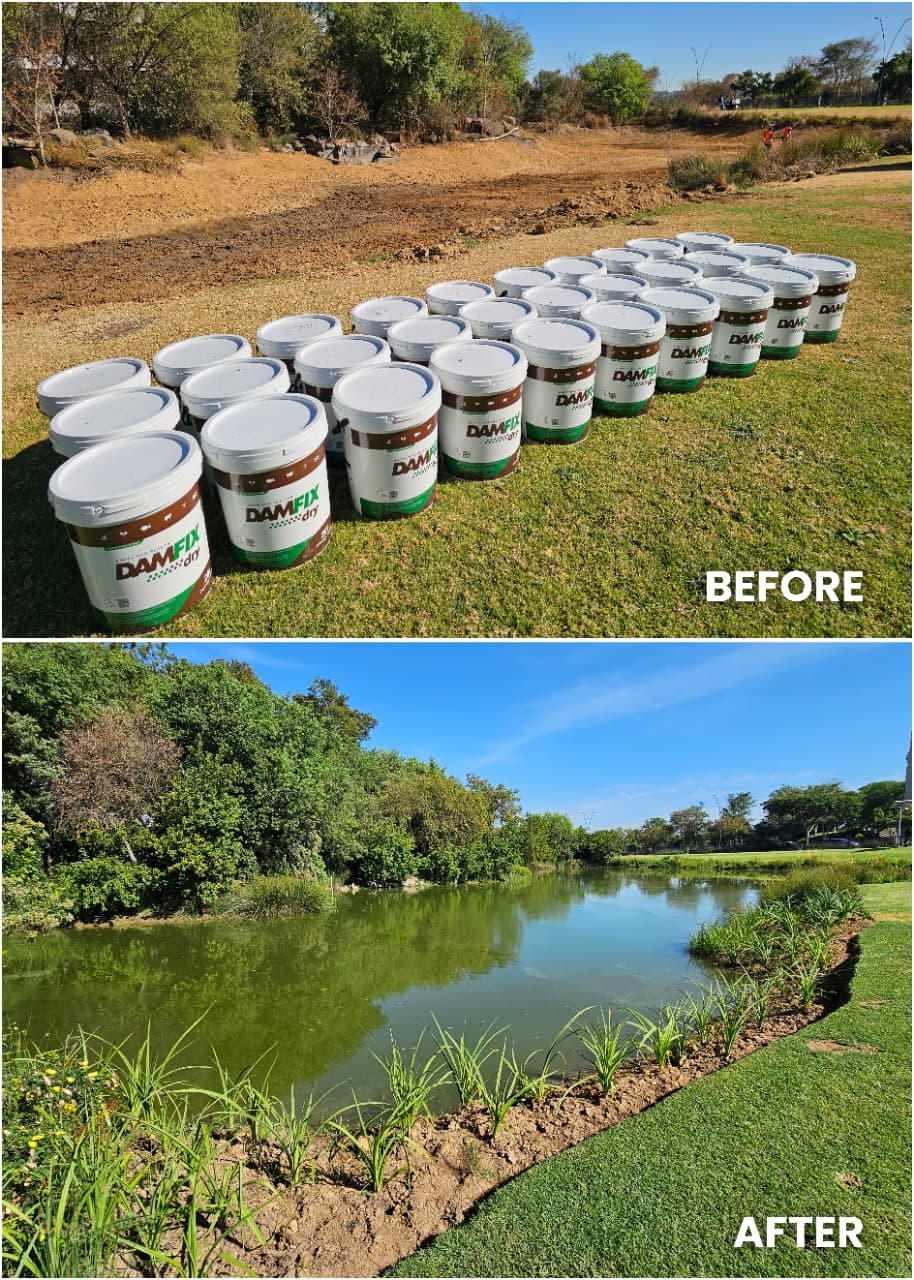
DAMFIX Dry™ is an engineered polymer clay composite designed to form a cohesive barrier within the soil matrix of an earth dam. The material’s fine granular structure interlocks with the soil bed and accelerates the dam’s settlement period, promoting the formation of a long-term natural seal.
DAMFIX Dry™ is ideally applied to seal new earth dams or existing empty earth dams in need of repair by tilling it into the top soil layer, followed by compaction.
The final process of this sealing method is rounded off with a light application of DAMFIX Wet™ after the dam has been filled with water, which consolidates the seal as a whole.
This 2-part application process is a more permanent solution, focusing on the longevity of a dam. It is typically used for sealing new dams or repairing existing ones that have been completely drained.
The seal is not a visible liner, but becomes an integral part of the dam’s floor and walls, which promote a more natural-looking environment.
How to apply it yourself:
- Cleaning
Pump out the existing water in your dam. Remove all plants, organic or foreign matter (stones, rocks, rubble, roots, etc) from below the final water level.

- Slopes and spillway
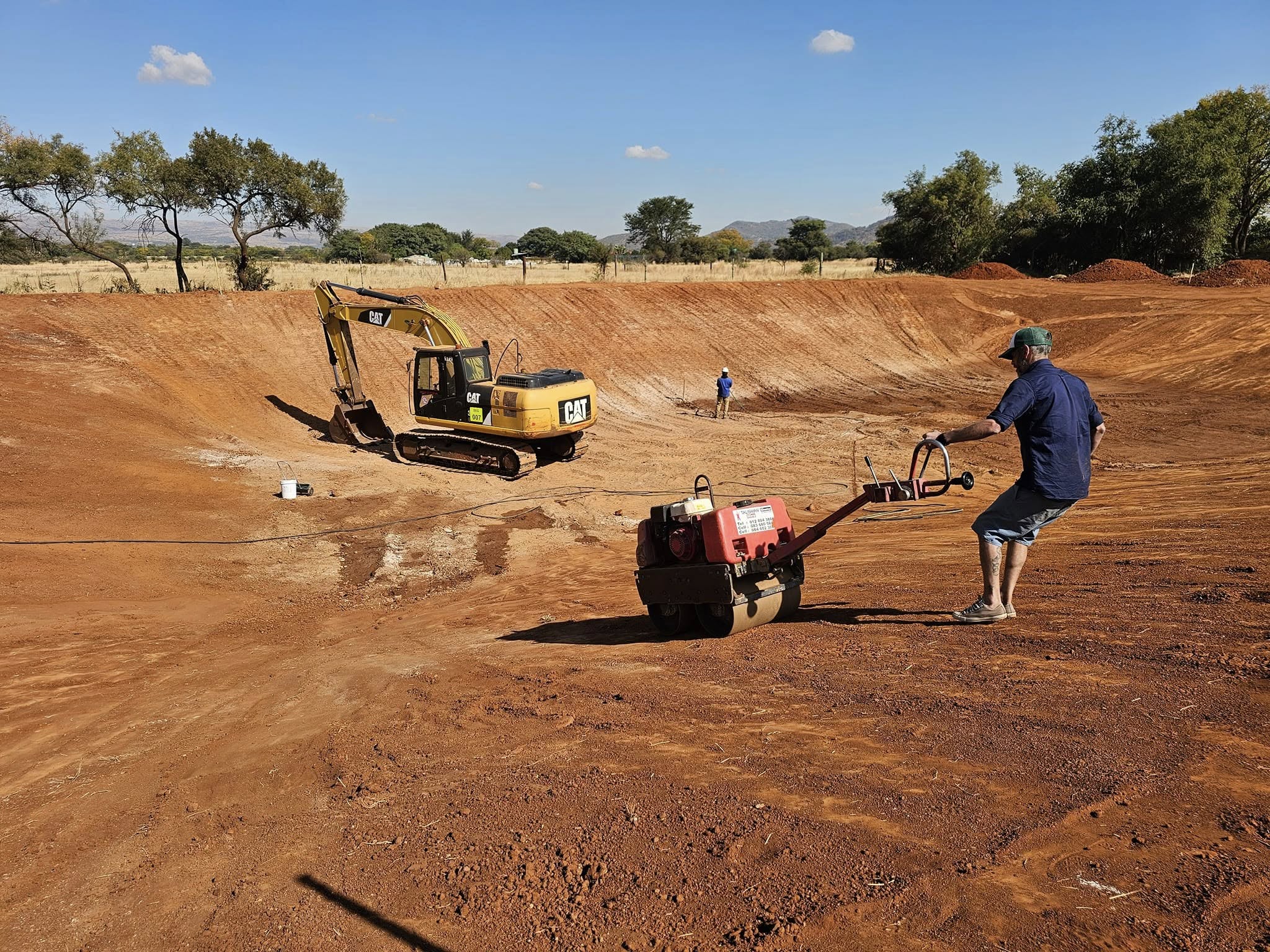
All slopes should ideally be prepared to a maximum of 1:3, or at a maximum gradient of 45 degrees. This step is important to achieve the necessary compaction that is required for product success. Form an adequate spillway.
- Soil loosening
Loosen the soil in the area you want to seal, to a depth of 200 to 300 mm. A Rotorvator can be used.
- Wet area
Wet the area to be sealed with water. Sprinkling by garden hose is sufficient. DAMFIX Dry is a very fine granular powder and wetting the soil will assist the product to attach to the soil. Wetting the soil will also assist with the compaction process.
- Spreading
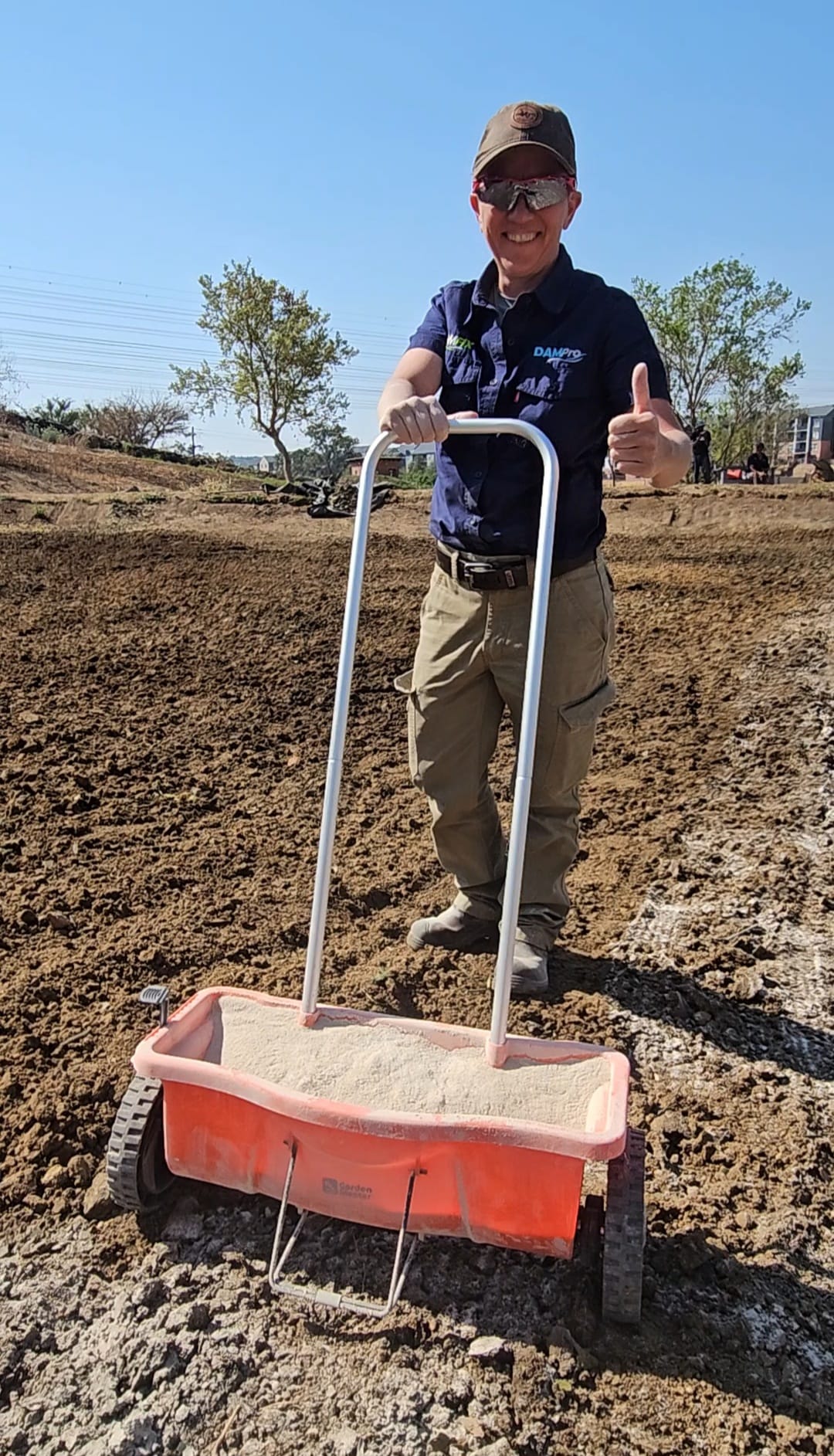
Distribute DAMFIX Dry evenly across the dry soil surface.
For optimal precision, measure a coverage area of approximately 30m² per 20-liter bucket. Using a walk behind spreader will significantly streamline the distribution process.
- Tilling
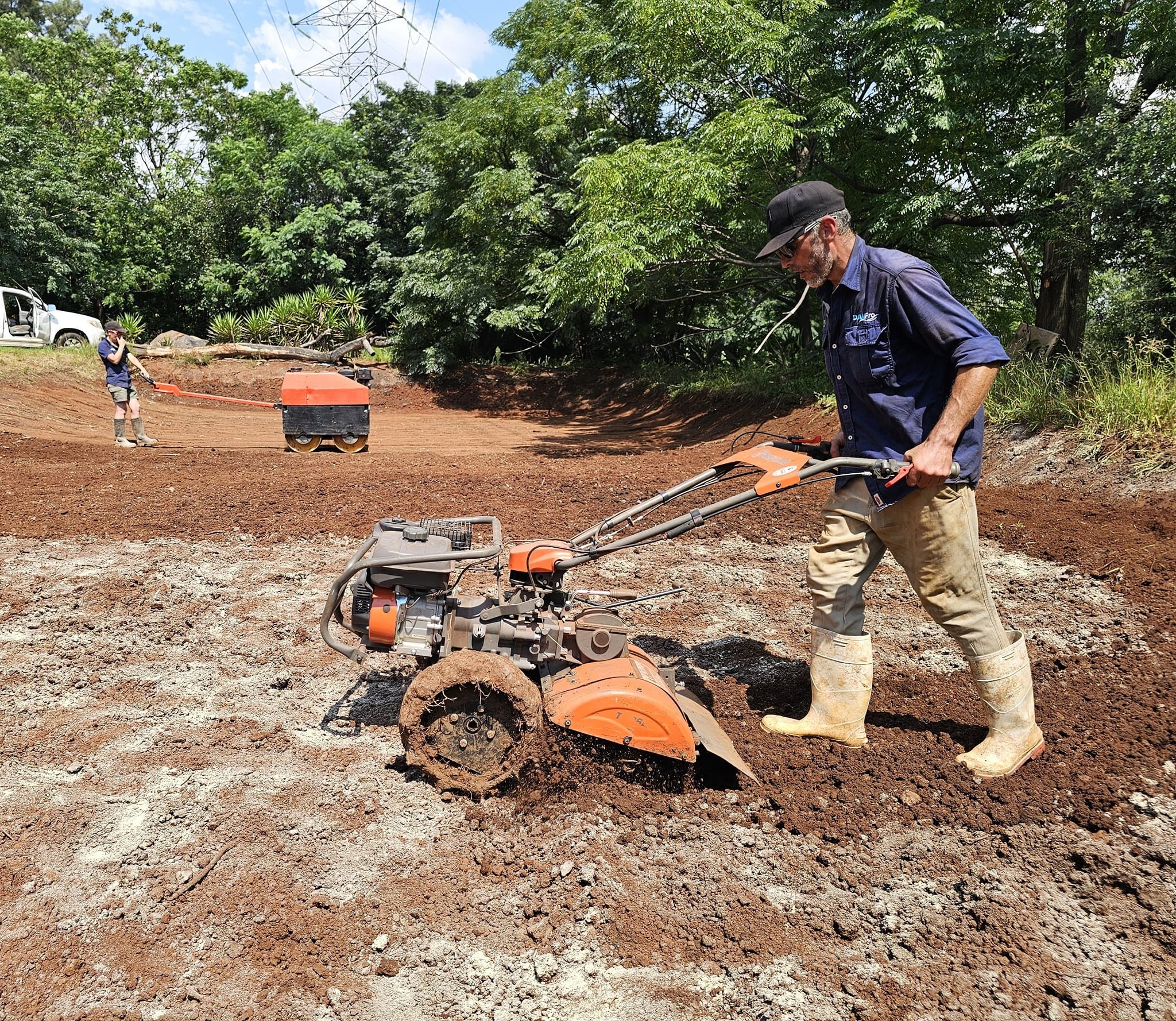
Till DAMFIX Dry into the soil up to 150 mm deep with a Rotavator, garden fork or garden rake.
(The use of a TLB is not recommend, as consistent tillage is not achieved. Contact DAMPro for advanced instructions if using a TLB.)
- Compact
Compact the area using a smooth drum vibratory roller such as a Bomag to provide a sealed thickness of approximately 100 to150 mm. Repeat at least 6 times over the whole surface.
Soil compaction is crucial for earth dams. It significantly increases the soil’s strength, reduces permeability (seepage), and minimises settlement, all of which are essential for the stability and longevity of the dam.
- Fill the water
Fill the dam with water, or raise the water level to a minimum of one meter deep. Allow 14 days for the DAMFIX Dry seal to activate and expand.
Maintain water levels during this time, because the product requires water pressure to activate, expand and bond.
- Consolidate
Finalise the sealing process with a light application of DAMFIX Wet. Apply the granules evenly on the surface of the water by using a canoe and a hand-held spreader. 20 liter = est. coverage area of 650m². The wet application is essential to consolidate the dry seal. When doing the wet application, use a canoe and spreader on a fine day, with no wind and no rain present.
The wet application is essential to consolidate the dry seal. When doing the wet application, use a canoe and spreader on a fine day, with no wind and no rain present.
DAMFIX Dry is most effective, when applied by using the mixed blanket method, in the construction stage of a dam or when an existing dam has been completely drained, as only under these conditions can the necessary compaction be achieved.
The wet application of DAMFIX Wet is a crucial part of the process in order to consolidate the seal as a whole. The prescribed method of sealing an earth dam in this guide drastically reduces permeability in soil.
For a quick and efficient way to fix your dam, please visit the website at http://www.damfix.co.za for more information.