Every hectare must have a purpose
High input costs, unpredictable climatic conditions and increasing pressure on profitability make purposeful crop and cultivar selection more important than ever. AgroFors focuses on helping farmers make seed choices that align with their feed flow, farming system and long-term objectives.
Today, a hectare cannot simply be planted because suitable land is available. It must fulfil a specific role within the farming operation.
For a dairy farmer, this may mean ensuring that sufficient high-quality grazing is available when cows need it most. A beef farmer may need to bridge a feed gap during summer or winter, or require additional feed to carry animals through a critical production phase. In other cases, the objective may be hay, silage or standing forage.
In a crop rotation system, a crop or mixture can also serve a secondary purpose by improving soil cover, increasing root diversity throughout the soil profile and supporting the next cash crop or forage season.
The question, therefore, is not simply what to plant, but rather what the planting must achieve.
This is precisely what AgroFors focuses on.
The right crop for the right need
AgroFors specialises in seed for planted pastures and forage crops, offering an extensive range for summer and winter farming systems.
From lucerne and grasses to winter forage cereals, forage sorghum, hybrid babala and various crops for mixtures and cover crops, the focus remains on matching the right option to the farmer’s farming system.
After all, there is no single crop or cultivar that can fulfil the same role on every farm.
A crop that establishes quickly and provides early feed can be valuable when an immediate feed shortage needs to be addressed. Another option may be better suited to situations requiring longer production periods, regrowth or repeated grazing. Where hay or silage is the end goal, the emphasis shifts to different characteristics.
The same applies to planted pastures. An intensive dairy farming system under irrigation has different requirements from a dryland beef production system. Climate, soil type, planting date, available soil moisture, utilisation method and the time of year when feed is required should all form part of the decision-making process.
Therefore, the cultivar with the highest total yield on paper is not necessarily the best choice for every system.
The more relevant question is: Does it deliver the right quantity of usable feed at the required time?
More than one answer to the same question
AgroFors works with local and international breeders and seed companies to access a broad range of cultivars and product options.
This gives the company the flexibility to offer improved cultivars with specific characteristics, as well as competitively priced commodity seed where it is the more suitable option for a farmer’s needs and budget.
The value lies not simply in the number of products on a list, but in the ability to distinguish between the available options.
A farmer who needs winter grazing early in the season does not necessarily require the same cultivar as someone who wants to extend production later in the season. Sorghum planted for silage is evaluated according to different objectives from a crop intended primarily for grazing. The same principle applies when selecting lucerne, grasses, winter forage cereals, legumes or mixtures.
This is where technical knowledge and local experience make a difference.
Much of the new genetics becoming available in South Africa originates from international breeding programmes. However, a cultivar’s performance in its country of origin does not necessarily tell the full story of how it will perform under South African conditions.
AgroFors therefore investigates new products and cultivars and evaluates them locally. Characteristics such as establishment, dry matter production, seasonal production, flowering behaviour, regrowth and persistence help build a clearer picture of where a cultivar can fit into a practical farming system.
The objective is not simply to introduce new genetics to the market, but to better understand where they can add value.
Feed production and the bigger farming system
Good forage production remains a core requirement in dairy and beef farming, but increasing attention is also being given to the role planted crops can play within the broader farming system.
Mixtures, legumes, grasses and other cover crop options can contribute to soil cover, crop diversity and root development when selected and managed according to the appropriate objectives.
However, this does not mean that any mixture will automatically improve soil health.
As with forage production, the objective must be clear from the outset. Is the priority feed production? Soil cover? A break in the existing crop rotation? Greater diversity? Or a combination of these objectives?
The composition and management of the crop should be determined accordingly.
Quality remains the foundation
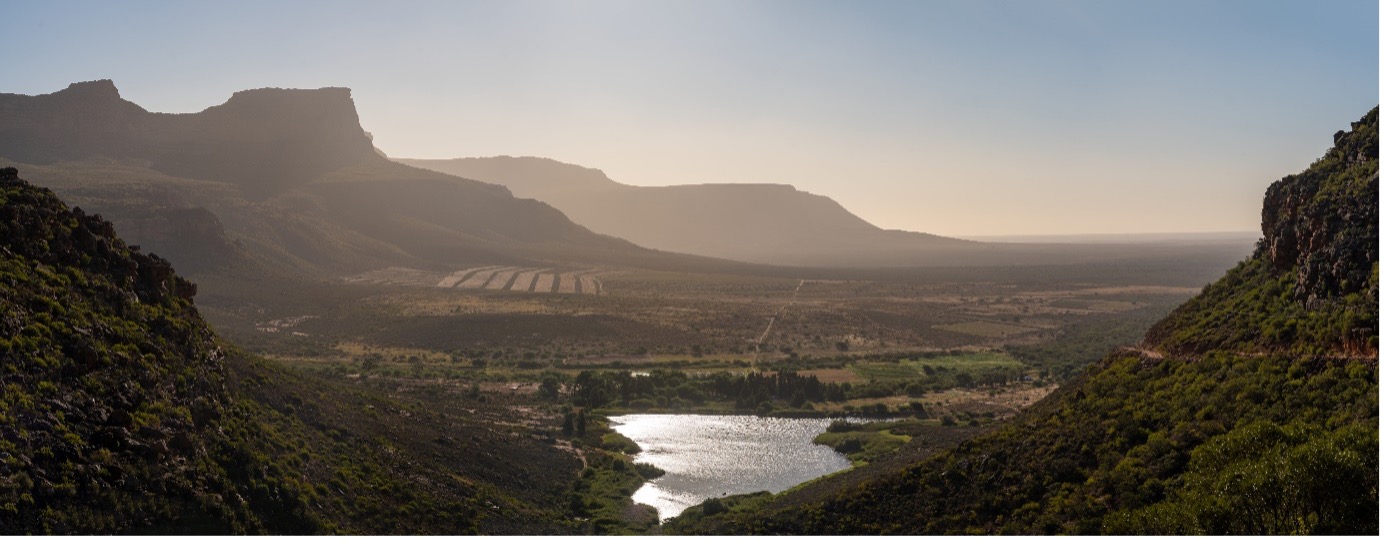
AgroFors is based in Oudtshoorn and forms part of the Klein Karoo Seed Group. Although AgroFors was established in 2022, the company draws on decades of experience within the group in seed production, processing, quality control as well as marketing forage and pasture seed.
This affiliation provides access to professional seed-processing facilities, technical expertise and an ISTA-accredited seed laboratory.
This is important because even the right cultivar cannot reach its full potential if seed quality and establishment are inadequate.
Ultimately, choosing the right seed involves much more than a name on a bag.
It is about the farmer’s environment, the role of the crop within the farming system, when production is required and how the crop will be utilised.
AgroFors follows a simple principle: Start with what the hectare needs to achieve, and then select the right crop and cultivar accordingly.
Talk to us about the right solution for your farming system. Contact us on (+27)44-203-5295, email agrofors@kleinkaroo.com or visit www.agrofors.co.za for more information.