Centuries ago, the indigenous people of the Cederberg region, roughly 250 kilometres north of Cape Town, harvested the leaves and twigs of a local shrub. They would steep them in hot water, sometimes for days, before enjoying it as a warm beverage.
Whether people back then were aware of the drink’s health properties remains unknown, but today it is an established fact that this shrub is exceptionally good for you. It is one of the rare plants of its kind that does not use caffeine as a natural deterrent, and it is universally known as rooibos tea—one of South Africa’s most popular export products.
The plant, which belongs to the fynbos family, grows almost exclusively in the rocky soil of the Cederberg and can be harvested up to three times before it needs to be replanted.
In this article, however, we look at the rooibos plant from a different perspective and explore the many ways it can be utilized.
From humble origins to global success: A rooibos journey
Before examining how and where rooibos is used, we must first look at how every teabag of rooibos begins. From the late 1800s, when South Africans first began using rooibos as an herbal tea, to today, where thousands of tonnes are exported, the plant grows almost exclusively in the Cederberg region.
Various farms are managed by farmers whose families can trace their history back to the days when these plants grew wild. In the early years, rooibos fynbos was not propagated in the way it is today; this only began to change as rooibos grew in popularity during the mid-1900s.
Only with more modern technology did it become possible to propagate plant lines that could meet the demand for larger harvests. When the plant still grew abundantly in the wild, everything was harvested by hand using a sickle and a sack. Today, farmers cultivate the plants in rows, just like any other crop.
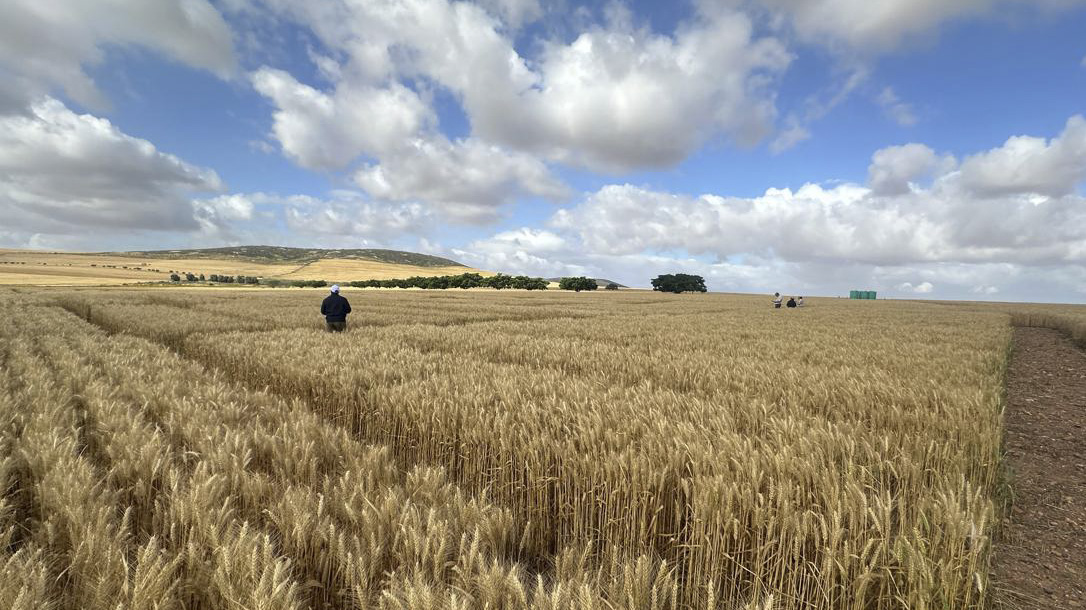
It takes about a year and a half for a plant to reach full maturity, after which it is harvested by hand, just as in the past. Teams enter the fields and cut the branches roughly 50 cm above the ground, bundle them into cloths, and load them onto trucks or trailers.
The branches are then finely chopped and spread out to dry. What makes rooibos tea so remarkable is that it dries within 12 hours. After that, it is steam-pasteurized, packaged, and transported across the globe.
Adele du Toit, spokesperson for the South African Rooibos Council, explains that 2025 was a record-breaking year: “2015 was previously a record year, but 2025 was even better, with almost 11,000 tonnes exported in total!”
-

- Rooibos is harvested by hand approximately 50 cm above the ground with a sickle. (Source: South African Rooibos Council)
-

- It takes approximately 12 hours for rooibos to dry in the African sun, after which you can make a delicious cup of tea. (Source: South African Rooibos Council)
Where does all this tea go?
In the past, rooibos tea was mainly something uniquely South African—part of our local culture that was hard to explain to foreigners. Sitting on a stoep with a farmer in the evening, holding a cup of tea in one hand and a beskuit in the other, made you feel like all was right with the world.
Today, however, things look very different. Rooibos tea is no longer confined to South Africa, nor is there just a single brand associated with the teabags. The drink has rapidly gained ground in health-conscious countries like Japan, where the pursuit of staying youthful is particularly important.
Consequently, it had a massive impact in Japan when rooibos shifted from being categorized as a niche health product to an everyday beverage. “This prompted many people to start experimenting to see what else could be done with rooibos,” says Adele.
As a result, rooibos developed into much more than just a tea. If you visit Japan today, you can even find ramen—a noodle soup with a flavourful broth and various ingredients—made with rooibos.
Yet Japan is not the only country to discover rooibos. In England, rooibos tea has been popular since the 1970s, and new ways of using this uniquely South African drink are currently being explored. Items such as rooibos sorbet—a frozen treat made with a rooibos infusion and sugar frozen into a dessert similar to ice cream, but without the dairy—are being crafted.
Elsewhere in Europe, such as Germany, France, and the Netherlands, rooibos is also becoming increasingly well-known thanks to the significant role tea has played in these countries for centuries. This growing popularity can be attributed to products like ice cream and kombucha being introduced by tea merchants such as Tick Tock.
Next month, we will discuss the impact of rooibos tea in South Africa, how farmers are continuing to expand their fields, and the incredible influence of rooibos in Japan. We will also share other recipes you might want to try during the warmer months for a refreshing twist on tea to help you cool down on a scorching day.
Try this rooibos recipe
Traditional South African boeretee
By the early 1900s, rooibos tea was already familiar to farmers and residents of the Cape. However, the method of preparation was completely different from today’s approach. There were no teabags or quick brewing methods. Note: to follow this recipe, you will need more than just a teabag of rooibos tea.
Ingredients:
4 tablespoons loose rooibos tea
2 litres water
Optional: 1 cinnamon stick, a few cloves, or a few slices of fresh lemon
Instructions:
- Bring to the boil: Pour the water into a large saucepan or teapot and add the loose rooibos tea along with any optional spices. Bring to the boil.
- Allow to simmer: Once boiling, reduce the heat to the lowest setting so the tea simmers gently.
- Serve as needed: You can leave the tea on low heat all day. Unlike black tea, rooibos does not turn bitter because it contains very few tannins; the longer it simmers, the richer and deeper the flavour becomes.
- Serving: Ladle the tea into a cup and add milk, honey, or sugar to taste.
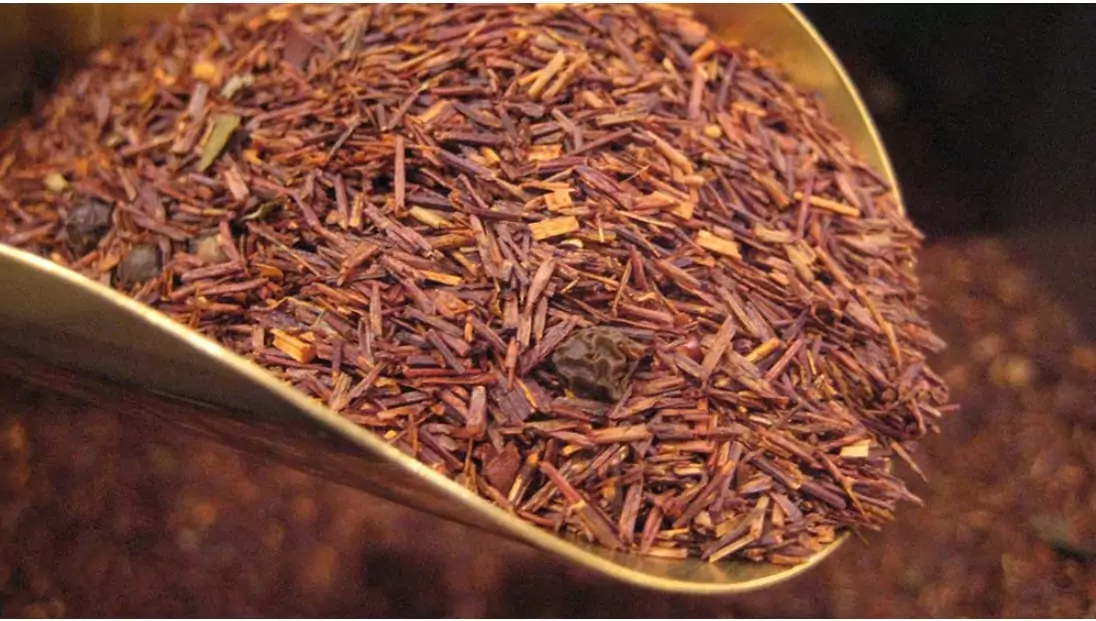
Numerous recipes feature rooibos as an ingredient, ranging from various types of tea to ice cream and ramen.
(Source: South African Rooibos Council)