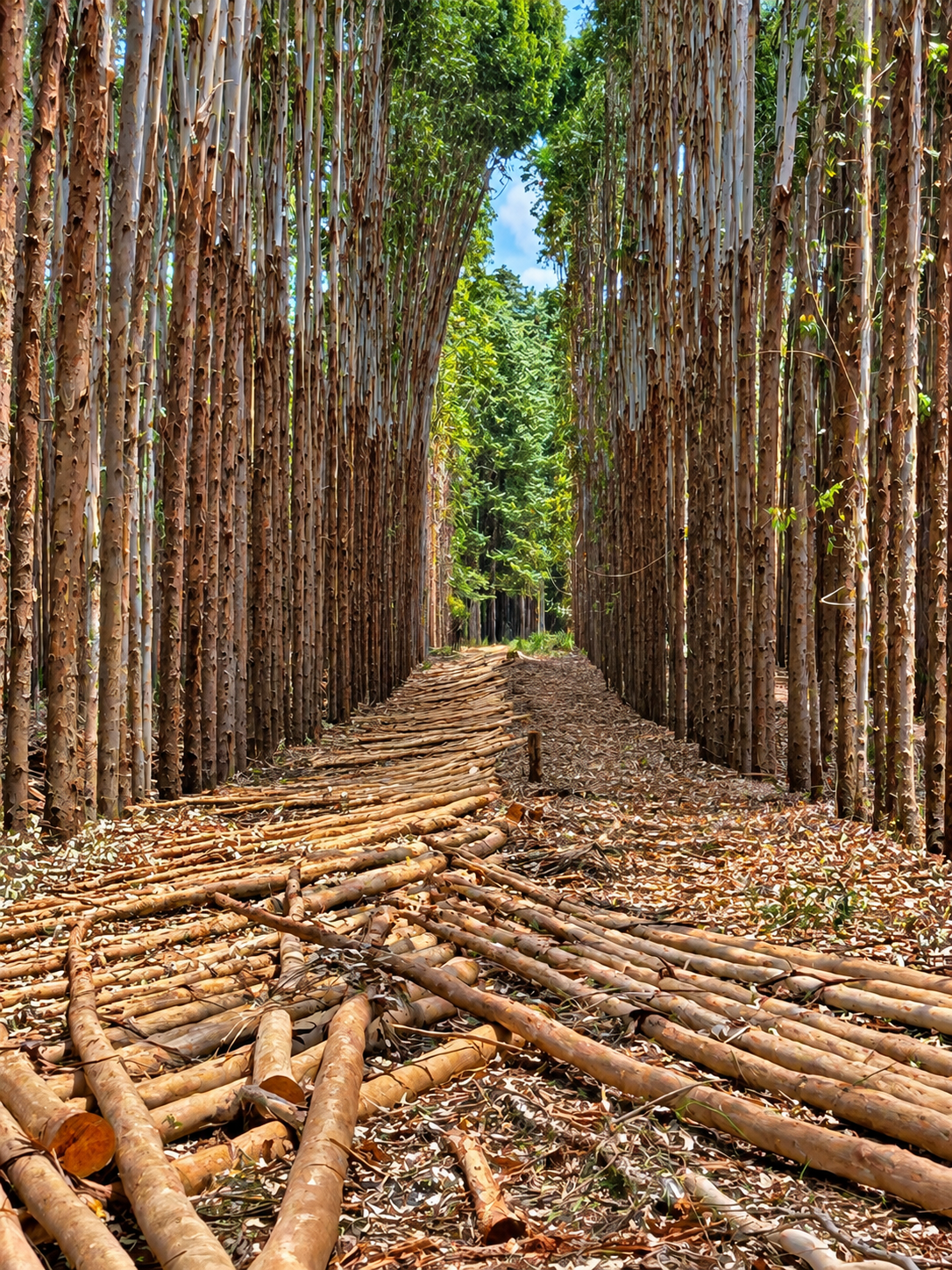
Treated timber lasts significantly longer than untreated timber, and the correct treatment depends on what you intend to use the poles for. At Low’s Creek Treated Timber (LCTT) in Nelspruit, we first dry our eucalyptus and pine poles in our own drying kilns before pressure-treating them with either copper-chrome-arsenic (CCA) or creosote.
Both treatment methods protect timber against decay, fungi and insects such as termites. The difference lies in the chemical and physical properties of the preservatives and how well they suit your project and target market. Everything you need to know about the different chemical treatment methods is explained below.
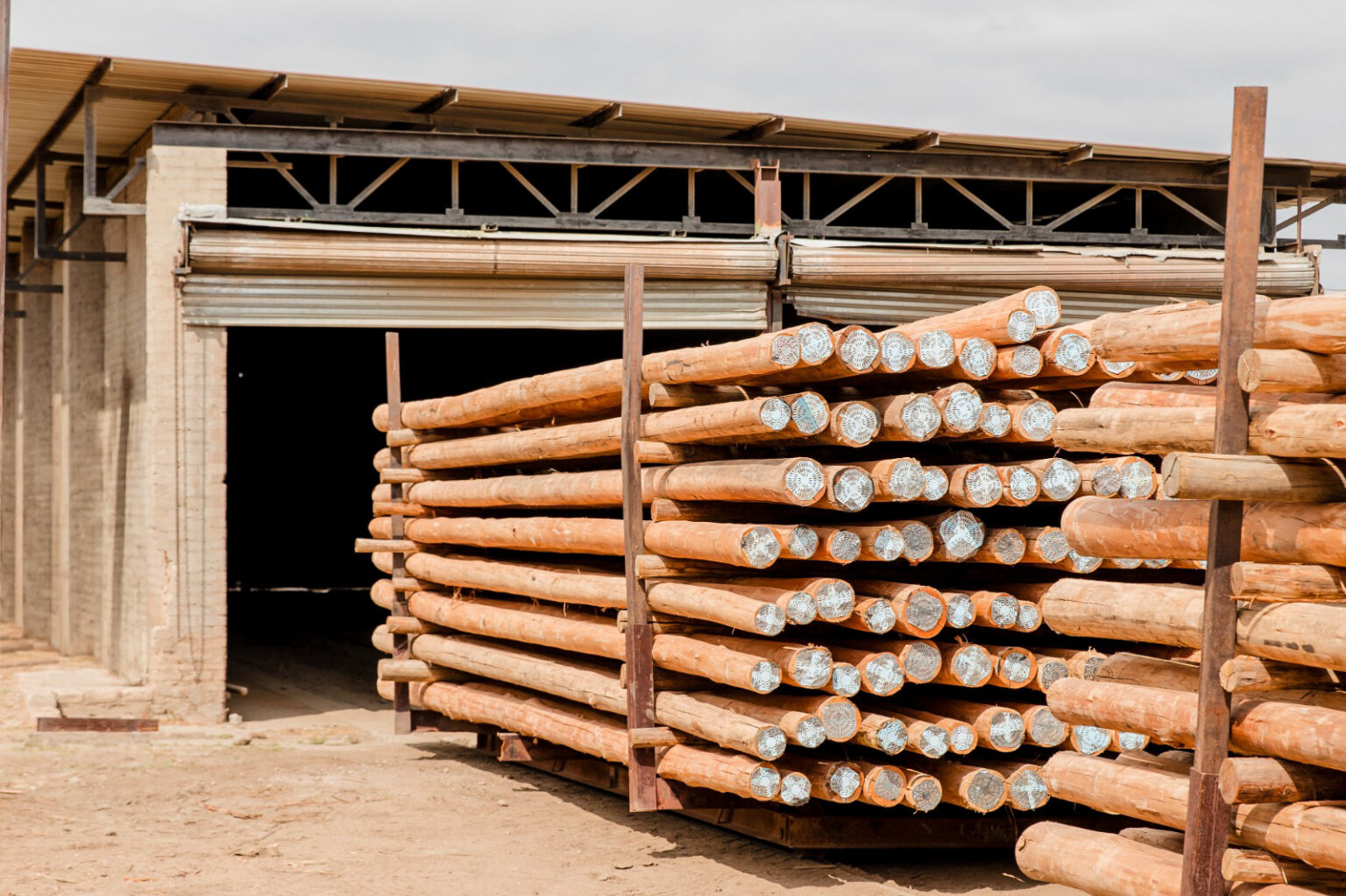
Timber poles stacked and ready to go into the drying kiln.
CCA Treatment: Clean, versatile and treated according to SANS specifications
Copper-chrome-arsenic (CCA) is a water-based preservative that protects timber against decay, fungi and wood-boring insects. It is applied using a vacuum-pressure process (the Bethell process), allowing the chemicals to penetrate deep into the timber rather than simply coating the surface.
The preparation and treatment process is as follows:
Drying: The timber is dried in the stacking yard or in one of our four drying kilns. The moisture content is monitored according to specified requirements before treatment can begin. High moisture content prevents proper penetration and retention of the preservative.
Preparation: All preparation of untreated or “white” timber, such as drilling holes, planning or meeting any other customer requirements, must be completed before treatment. This ensures that all exposed, untreated timber can be properly treated.
Vacuum: The untreated poles are placed inside a pressure cylinder, where a vacuum of approximately -75 kPa is created. The vacuum causes the wood cells to open, creating space for the chemicals to penetrate.
Pressure: The cylinder is filled with the CCA solution, and high pressure forces the required amount of chemicals into the timber at 9 kPa. This process is used to achieve the required retention level.
Recovery: The excess solution is pumped back, followed by a short final vacuum to dry the poles and remove excess chemicals.
Fixation: During the resting period, the chromium chemically binds the copper and arsenic within the wood cells. Copper acts as the primary fungicide, while arsenic protects against copper-tolerant fungi and wood-boring insects.
After this process, the chemicals become insoluble in water, giving the timber its characteristic light-green colour.
CCA-treated poles are suitable for fencing, vineyard and orchard trellising, net-structure supports, road sign and guardrail poles, roof trusses, ceiling battens and other outdoor applications. They can also be recommended for indoor use, playgrounds and surfaces. Never burn CCA-treated timber, as the smoke can release toxic gases.

CCA-treated timber poles.
Creosote treatment: Heavy-duty protection against weather and moisture
Creosote is an oil-based preservative containing hundreds of aromatic hydrocarbon compounds. It is toxic to fungi and wood-destroying insects such as termites and wood-boring insects. Because it is insoluble in water, it also seals the timber against moisture.
The preparation and treatment process is as follows:
Drying: The timber is dried in the stacking yard or in one of our four drying kilns. The moisture content is monitored according to specified requirements before treatment can begin. High moisture content prevents proper penetration and retention of the preservative.
Preparation: All preparation of untreated or “white” timber, such as drilling holes, planning or meeting any other customer requirements, must be completed before treatment. This ensures that all exposed, untreated timber can be properly treated.
Vacuum: The untreated poles are placed inside a pressure cylinder, where a vacuum of approximately -75 kPa is created. The vacuum causes the wood cells to open, creating space for the chemicals to penetrate.
Pressure: The cylinder is filled with the preservative solution, and high pressure forces the required amount of chemicals into the timber at 9 kPa. This process is used to achieve the required retention level.
Recovery: The excess solution is pumped back, followed by a short final vacuum to dry the poles and remove excess chemicals.
Bonding and appearance: Creosote-treated poles have a dark brown or black colour, an oily finish and a strong tar-like smell. Creosote is our preferred choice for transmission poles (electricity and telecommunications, in accordance with SANS 754 and heavy-duty agricultural fencing. Creosote contains compounds classified as potential human carcinogens, and its use is strictly regulated. Poles must not be used indoors or burned.

Timber after creosote treatment.
CCA or Creosote: Which is right for your project?
Choose CCA for clean, versatile outdoor applications. Choose creosote where long-term weather resistance and water resistance are more important than appearance.
| CCA | Creosate | |
| Appearance | Light green | Dark brown or black |
| Smell | Virtually odourless | Strong tar-like smell |
| Surface | Clean and dry; can be painted | Oily or sticky; may bleed in hot weather and cannot be painted |
| Main strength | Good protection against fungi and insects | Highly water-resistant and resistant to weathering and movement |
| Important consideration | Sealant helps prevent cracking | Strictly regulated and has a strong smell |
| Typical LCTT applications | Construction poles, fencing, vineyard and orchard trellising, net structures, road sign and guardrail poles | Electricity and telecommunications transmission poles, heavy-duty agricultural fencing |
The application determines the required specification: SANS 754 for transmission poles, SANS 457 and 1288 for construction and fencing poles, and SANS 457 for vineyard, orchard, road signs and guardrail poles.
Our flagship product, SANS 457 H5, has been developed for net structures, vineyards and other outdoor applications. It offers 30% additional chemical retention, 25% sapwood penetration and nail plates fitted to both ends of the pole for a longer service life.
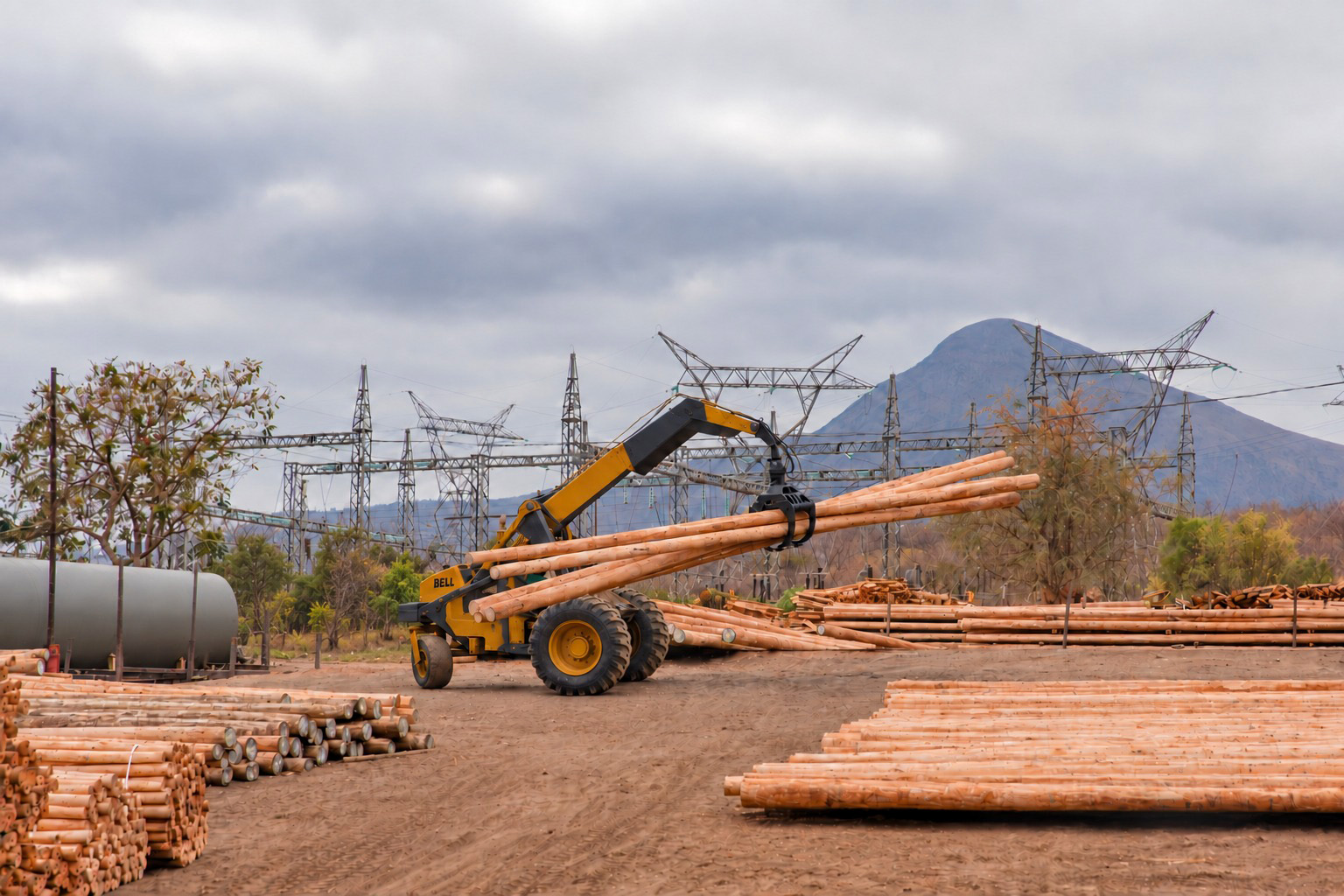
Timber being transported around the facility.
Why LCTT?
Located in the heart of one of South Africa’s most important timber-growing regions, LCTT has rapidly grown into one of Africa’s leading pole treatment facilities.
Capacity: Four drying kilns, two creosote cylinders and one CCA cylinder give us the capacity to produce more than 8 000 m³ of timber per month.
Standards: Our facility complies with ISO 9001:2015 and SANS specifications 457, 754 and 1288. Electronic process management monitors and reports on every stage of the treatment process.
Own timber resources: We have access to timber from our own plantations and strategic supply partners, allowing us to supply treated or untreated poles to suit your requirements.
Location: Situated alongside the N4 and close to the Port of Maputo, we can efficiently and cost-effectively serve customers throughout South Africa, as well as Southern and East Africa.
Value-added services: We drill holes, cut slots (slab-gaining), wire-bind, cut pole tops (flat, angled or gable-shaped), fit pole caps and offer specialised labelling and identification markings.
Our customers include national electricity and telecommunications utilities, provincial and regional government entities, turnkey installation companies, agricultural cooperatives and independent distributors.
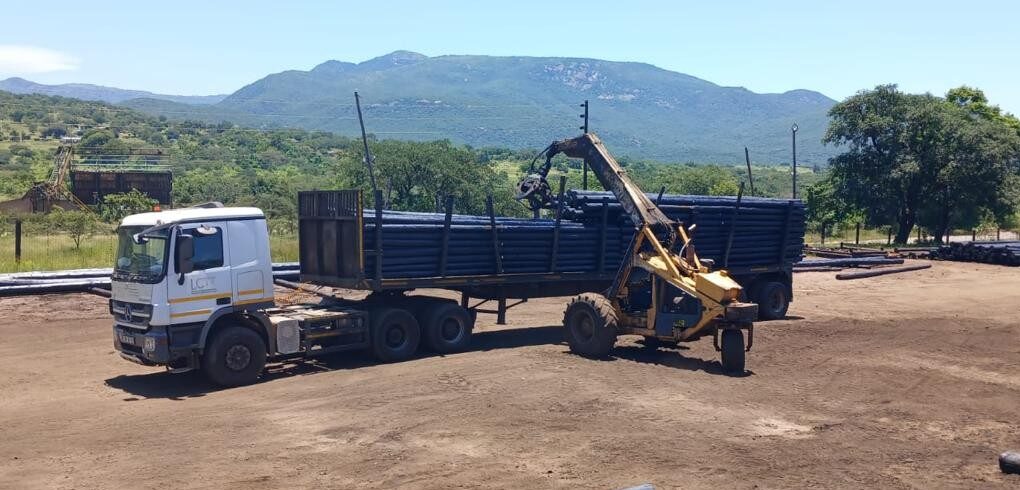
The timber has been treated and is ready for delivery to customers.
Speak to our team
Whatever your timber requirements, LCTT has the right solution. Visit www.lctt.co.za for product dimensions and specifications, or contact one of our specialists to determine which treatment is best suited to your project.
Transmission poles:
deysel@lctt.co.za or 083-442-4436
Construction and fencing poles:
sharon@lctt.co.za or 082-838-0971
Upington (Regional Sales):
harlie@lctt.co.za or 071-600-6911
General enquiries:
info@lctt.co.za ·or 013-710-0933/4
Western Cape: Lizelle Woest at sales@lctt.co.za or 082-922-0455