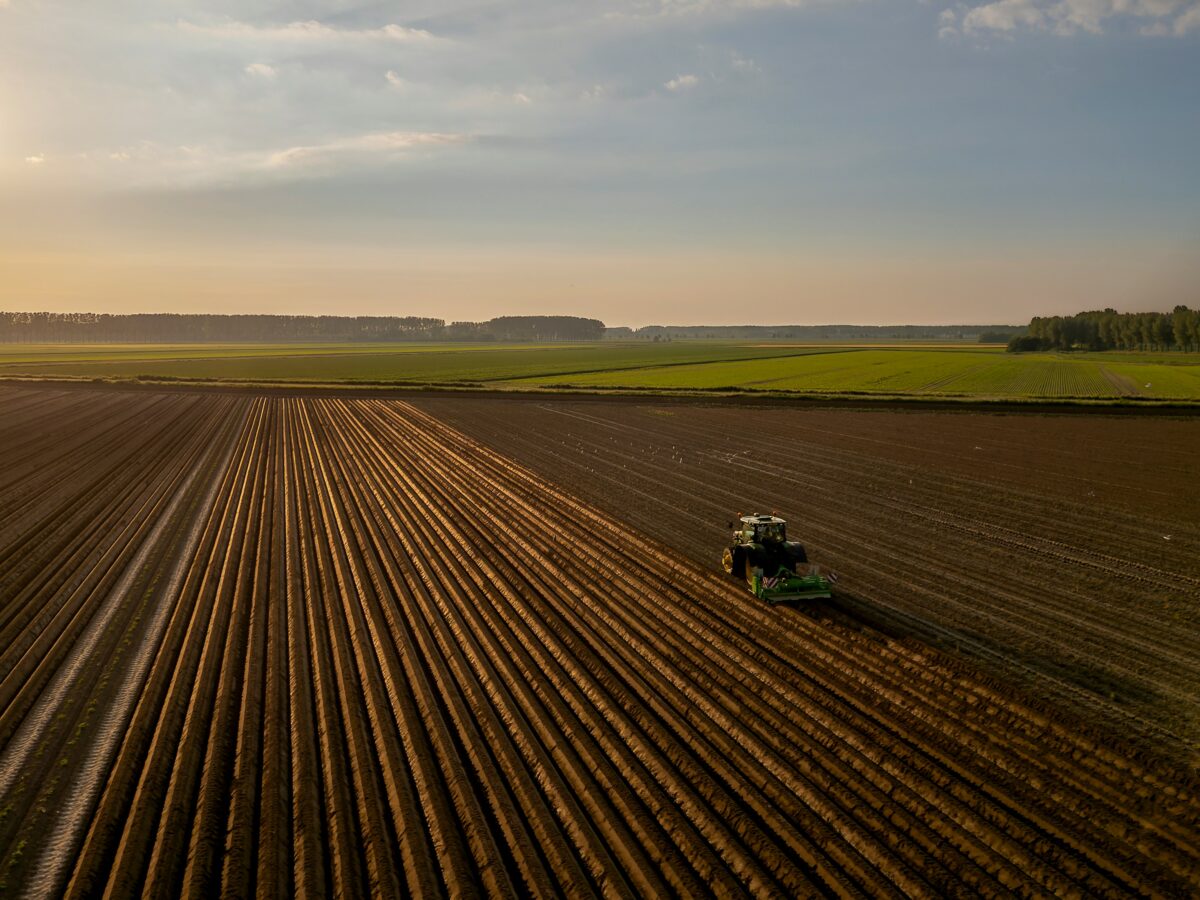
We have officially reached the time of year when farmers are preparing their soil for planting for the upcoming season. Optimal planting preparation focuses on two main factors, namely fertilisation and good seedbed preparation, both of which are critically important in practice.
The benefits of a correct fertilisation programme
In farming practice, it is becoming increasingly important year after year to focus on following the correct fertilisation programme – and even better if this plan is calculated according to your specific soil requirements.
Farmers sometimes feel as though they have reached a ceiling when it comes to yields. To break through this ceiling, the focus should be on accurately placing nutrients in order to increase the soil’s production potential over the long term.
Simply applying more fertiliser every year is not the solution. Over-fertilisation can have just as many negative effects on plant development and yields as under-fertilisation.
By following the correct, calculated fertilisation programme, the ratios of elements in the soil can be restored, thereby increasing the soil’s production potential.
Mulder’s diagram (Figure 1) provides a clear illustration of how important element ratios in the soil are. Too much of a particular element can result in another element being suppressed, while we can also see how certain elements can promote the availability of other elements.
Good seedbed preparation
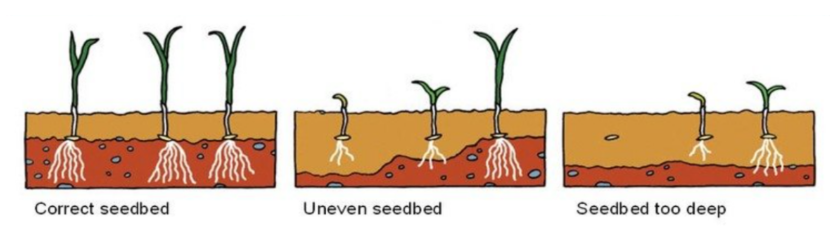
In a well-prepared seedbed, the soil should be:
- Porous enough to allow water to penetrate while maintaining good drainage.
- Firm enough to retain as much moisture as possible during the germination process.
- Level enough to ensure uniformity and optimal planting depth.
Once imbibition takes place, it is critically important that the seed does not dry out again shortly afterwards. This will result in poor emergence, and the newly germinated seedling can easily die at an early stage.
Therefore, the three points mentioned above are critically important to ensure sufficient available moisture during this period. The optimal seedbed will be porous enough to allow the mesocotyl (the young plant’s stem) to push the plumule (young shoot) above the soil surface. At the same time, it will also be firm enough to prevent unnecessary moisture loss.
Good planting preparation is essential. If you simply follow the two basic principles of a correct fertilisation programme and good seedbed preparation, you are already giving the planting season a good start.

For more information, contact Pioneer at info.rsa@pioneer.com or visit our website at www.pioneer.com/za.