In the previous article we considered the value of rotational grazing. In this issue, we take a look at how cover crops can enhance the condition of grasslands.
What are cover crops?
In agriculture, cover crops are plants that are planted to cover and protect the soil rather than for the purpose of being harvested. Cover crops may be planted during the off-season after the cash crop has been harvested.
Benefits
These cover crops reduce soil erosion as they slow down water run-off, and add organic matter to soil, thereby improving soil quality and fertility. They increase soil microbial activity that positively influence nitrogen availability and uptake in target crops, and increase crop yields. They help control weeds, pests and diseases, but attract pollinators. They also enhance biodiversity and wildlife in an agro-ecosystem managed and shaped by humans.
There is also growing evidence that cover crops increase resilience when rainfall is erratic or intensive, but also under drought conditions, thus helping when it rains and when it doesn’t, and when it pours!

-

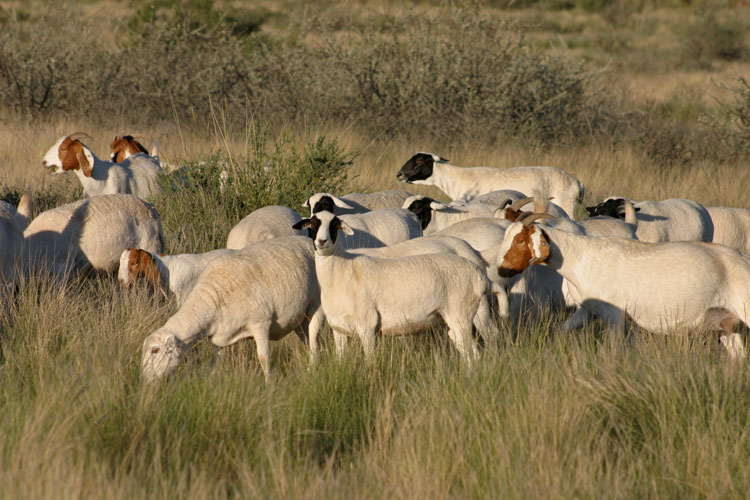
- Compared to cattle, sheep typically graze closer to the ground, which means they can manage weed populations effectively.
Choose the right cover crop
It is important to choose the right cover crop so that it will be successfully integrated in the existing grassland.
Leguminous cover crops, such as clover, fix nitrogen in the soil, while grass cover crops, like rye and oats, prevent weed growth. Mustard and radish can effectively improve soil structure.
In Africa, a study in the moist savanna agro-ecolgical zone in Nigeria found that different leguminous cover crops did better in providing good ground cover, with effective weed suppression. These include lablab, velvet bean, pigeon pea, centurion and sunhemp.
A study in Malawi found that legume cultivation was beneficial to maize, while increasing soil health, maintaining the biodiversity and ecosystem services on smallholder farms, thereby fostering sustainable development.
It is important to plan ahead and select appropriate cover crops for the region. It is important to monitor soil conditions and get the timing of planting and grazing right.
Keep in mind that some cover crops may compete with cash crops. Also, managing diverse species can be complex, but with careful planning, these challenges can be overcome.
Grazing management is essential for maintaining cover crops and can be done by limiting grazing during critical growth periods. Using rotational grazing can minimize soil compaction, and adjusting stock density can avoid overgrazing.
Integrating cover crops in the grazing boosts soil health, which leads to increased productivity. It also makes the grassland more resilient to climate variability and supports sustainable farming initiatives.
-

- Planting beans with maize can produce a higher yield of maize.

Impact of livestock types on soil quality and health
Different types of livestock have varying impacts on the quality of the soil as cattle, sheep, goats, and pigs each have unique grazing habits. It is important to understand the distinctions for sustainable practices.
Cattle tend to compact the soil due to their size and weight, which can reduce water infiltration and root growth. Yet, cattle can help recycle nutrients through their manure.
Properly managed grazing can enhance the soil structure and health, and rotational grazing allows for recovery periods for pastures.
Compared to cattle, sheep typically graze closer to the ground, which means they can manage weed populations effectively. Sheep droppings can benefit soil microbial activity, thereby promoting nutrient recycling in pastures.
Goats prefer browsing shrubs over grazing grass, and this behaviour can control invasive plant species. Goats also disturb the soil less, which can help preserve soil structure. If managed properly, goats can lead to biodiversity in plant life.
Pigs are known for rooting in the soil, which can cause significant disturbance. While excessive rooting can degrade soil health, this behaviour can lead to soil aeration and increased nutrient availability. With proper management, grazing with pigs can balance the negative and positive aspects.
Combining the livestock types can promote soil health by using the strengths of each animal. Using cattle and sheep together can optimize pasture use while enhancing nutrient recycling and reducing weeds. Systematic rotation remains key to sustainable livestock management.
Healthy soils are crucial for resilient agricultural systems as these support diverse ecosystems and enhance crop yields. Managing livestock effectively ensures ongoing soil fertility, leads to improved water quality and prevents soil erosion.
-

- Pigs are known for uprooting in the soil, which can cause significant disturbance, but this behaviour can also lead to soil aeration and increased nutrient availability.

Monitoring soil health indicators in grazing areas
Monitoring soil health requires specific indicators. These include soil organic matter and compaction, as well as pH levels and microbial activity.
- Soil organic matter improves soil structure and fertility while increasing water retention and nutrient availability;
- Compacted soil restricts root growth and water infiltration, but with regular checks, compaction issues can be identified and rectified;
- Soil pH affects nutrient availability to plants, and monitoring it ensures proper nutrient management;
- Healthy microbial activity indicates a thriving soil ecosystem, as microbes play a vital role in decomposing organic matter.
Various methods exist for monitoring soil health indicators, including soil sampling and analysis, as well as visual observations. Regular soil testing quantifies soil properties; laboratory tests can measure organic matter and pH levels. Visual inspections can reveal signs of erosion or compaction and identifying plant health issues can indicate soil quality.
Soil monitoring can guide grazing management, as it allows for informed decisions on pasture rotation. It also supports targeted soil amendments.
Challenges and solutions in adopting sustainable grazing
Farmers often struggle with the transition to sustainable grazing methods, including financial constraints that may limit their ability to invest in new practices. This can be overcome by accessing grants that can help offset initial costs. Non-government organisations may provide funding, while cooperative purchasing can reduce expenses for equipment and resources. Farmers can also explore other sources of income, such as ecotourism or agritourism.
A lack of knowledge regarding sustainable techniques can also hamper success. Local agricultural extension services can provide valuable training through workshops on sustainable grazing. Online resources and webinars also offer learning opportunities, and local farming groups can share knowledge among peers.
Weather variability can pose challenges for effective grazing management, but there are ways to mitigate it. Monitoring weather patterns can help inform grazing decisions. Rotational grazing can help improve pasture recovery, as can using drought-resistant forage. Diversifying livestock types can also make farms more resilient to changing conditions.
Land degradation from improper practices may create additional hurdles. Restoration practices, such as cover cropping, improve soil health. Regular soil assessments can guide better management of land resources. Integrating agroforestry systems enhances biodiversity within grazing lands, and fencing can prevent overgrazing in sensitive areas.
The future of grazing and soil care
Effective management can minimise negative impacts on ecosystems. Sustainable grazing practices are crucial for soil care as they help improve soil health and increase soil fertility.
Climate change poses massive challenges for agriculture, and farmers must adapt their grazing strategies to these shifting weather patterns.
Sustainable grazing can mitigate some of the effects of global warming by promoting carbon sequestration in soil.
Investing time, money and effort in research can advance sustainable grazing. New technologies can enhance monitoring and management techniques. Technology can also help farmers make informed decisions by using precision grazing methods to optimize land use.
Farmers, researchers, and policymakers should work together by sharing knowledge and resources, community initiatives can help achieve sustainable practices, once farmers realise that they can benefit financially from improved soil health by creating more resilient agricultural systems. In the end, it ensures a sustainable environment for future generations.
Source References
Cover crop. Wikipedia. https://en.wikipedia.org/wiki/Cover_crop
Clark, A. (2015) Cover crops for sustainable crop rotations. SARE Outreach. https://www.sare.org/resources/cover-crops/
Fern, M. (2022) Cover Crops: What are they and how do they work? https://rodaleinstitute.org/blog/cover-crops-what-are-they-and-how-do-they-work/
Ekeleme F, Akobundu IO, Fadayomi RO, Chikoye D, Abayomi YA. (2017) Characterization of Legume Cover Crops for Weed Suppression in the Moist Savanna of Nigeria. Weed Technology. 17(1):1-13. Cambridge University Press . doi:10.1614/0890-037X(2003)017[0001:COLCCF]2.0.CO;2
Sustainable grazing practices for soil care (2025) https://thefarminginsider.com/sustainable-grazing-practices/
The power of cover crops (2024) Times Agriculture. https://timesagriculture.com/the-power-of-cover-crops-benefits-and-best-practices/
Vogel, C., Poveda, K., Iverson, A., Boetzi, F.A., Mkandawire, T., Chunga, T.L., Kustner, G., Keller, A., Kerr, R.B., Steffan-Dewenter, I. (2023) The effects of crop type, landscape composition and agroecological practices on biodiversity and ecosystem services in tropical smallholder farms
https://doi.org/10.1111/1365-2664.14380
https://besjournals.onlinelibrary.wiley.com/doi/10.1111/1365-2664.14380