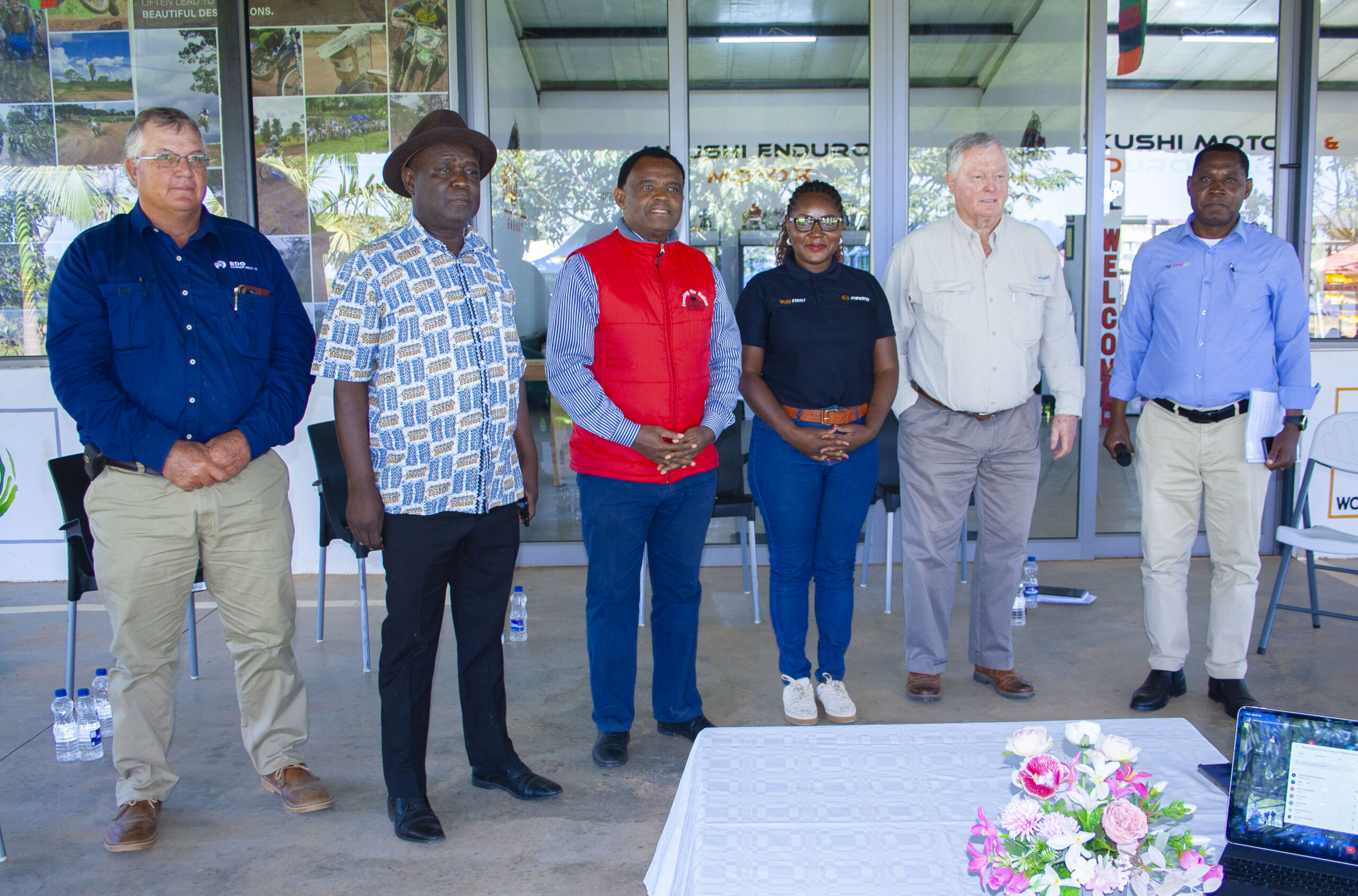
On 10 June 2026, AgLeaseCo, in partnership with Global Grains Investment Limited, hosted the Mkushi Agricultural Finance and Markets Networking Event, a full-day, practitioner-led forum designed to bring together key players across Zambia’s agricultural value chain.
Held in one of the country’s most commercially active farming regions, the event created a rare platform for open, solution-driven dialogue between farmers, financiers, buyers, policymakers and development organisations. Through a series of panel discussions and interactive sessions, participants unpacked the realities shaping agricultural productivity, profitability and long-term sustainability.
The Mkushi Agricultural Finance and Markets Networking Event was conceived as a practitioner-led forum bringing together the full spectrum of Zambia’s agricultural value chain in one of the country’s most productive and commercially significant farming districts.
Mkushi is widely regarded as a flagship agricultural district in Zambia. Home to established commercial farmers, active commodity traders, input suppliers, and development organisations. Yet, despite the concentration of expertise in the region, structured conversations between financiers, buyers, farmers, and policymakers remain rare. This event sought to close that gap.
The organising partnership between AgLeaseCo and Global Grains Zambia, a leading commodity trading and market-linkage company, reflected the dual pillars of productive agriculture: capital access and market access. Together, they created a platform for the agricultural community to examine shared challenges, celebrate progress, and identify concrete pathways toward greater commercial viability.
The event was also positioned as a vehicle for stakeholder relationship-building, with an expressed intent to create recurring touchpoints between sectors that often operate in silos. The Mkushi event is expected to establish a template for similar gatherings in other agricultural districts.
A shared responsibility for farmer success
One of the strongest themes to emerge from the discussions was the role of farmer agency. While access to finance, markets and infrastructure remains critical, there was clear consensus that farmers themselves carry the greatest responsibility for their success. Financial discipline, informed decision-making and operational consistency were highlighted as key differentiators between thriving and struggling farming enterprises.
Mutinta Mukale of Zanaco was asked to respond to the claim that banks are too conservative, underfinancing the farmers who need capital most. She acknowledged that lending risk management is a concern, as farmers who redirect borrowed capital away from their production. This behaviour erodes repayment capacity, increases default rates, and ultimately makes banks more reluctant to lend.
Mutina mentioned: “We understand the perception that banks are too conservative, but the reality is that risk management is essential to ensure sustainability in lending. One of the key challenges we face is when borrowed funds are diverted away from their intended productive use. This not only weakens the farmer’s ability to repay but also increases default risk, which in turn makes financial institutions more cautious. Strengthening financial discipline and accountability within the farming sector is critical if we want to unlock more accessible funding.”
Ezekiel Sekele of Zambeef offered a unique buyer’s perspective that consistency of supply, adherence to quality specifications, and reliability of delivery schedules matter far more than raw production numbers. “There is a common belief that success in farming is driven by volume, but from a buyer’s perspective, that is only part of the equation. What matters far more is consistency in supply, meeting quality specifications, and delivering reliably against agreed schedules. We are actively working with cooperatives in Mkushi and surrounding areas to strengthen these systems, because organised, dependable producers are the ones who unlock long-term, premium market opportunities,” Ezekiel added.
Stuie Kearns, a commercial farmer, presented the view that farmers themselves bear the greatest responsibility for their outcomes. He acknowledged the role of external factors but argued that farmer agency, decision-making quality, input management, and financial discipline are the ultimate variables and most are within the farmer’s control. He added: “External factors like weather, market volatility, and policy shifts will always play a role in agriculture, but they are not the whole story. The most decisive factors often lie within the farmer’s control: the quality of decisions made, how inputs are managed, and the level of financial discipline applied. While it is easy to attribute challenges to external pressures, long-term success is built on strengthening these internal drivers.”
Dave Hannay of Dunsea Farms gave his insights on which stakeholder failure hurts farmers most. Dave said: “It is easy to single out one stakeholder when things go wrong, but the reality is that agriculture operates within a highly interconnected system. Banks, buyers, input suppliers, and the government all play critical roles, and each can either enable or constrain farmer success. No single player carries the full weight of responsibility, outcomes are shaped by how effectively the entire value chain functions together.”
Representing traditional leadership in the districts, Chief Shaibila Chipushi, said: “As traditional leaders, we cannot stand apart from the challenges our farmers face, we must be actively involved in finding solutions. Whether it is organising dam-building during drought or sharing knowledge gained from agricultural workshops, our role is to mobilise our communities and lead by example. Real transformation begins at the grassroots level, and traditional leadership has a critical role to play in helping farmers move from subsistence to more commercial, sustainable practices.”
Unlocking value beyond production
A major takeaway from the event was that the most significant opportunities in agriculture lie beyond primary production. Panellists consistently pointed to value addition, processing, storage and logistics as areas where substantial value is currently lost.
Stewart Parkes of Global Grains Zambia offered a sharp analysis of the value chain, concluding that the greatest and most consistent value creation currently occurs at the processing and export end of the chain. He added: “While primary production remains the foundation, the margins available to those who can process raw commodities into finished or semi-finished products are substantially higher and more reliable. This framing implicitly challenges farmers to think beyond production and consider upstream investment.”
Western Muzomba, a commercial farmer, was candid about where farmers lose money. His answer centred on logistics costs, especially fuel costs and other external factors beyond the direct control of individual producers. His recommendation was practical: “Rather than expending energy on variables outside their control, farmers should focus intensely on the cost structures and management decisions that are within their power to improve. This is a message of operational discipline and strategic focus.”
Exporting raw commodities without processing continues to limit profitability across the sector. Strengthening local capacity for storage, aggregation and processing was identified as a critical step toward retaining more value within Zambia’s agricultural economy.
Mechanisation as a foundation for growth
AgLeaseCo reinforced a central message: mechanisation is not a luxury; it is a prerequisite for commercial farming. Without the right equipment and reliable access to water, farmers cannot achieve the scale, efficiency or consistency required by modern markets.
Chinso Chipopola of AgLeaseCo responded to questions about mechanisation and asset finance, anchoring the discussion in the fundamental question of farmer productivity. “The central argument was that agricultural mechanisation is not simply an efficiency tool, it is a productivity threshold. Without adequate machinery, farmers cannot achieve the scale, timeliness, and consistency required to compete in commercial markets. Water security was specifically cited as a critical dimension: farmers who cannot reliably irrigate are fundamentally vulnerable to rainfall variability, making their businesses inherently difficult to finance and difficult to scale,” he added.
Delays in adopting mechanisation come at a cost, resulting in missed planting windows, reduced yields and lower profitability over time.
The role of knowledge and market planning
Another key insight was the importance of knowledge and preparation. Farmers were encouraged to view inputs such as fertiliser not as costs to minimise, but as investments that require proper understanding to deliver returns.
David Bradshaw of AAAA Fertiliser challenged the framing of fertiliser as a cost to be minimised. David elaborated: “The difference between profitable and unprofitable fertiliser use is not simply access, it is knowledge. Understanding your soil, applying the right product at the correct rate and time, and aligning fertiliser use with broader agronomic decisions are what ultimately determine returns. Without that foundation, even subsidised inputs can be misused. That is why farmer education remains the most critical intervention in improving fertiliser efficiency and profitability.”
Maziko Phiri of AGRA brought a continental perspective, drawing on the Alliance’s work across African agricultural transformation programmes.
Equally important is market planning. One of the costliest mistakes identified was producing without securing a buyer. The shift toward market-led production, where offtake agreements guide planting decisions, is essential for reducing risk and improving profitability.
Looking ahead: Agriculture in 2035
Looking to the future, technology emerged as the defining factor that will shape agriculture over the next decade. Farmers and agribusinesses that adopt digital tools, leverage data and remain adaptable will be best positioned to succeed.
Owen Green offered a forward-looking perspective on where the next generation of agricultural wealth will be created. Owen said: “Much of the wealth created in agriculture has historically been built at the household level, rooted in generational knowledge and informal practices. The real opportunity for transformation lies in taking that embedded knowledge and making it systematic, teachable, and scalable. By doing so, we can move beyond a model that produces only a small group of large-scale commercial farmers, and instead enable a far wider base of agricultural entrepreneurs to grow and participate meaningfully in the sector.”
The future agricultural leader will not only produce efficiently but will also operate as a data-driven entrepreneur, able to respond to changing conditions and market demands in real time.

Strengthening collaboration for a resilient sector
The Mkushi event demonstrated the power of bringing stakeholders together in a practical, solution-focused environment. By fostering honest dialogue and shared understanding, AgLeaseCo and its partners are helping to build a more connected, informed and resilient agricultural sector.
The final full session invited panellists to turn their thoughts to the future and answer the question, where will Zambian farming be in 10 years. Here, technology was identified as the dominant driver of change.
Gwinyai Dzinotyiweyi of CPTM opened the session by saying that technological advancement would be the defining force in Africa. “Business models built on long, opaque trading chains with limited price transparency are unlikely to survive in the long term. Farmers are increasingly seeking direct access to markets, better pricing visibility, and greater control over their products. Digital platforms are accelerating this shift by connecting producers more directly with buyers, and in doing so, they are fundamentally reshaping how agricultural trade will function in the future,” Gwinyai added.
Mutumboi Mundia of Prospero Zambia was asked what separates tomorrow’s agricultural winners from those who fail to adapt. “The farmers and agribusinesses who will succeed in the future are those who can adapt quickly and, importantly, make sense of the data available to them. It is no longer enough to rely on intuition alone, the real advantage lies in translating information into better, faster operational decisions. As the sector evolves, we will also see a shift toward more integrated ecosystems, where farmers, financiers, buyers, and technology platforms are connected in ongoing, data-driven relationships rather than isolated, transactional interactions,” he added.
Lance Simwanza of Kudu Consulting was asked to identify the single most important change Zambia must make to become one of Africa’s most competitive agricultural economies.
Kennedy Mwale, the District Agricultural Coordination Officer for Mkushi, mentioned: “Mkushi is a district with immense agricultural potential, and its strength lies in the depth of farming activity already taking place here. However, to fully unlock that potential, we need to address key constraints such as infrastructure gaps, reliable water access, and the transition from semi-commercial to fully commercial farming. Strengthening these areas will be critical if the district is to sustain growth and compete at a higher level.”
Key insights and takeaways
Farmer agency is primary
Across all three sessions and the Hot Seat, one theme was consistent and unambiguous: farmers bear the greatest individual responsibility for their own outcomes. This does not diminish the importance of enabling environments, market access, and finance, but it does reframe the dominant narrative from ‘farmers as victims’ to ‘farmers as entrepreneurs who must exercise discipline, knowledge, and agency.’
Mechanisation is a productivity prerequisite
The AgLeaseCo perspective framed mechanisation not as a productivity enhancement but as a baseline requirement for commercial-scale farming. Without adequate mechanisation and water security, farmers cannot achieve the consistency and scale demanded by commercial buyers and financiers. Delayed mechanisation is not cost-neutral; it represents lost income, missed market windows, and compounding competitiveness gaps.
Value addition is the defining commercial opportunity
Whether the question was about investment priorities, business model evolution, or the future of the value chain, the answer consistently pointed to value addition and processing as the primary site of untapped commercial opportunity in Zambian agriculture. The export of raw commodities without any processing is widely seen as a structural weakness that leaves significant revenue on the table.
Technology will separate winners from losers by 2035
The unanimous identification of technology as the primary driver of agricultural change over the next decade carries a specific implication: businesses and farmers that invest in digital tools, data management, and precision agriculture now will have a structural advantage that compounds over time. Those who delay adoption risk not merely falling behind but becoming commercially unviable.
Logistics and storage are the hidden profit killers
Multiple panellists identified logistics costs, mainly fuel and inadequate grain storage, as major causes of post-harvest value loss. These are not merely operational problems; they are financial ones. A farmer who produces a good crop but cannot store or transport it efficiently is systematically disadvantaged relative to one who can.
Market linkage must precede production planning
The Hot Seat rapid-fire produced a sharp lesson: planting without an offtaker is the most expensive mistake a farmer can make. The discipline of securing market linkages before committing to a production plan, rather than hoping to find a buyer post-harvest, is a fundamental shift in how Zambian farmers must approach their businesses.
Traditional leadership has an underutilised role
Chief Shaibila Chipushi’s contributions elevated an often-overlooked dimension of agricultural transformation: the role of traditional authority in mobilising communities, shifting cultural attitudes toward business-oriented farming, and leading practical interventions such as water infrastructure development. Development programmes and private sector actors would benefit from the formal integration of traditional leadership into agricultural extension and investment strategies.