Smart Irrigation, Smarter Yields: A South African farmer, Hannes Schutte, who is rewriting the rulebook in Mpumalanga
For farmer Hannes Schutte, smart irrigation is more than technology, it’s survival. In one of South Africa’s key farming regions, he’s proving that smaller pivots, solar power, and Komet’s low-pressure sprinklers can deliver outsized results.
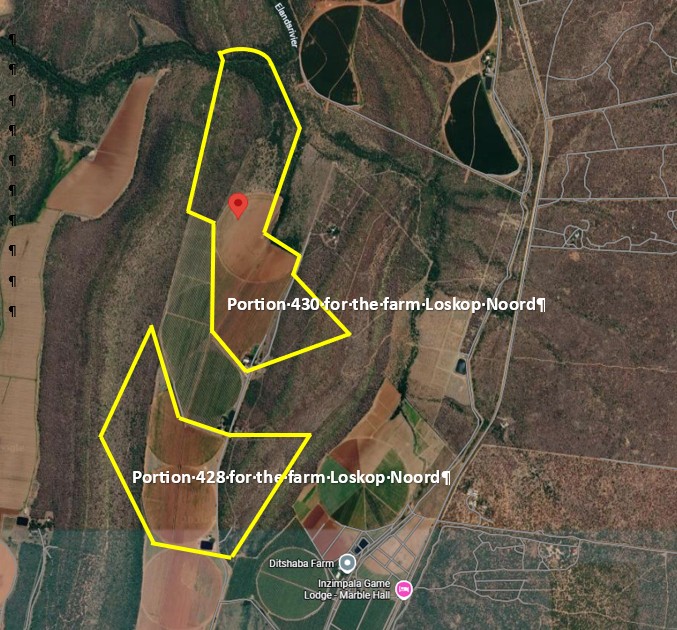
On his mixed farm in Groblersdal, Mpumalanga, Hannes has recorded a 12% increase in potato yields by switching to smaller, precision-managed pivots. He has also cut energy use by 60% thanks to solar-powered irrigation, slashing both costs and carbon emissions.
“Potatoes are high risk, high reward,” Hannes says. “But if you learn the variety, study the land, and fine-tune your irrigation, they pay you back. Komet’s sprinklers helped me get there – uniform droplets, less misting, and better coverage at lower pressure.”
Smaller pivots, bigger impact
While many farmers in the region rely on large pivot systems to irrigate wide swathes of land, Hannes took a different route: smaller, more agile pivot systems, typically no more than 22 hectares each. It might seem counterintuitive, but it gives him greater control and responsiveness, especially in the face of unpredictable weather and soil variability.
“Big pivots look efficient, but when one breaks down, the whole schedule falls behind. With smaller pivots, I can stay on track and tailor water to the land’s needs,” he explains.
That flexibility is especially valuable during Mpumalanga’s intense summer heatwaves. The smaller pivots allow Hannes to run more frequent irrigation cycles, apply water where it’s most needed, and react to plant stress faster – a strategy that has delivered measurable results.
Engineering for efficiency
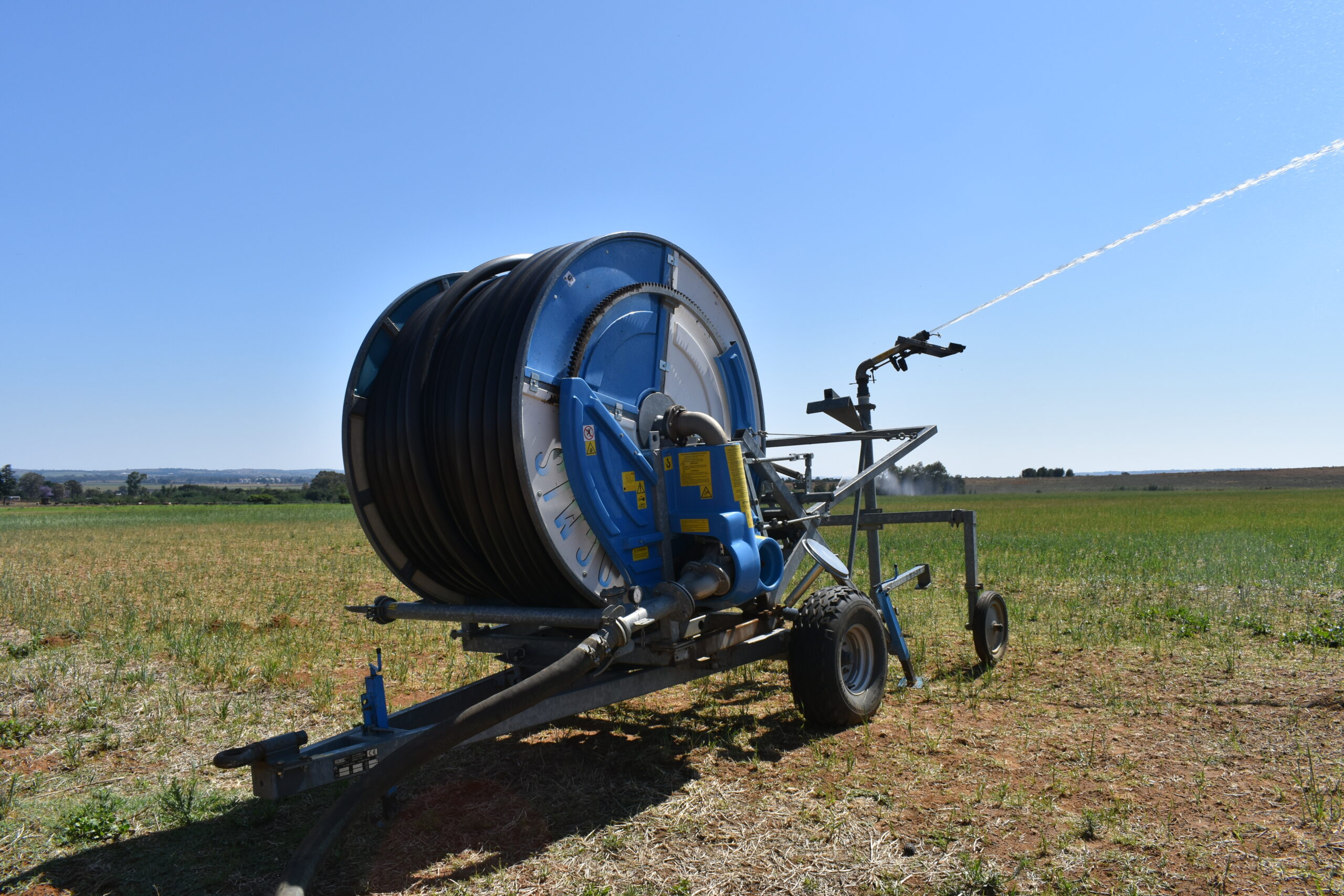
A critical piece of Hannes’ success has been his switch to Komet’s low-pressure sprinkler systems, introduced through a collaboration with his local dealership, Loskop Valley Besproeiing, and Komet’s South African lead, Cobus Myburgh.
“I had pressure issues on one farm,” Hannes recalls. “I was advised that Komet’s nozzles were perfect. The droplets were more uniform, there was no misting, and the coverage was just better.”
Because Komet sprinklers operate at lower pressures, Hannes can run fewer pumps if needed and use significantly less energy and water – while still improving crop performance.
“Komet’s sprinklers deliver a consistent droplet size, even coverage, and less evaporation,” he says. “That means more water gets to the plant, not lost in the air.”
Komet’s Global CEO, Andree Groos agrees: “Hannes is a standout example of how South African farmers can innovate with the right tools. He’s data-driven, proactive, and focused on doing more with less – exactly where farming needs to go.”
Dealer support has also been critical. “They’re part of the team,” Hannes says. “They consult to ensure I get the best results.”
Technology with farmers in mind
Hannes’ success reflects a broader shift across South African agriculture. With load-shedding, climate volatility, and sediment-heavy water threatening production, farmers are seeking smarter irrigation. Komet’s innovations, such as the KPW end-of-system sprinkler, are designed to maximize coverage at just 10 psi, critical in a low-power environment where every drop and kilowatt counts.
A deeper commitment
In August this year, Groos, visited South Africa to strengthen ties with farmers and dealers and gain firsthand insight into their challenges.
“What strikes me most is the precision and care South African farmers bring to every aspect of their operation,” Groos says. “They invest thoughtfully, care deeply about water conservation, and are constantly looking to improve, even by just 1% in every input. That commitment inspires us to keep raising the bar.”
A central focus of his visit was energy, how to reliably power the pivots that keep crops alive in a country where grid instability and loadshedding are everyday challenges. Many farmers are transitioning to solar energy, and Komet’s low-pressure, high-efficiency sprinklers are designed to operate effectively even at reduced energy input, without relying on traditional end guns.
“One of the reasons we developed the KPW is with South African challenges in mind,” Groos explains. “It delivers optimal performance at low pressure, extending irrigation coverage without demanding more power.”
Looking ahead
From its high-tech base in Lienz, Austria, to its partnerships across Sub-Saharan Africa, Komet is embedding sustainability, farmer support, and continuous education through the Komet Academy.
“There’s something special happening in South Africa,” Groos concludes. “The optimism, the technical skill, and the community-driven approach to farming are inspiring. We’re proud to support that with world-class solutions that respect both people and planet.”