

The Ivory Coast is a country in western sub-Saharan Africa. The capital, Yamoussoukro, is located in the centre of the country, but the port city of Abidjan is the largest. Unlike other countries in the region, the Ivory Coast enjoys political stability.
This tropical country is bordered by Guinea to the northwest, Liberia to the west, Mali to the northwest, Burkina Faso to the northeast, Ghana to the east and the Atlantic Ocean’s Gulf of Guinea to the south.
With 31,5 million inhabitants (2024), the country is the third-most populous in West Africa. The official language is French; religions include Islam, Christianity, and traditional faiths, often entailing animism.
It is the most biodiverse country in West Africa, with more than 1 200 animal species, including 223 mammals, 702 birds, 161 reptiles, 85 amphibians and 111 species of fish, along with 4 700 plant species.
There are six terrestrial ecoregions, namely the Eastern Guinean forests, Guinean montane forests, Western Guinean lowland forests, Guinean forest-savanna mosaic, West Sudanian savanna and Guinean mangroves.
Nearly 65% of the land is being farmed and includes arable land (9,1%), permanent pastures (41,5%) and permanent crops (14,2%). The fertile land is mainly cultivated by small-scale farmers, who receive fairly decent prices for their crops. About 55% of the income is generated by cocoa and coffee, as well as rubber exports.
The tropical climate with two rainy seasons and warm temperatures is geographically suitable for growing grains, peanuts and palm oil. The rainforest in the southern part limits agriculture, but the northern part’s woodland and savanna provide fertile soil for crops.
Cuisine
The Ivory Coast’s traditional cuisine, which shows similarities with neighbouring countries, is influenced by the food produced, including staple ingredients such as tubers and grains, ground nuts, vegetables, fruit, spices, palm oil, as well as pork, chicken and seafood.
Street food
Ivorians like to eat at maquis, small, open-air restaurants that are unique to the region. Maquis normally offer braised chicken and fish covered in onions and tomatoes served with attiéké (fermented cassava couscous) or kedjenou (Ivorian chicken stew).
Alloco is a popular street food consisting of ripe, sliced plantains fried and salted in palm oil, served with a spicy sauce prepared with onions and chilli. Alloco can be enjoyed on its own as a snack or as a side dish for braised chicken or freshly grilled fish.
Staples
Attiéké is prepared with grated cassava and palm oil, which is processed into a fine, grainy product similar in appearance and taste to couscous. It is eaten as breakfast, lunch and dinner, and most commonly paired with fried fish and vegetables.
Fufu, or foufou, another staple, is a big dumpling prepared using a mixture of cassava and green plantain flour in equal portions with lukewarm water. The mixture is shaped into a ball and cooked in a pan over a low flame. It is eaten with one’s fingers and is used to scoop up other foods on the plate, particularly sauces and soups.
-
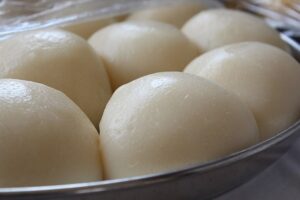
- Placali is prepared with fermented cassava. (Source: https://travelfoodatlas. com/ivorian-food)
-
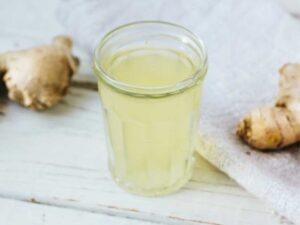
- Gnamakoudji is a ginger-flavoured drink consisting of water, ginger, spices and a sweetener. (Source: https:// travelfoodatlas.com/ivorian-food)
Placali, which resembles fufu in appearance, is also prepared using fermented cassava dough. It is slow-cooked with water and then allowed to cool. It is usually eaten for lunch, accompanied by stew, sauce or soup prepared with palm nuts or peanuts.
Meat
Kedjenou is a traditional dish prepared by slowly cooking chicken and vegetables in a clay pot called a canari. Traditionally, chicken or guinea fowl is used, but sometimes it’s also made with. Proteins can be omitted to enjoy kedjenou as a vegetarian dish.
This popular dish is cooked without water or oil as the vegetables and chicken cook in their own juices. Vegetables may include tomatoes, sweet and hot peppers and spices, especially fresh ginger. Certain ethnic groups cover the pot with banana leaves during cooking. Kedjenou is served with rice or attiéké.
Mafé or peanut butter stew is prepared using meat, such as chicken, lamb and beef, as well as tomatoes, onions, peanuts, garlic, cabbage and leaf or root vegetables. There are many different versions, which include okra, maize, carrots, cinnamon, hot peppers, paprika, black pepper, turmeric, cumin and other spices. It’s generally accompanied by white rice or fufu.
-

- Mafé sauce is a peanut butter stew consisting of meat such as chicken, lamb and beef, and vegetables – as well as onions, garlic and peanuts. Vegetarian options are made with tomatoes, onions, peanuts, garlic, cabbage and leaf or root vegetables. (Source: https://travelfoodatlas. com/ivorian-food)
-
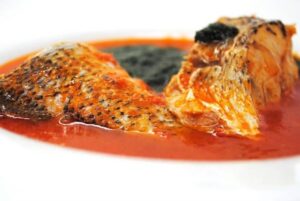
- Biékosseu is a chilli sauce eaten with fufu and accompanied by dry fish or snails. (Source: https:// www.chefspencil.com/top-24- foods-from-ivory-coast/)
Poulet Braisé is a chicken dish prepared like fish – marinated and slow-cooked on the grill. It is usually eaten with a spicy chilli sauce. Poulet Braisé is a popular streetside food, favoured by Ivorians.
Choukouya is the West African version of flame-grilled meat, such as beef, chicken or goat. Once cooked, the meat is chopped up, topped with onions and served with a spicy sauce, fries or alloco.
Fish
Garba is a widely consumed street food dish consisting of attiéké and deep-fried pieces of tuna. The dish is seasoned with tomatoes, chopped onions and peppers, with a bit of oil from the fried tuna and seasoning. Garba, which is eaten at any time of day, is sometimes served wrapped in a banana leaf.
Poisson Braisé is a fish dish. Fresh fish is usually marinated in garlic, lemon, parsley and pepper, and cooked slowly on a hot grill. It is served topped with sauteed onions and tomatoes and complemented by attiéké or alloco.
Poisson en papillote is a fish dish cooked with lemon marinade and sometimes tomatoes. It’s served wrapped in foil.
Sauces
-

- Attiéké is a dish prepared using grated cassava that has a similar taste and consistency to couscous. (Source: https://travelfoodatlas. com/ivorian-food)
-

- Sauce Kopè is prepared using crab, snails, fish or beef and okra, which gives the sauce a gooey consistency. (Source: https://www.chefspencil. com/top-24-foods-from-ivory-coast/)
Sauce Kopè is a sauce prepared using crab, snails and fish or beef, okra and spices. The okra gives it a gooey consistency, and the sauce is usually eaten with placali.
Gouagoussou sauce is prepared with aubergine and okra and enjoyed with fufu.
Djoumblé is another sauce that uses fresh or dried okra as its base. The dish is served with fufu, banana, yam, rice or placali.
Drinks
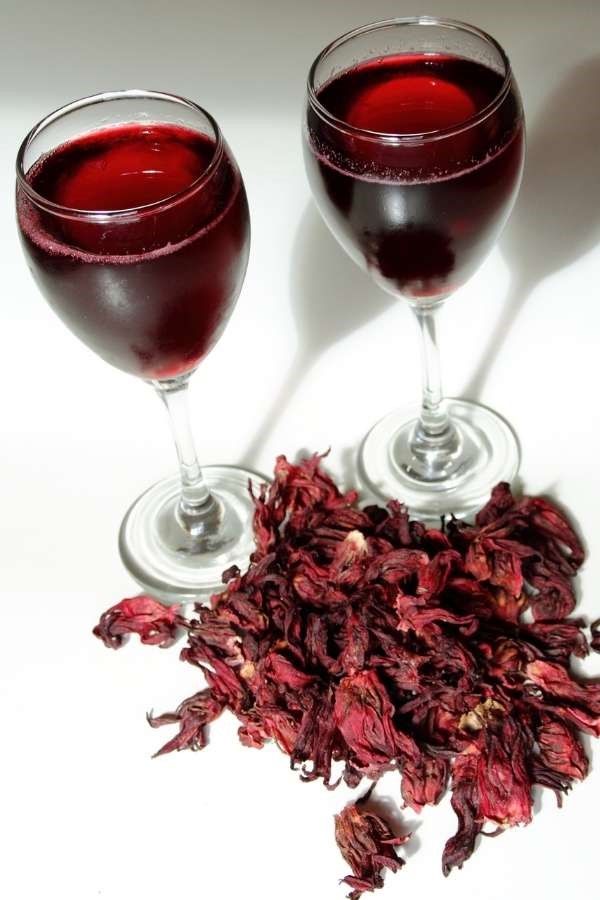
Bissap, also known as roselle juice, is a drink that is prepared by using the calyx, a group of sepals that forms the outermost whorl of the hibiscus flower. The drink is usually sweetened and chilled, but when it is consumed hot, it’s known as hibiscus tea. Bissap is often served with mint leaves.
Gnamakoudji is a ginger-flavoured beverage consisting of ginger, water, spices and a sweetener. The ginger and spices are steeped in hot water, then removed, sweetened and chilled before serving.
Source references
Agriculture in Ivory Coast (2025) Wikipedia
https://en.wikipedia.org/wiki/Agriculture_in_Ivory_Coast
Bren (2025) Eating Abidjan: 16 Foods to try on your Visit to Cote d’Ivoire Bren on the road.
https://brenontheroad.com/food-in-abidjan-cote-divoire-ivory-coast/
Dje, E. (2021) Top 24 Foods from Ivory Coast Chef’s Pencil
https://www.chefspencil.com/top-24-foods-from-ivory-coast/
Ivory Coast
https://en.wikipedia.org/wiki/Ivory_Coast
Ivorian Food: 10 Traditional Dishes of the Ivory Coast (2025)


