Liberia is located on the West African Coast. The capital is Monrovia, and, besides the Atlantic Ocean, the country is bordered by Sierra Leone to the northwest, Guinea to the north, and the Ivory Coast to the east.
Liberia began in the early 19th century as a project of the American Colonisation Society (ACS), which believed that Black Africans would face better chances for freedom and prosperity in Africa. Between 1822 and the outbreak of the American Civil War in 1861, more than 15 000 freed and free-born African Americans, along with 3 198 Afro-Caribbeans, relocated to Liberia. The country became the first to declare independence in 1847, and it was never colonised.
The settlers gradually colonised the indigenous population and developed an Americo-Liberian identity with their own culture and traditions.
The Liberian landscape consists mostly of flat to rolling coastal plains with mangroves and swamps, which rise to a rolling plateau and low mountains in the northeast. Tropical rainforests cover the hills, with elephant grass and semi-deciduous forests in the northern sections.
Forests along the coastline consist mainly of salt-tolerant mangrove trees, while the more sparsely populated inland has forests opening onto a plateau of drier grasslands. The equatorial climate is characterised by rains from May to October and harsh harmattan winds occur during the rest of the year.
Rubber and palm oil plantations have led to deforestation, which has reduced the country’s biodiversity and food access.
-
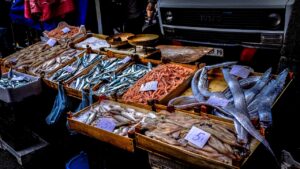
- Fish is the most popular protein component in Liberian dishes. (Source: Pixabay)
-
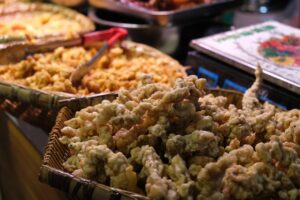
- Bushmeat is very popular in Liberia, and many households depend on whatever animal they can catch or kill in the forests. (Source: Pixabay)
Agriculture
Agriculture is a major sector of the country’s economy, which accounts for 38,8% of GDP and employs more than 70% of the population.
The country’s agriculture provides valuable exports for one of the world’s least developed countries, as defined by the United Nations.
The country has a climate favourable to farming, with vast forests and an abundance of water. Low yields hamper agriculture, so more than half of foodstuffs are imported.
The major crops include rice, cassava, bananas and palm oil. Natural rubber and timber are also exported, but these products are not sustainable as they destroy the natural habitat.
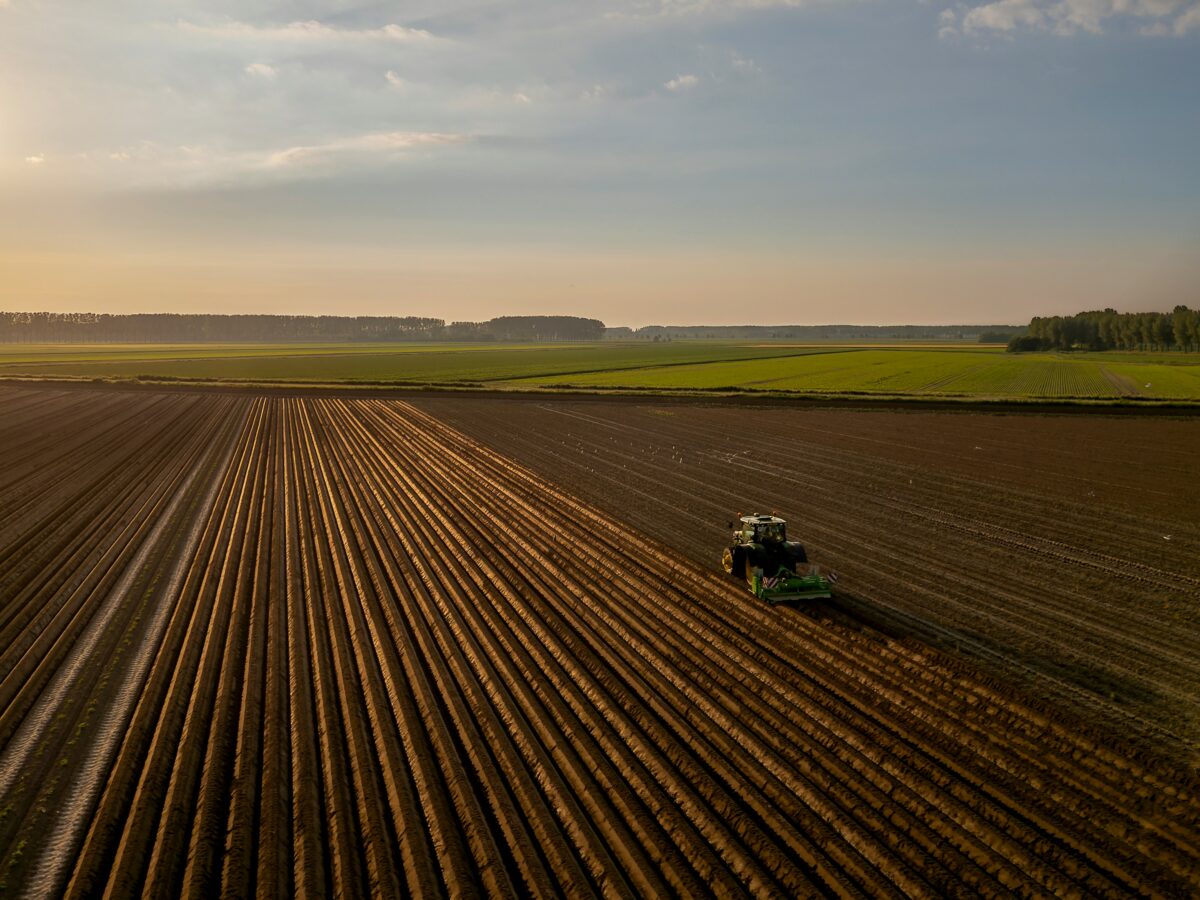
Agricultural activity occurs in most rural locations, with subsistence crops growing in coastal plains and cash crops in tropical forests. The sector is especially important for women, as they are widely employed in this sector when compared to the economy as a whole.
Cuisine
Liberian cuisine was influenced by African Americans through the Americo-Liberians and Caribbean food and recipes. It’s based on rice as the main staple, but also includes cassava, plantain, yam, vegetables including potatoes, greens, cassava leaf, okra, sweet potatoes, potatoes, potato greens and cabbage. Tropical fruits like citrus, coconut and palm oil, as well as fish and meat are widely available. Liberia produces no dairy, and all milk products are imported.
Stews are often flavoured with habanero and scotch bonnet chillies and are enjoyed with fufu. Baking is popular, with cornbread, sour bread, rice bread, banana bread and cakes at the top of the list.
Fish is one of the most important sources of animal protein in Liberia. A 1997 study found that in the Upper Guinea countries, including Liberia, fish accounted for between 30% and 80% of the animal protein consumed in local diets. However, research also showed that fish consumption declined between the 1970s and 1990s due to the degradation of land and catchment areas, which negatively affected aquatic ecosystems and fish production.
-
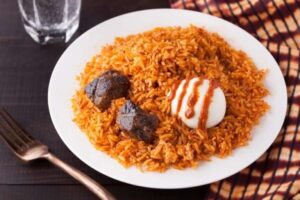
- Jollof rice is a traditional food in West African countries like Liberia. (Source: Pixabay)
-
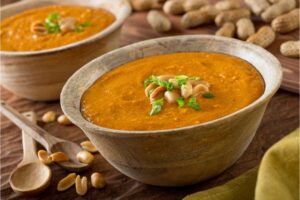
- Groundnuts (peanuts) are widely utilised in Liberian culinary traditions as the primary thickener and flavour base for proteins. The naming of these dishes is consistency-dependent: lighter, more fluid preparations are classified as soups, while reduced, thicker variations are termed stews. (Source: Pixabay)
Bushmeat is considered a delicacy and is widely eaten in Liberia, where it ranks only second to fish as the preferred source of protein.
A 2004 survey, conducted during the last civil war, found that 80% of households cooked bushmeat occasionally, 13% cooked it once a week, and 7% cooked bushmeat daily. It is believed that consumption may now be even higher. This is not favourable, since many species in the country are endangered, including elephants, pygmy hippopotamus, chimpanzees, leopards, duiker, other small antelope and even certain monkeys.
Alcohol, such as standard beers and liquors, is imported, but traditional palm wine, made from fermenting palm tree sap, is very popular. A local rum, called gana gana, is also made from sugar cane.
Fufu is a dough-like, starchy food or dumpling typically prepared with cassava, yams, or plantains. These ingredients are boiled, pounded and then formed into balls. The dish is usually eaten with the hands, after which it’s dipped into soups or stews made with meat, fish or vegetables.
Fufu is made more flavourful by adding olive oil, salt, pepper and garlic. It’s also often stuffed with chicharrón, which is fried pork belly.
Jollof rice is a classic West African dish featuring long-grain rice cooked in a spiced tomato, onion and pepper reduction. The recipe frequently incorporates vegetables like carrots, peas, cabbage, and eggplant, alongside proteins such as chicken, beef, lamb, or goat. Often accompanied by salad or fried plantains. The dish is also known as benachin (“one pot”) in Gambia, thieboudienne in Senegal, and riz au gras in French-speaking West Africa.
Rice bread is prepared by beating the rice into flour in a mortar using a pestle. The rice flour is then mixed with other ingredients such as ripe mashed plantains, butter, eggs, baking soda, sugar, salt, water and grated ginger.
The rice bread is similar to banana bread and is typically served with coffee or tea as a starter course, and when guests come to visit.
Dumboy is prepared by peeling and boiling fresh cassava from which the inner fibres have been removed. The boiled roots are transferred to a large mortar and beaten using a heavy pestle into dough, which is shaped into balls.
The balls are hand-moulded and dipped into a communal bowl of pepper soup, an aromatic broth made with meat, onions, chillies and local seasonings.
Maafe, or peanut soup, also known as groundnut stew, is prepared with peanuts or peanut butter, onions, bell and hot peppers, potatoes and okra, as well as beef, chicken or fish. It’s usually eaten for lunch with a side of cooked rice, couscous or fufu.
Cabbage stew is prepared using a mixture of cabbage, chicken, stock cubes or chicken bouillon, meat tenderiser, beef, tomato paste, black pepper, onions and vegetable oil. It is served with boiled yams, plantains, potatoes, rice or any other preferred starch on the side. Sometimes a can of mackerel in tomato sauce is added.
Collards and cabbage stew is another dish prepared with cabbage, and chopped collard greens, onions, red pepper, black pepper and pieces of bacon. Sometimes chicken, beef or shrimp is added. The dish is served with fried plantains or rice.
Chicken stew is typically prepared using chicken pieces, shrimp, green beans, bell peppers, tomatoes, onions and chicken stock. The dish is flavoured with garlic, ginger, hot peppers and parsley. It is enjoyed with white rice.
Torborgee is a thick, hearty Liberian stew characterised by its distinctly spicy and bitter flavour profile. The dish centres around torborgee beans and rich palm oil, layered with savoury dried meats such as chicken, pork or fish.
Torborgee can be traced back to the indigenous communities of Liberia, who used local greens as a staple in their diets. These communities relied on what the land provided. As a result, the bitter greens used in Torborgee, such as cassava leaves, jute leaves and other wild greens, became integral to their culinary practices.
During the 19th century, Liberia’s culinary traditions evolved significantly following the arrival of Americo-Liberian settlers (freed American slaves). The newcomers introduced novel ingredients and cooking methods that gradually integrated with existing indigenous practices, creating a unique fusion of flavours.
Source references
Agriculture in Liberia
https://en.wikipedia.org/wiki/Agriculture_in_Liberia
Liberia
https://en.wikipedia.org/wiki/Liberia
Liberian cuisine
https://en.wikipedia.org/wiki/Liberian_cuisine
Liberian Food: 9 Traditional Dishes of Liberia (2024) Travel Food Atlas https://travelfoodatlas.com/liberian-food