When it comes to our farms, there’s no one-size-fits-all solution. Every field, crop, and season presents unique challenges that can stump even the most experienced farmers. But to fix the growth, you need to strengthen the foundation – and it all starts with how you treat the soil.
Applying the same bulk fertiliser without considering soil health, crop stage, or environmental conditions is a common misstep. The result can be wasted input, lower returns, and, in some cases, long-term soil degradation. Speciality fertilisers are sophisticated products that contain plant nutrients and bio-stimulants to optimise nutrient efficiency, crop yield and quality, which is why they are attracting global attention.
Tailored to specific crops’ growth stages or nutrient gaps, speciality fertilisers abandon the one-size-fits-all approach and instead adopt a smarter, more sustainable method to boost yields and safeguard soil health for future growth. But what makes them so special?
Start with the crop’s needs
Speciality fertilisers differ from traditional bulk nitrogen, phosphorus and potassium (NPK) fertilisers. They are scientifically crafted for a specific purpose. Whether formulated as a water-soluble powder, a liquid for fertigation, a biostimulant or soil ameliorant, each product is targeted to deliver the optimal required compound in the right way at the right time.
For example, take a citrus farmer dealing with micronutrient deficiencies. Instead of applying more general fertiliser, a speciality product enriched with the required micronutrient can correct the problem directly – improving fruit size and quality, while using less overall input.
It’s not about applying more. It’s about supplying exactly what the plant needs, when it needs it.
Target nutrients, avoid waste
By targeting crop requirements, speciality fertilisers avoid the risks of over-fertilisation – wasted spend, lower nutrient uptake, and negative environmental impacts.
Globally, the devastation that can be caused by over fertilisation has been made clear. In regions near the Great Barrier Reef, nitrogen runoff has fueled algae blooms that damage marine biodiversity. Similar challenges are emerging elsewhere, prompting stricter input regulations.
South Africa doesn’t yet face the same regulatory pressure as Europe, but it’s coming. Our farmers are already asking the hard questions about nutrient efficiency, sustainability, and long-term soil health.
Knowledge before application
Switching to speciality fertilisers requires more than just buying a different product. Farmers need the right knowledge to identify nutrient gaps early.
One common barrier could be equipment if a farmer usually applies granular fertiliser and now may want to move to liquid speciality products but lacks the applicators to use them efficiently. Others may hesitate without clear proof of return on investment.
That’s why Omnia works closely with farmers from planting to harvest, to test soil, plant tissue, products, share data, and provide the science behind the solutions. It’s not enough to supply a product. We also need to build confidence in how and why it works.
The last decade has seen remarkable innovation in speciality fertiliser formulations. Products have evolved from simple powders and formulas to gels tailored for foliar applications and products with specific functions containing nutrients and biostimulants. Continuing research into biostimulants scientifically proves what we see in the field, such as boosting root development, nutrient uptake, and crop resilience.
The complex nature of agriculture dictates that healthy soil doesn’t look the same everywhere. It depends on the area and the crop, but the goal is always universal: to leave the soil in a healthier state for the next generation.
Feet on the farm: Omnia’s approach
Omnia’s Nutriology® model is built on this principle of tailored solutions. By combining rigorous soil analysis, farmer knowledge, and continuous on-farm support, Omnia helps producers integrate speciality fertilisers into practical fertilisation strategies.
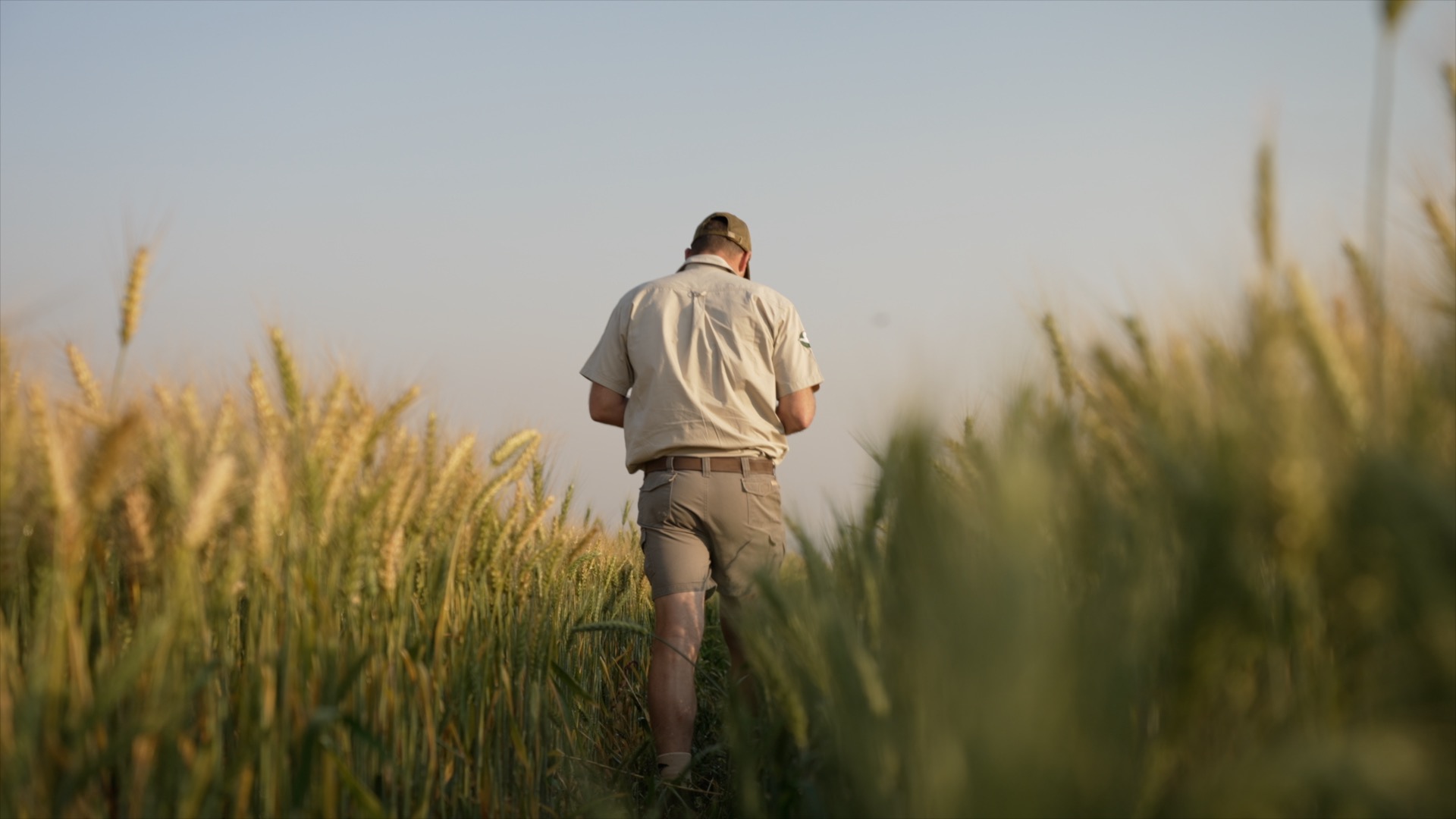
In doing this, partnership is central. Real progress happens in the field, backed by the knowledge and scientific data from the lab. It’s walking in the rows with farmers, interpreting soil data together, and adjusting strategies season by season. That’s how speciality fertilisers deliver their actual value – with speciality advice.
These fertilisers reflect the future of farming. By bridging the gap between research and real-world practice, we can help South African farmers adopt solutions that boost productivity, protect soils, and position agriculture for a greener future.