It is indeed true that more white maize than yellow maize is grown in the western production region. In terms of dryland production, the split is approximately 70% white and 30% yellow. Yield and price are the main factors influencing this ratio. Historically, white maize hybrids have had the upper hand in terms of yield, but yellow genetics have largely caught up and today deliver similar performance.
Adaptability, stability and especially grain quality are probably the reasons why white hybrids remain the more popular choice from an agronomic perspective.
Gentlemen’s agreements between neighbouring farmers to prevent cross-pollination contamination also influence colour selection. Price, however, remains the most important determining factor.
Pioneer continuously develops new yellow hybrids that are suited to the challenges associated with maize production in the western dryland regions. Under the Corteva umbrella, Pioneer has access to a wide range of genetic combinations and germplasm, providing endless possibilities for solutions.
Typically, these genetics have maturity ratings ranging from 123 to 129 CRM (Comparative Relative Maturity). Agronomically, the hybrids are prolific, have good standability and are adapted to different plant populations, row configurations, as well as a variety of soil and climatic conditions.
Yield stability is clearly a requirement. Pioneer is known for products with diverse genetic backgrounds. Hybrids such as P2362PW are early-maturing yellow options (CRM: 123) that offer the advantage of earlier delivery. In dry seasons where rainfall only arrives towards the end of December, these shorter-season genetics help avoid the risk of premature frost before harvest.
This highlights Pioneer’s ongoing commitment to developing genetics and solutions, even for what may appear to be a smaller segment of the market in the western production regions. Market demand can shift to yellow maize overnight, and Pioneer recognises this. However, price and market trends remain the key drivers. Pioneer strives to provide solutions for farmers and is ready for whichever direction market demand may take.
Against this background, I present the new Pioneer dryland yellow hybrid, P29050PW, as an option for producers in the western production region.
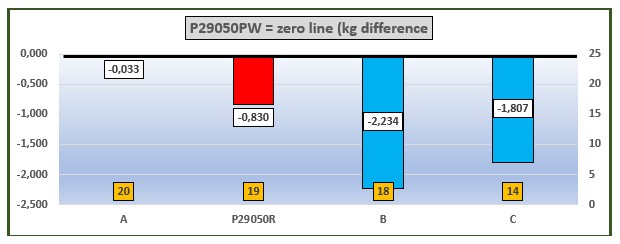
Figure 1: P29050PW standardised at zero in terms of kg/ha yield difference relative to other hybrids.
The black line in Figure 1 above represents P29050PW, standardised at zero in terms of kg/ha yield difference relative to other hybrids.
Multi-year data from the western production region show that P29050PW performs exceptionally well. Across 20 localities, P29050PW narrowly outperformed Competitor A by 33 kg/ha. More notably, P29050PW outperformed top-selling yellow competitor products B and C by 2 234 kg/ha (18 localities) and 1 807 kg/ha (14 localities), respectively. This reflects significant genetic progress in serving the yellow maize market segment.
Compared with the Roundup Ready version, P29050R, P29050PW delivered an additional 830 kg/ha across 19 localities. This demonstrates that the inclusion of PowerCore™ technology has provided a meaningful advantage to the product.
PowerCore™ is a stacked gene technology package that protects maize plants against maize stalk borer while also providing Roundup tolerance, making it suitable for the majority of crop management systems.
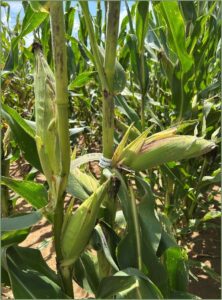
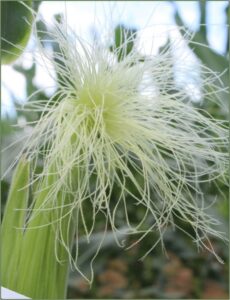
The prolificacy index is 1,82. Ears develop relatively uniformly and at the same time, indicating strong ear expression on the main stem. Grain quality is excellent despite the occurrence of white capping. Seedlings emerge quickly and uniformly, laying the foundation for a high-yielding crop. Standability is excellent.
P29050PW has a relatively long growing season and should therefore be planted early. Planting dates after 15 December are best avoided. These genetics are well adapted to a wide range of yield potential environments but perform particularly well on deeper soils with good water-holding capacity.
A plant population of 21 000 to 28 000 plants per hectare is recommended, depending on yield potential conditions. These genetics perform well across all soil types. Any row configuration (0,91 m, 1,15 m and even 0,76 m) is acceptable.

Plants are approximately 2,28 m tall, with ears positioned at around 50% of the plant height. With an ear height of 1,14 m, P29050PW is easy to harvest.
Given its excellent yield potential and strong agronomic characteristics, P29050PW should form part of any yellow maize hybrid package planted under dryland conditions in the western production region, particularly where early planting dates are possible.
For more information on Pioneer’s PowerCore™ technology and maize hybrids, visit Pioneer South Africa or send an email to info.rsa@pioneer.com