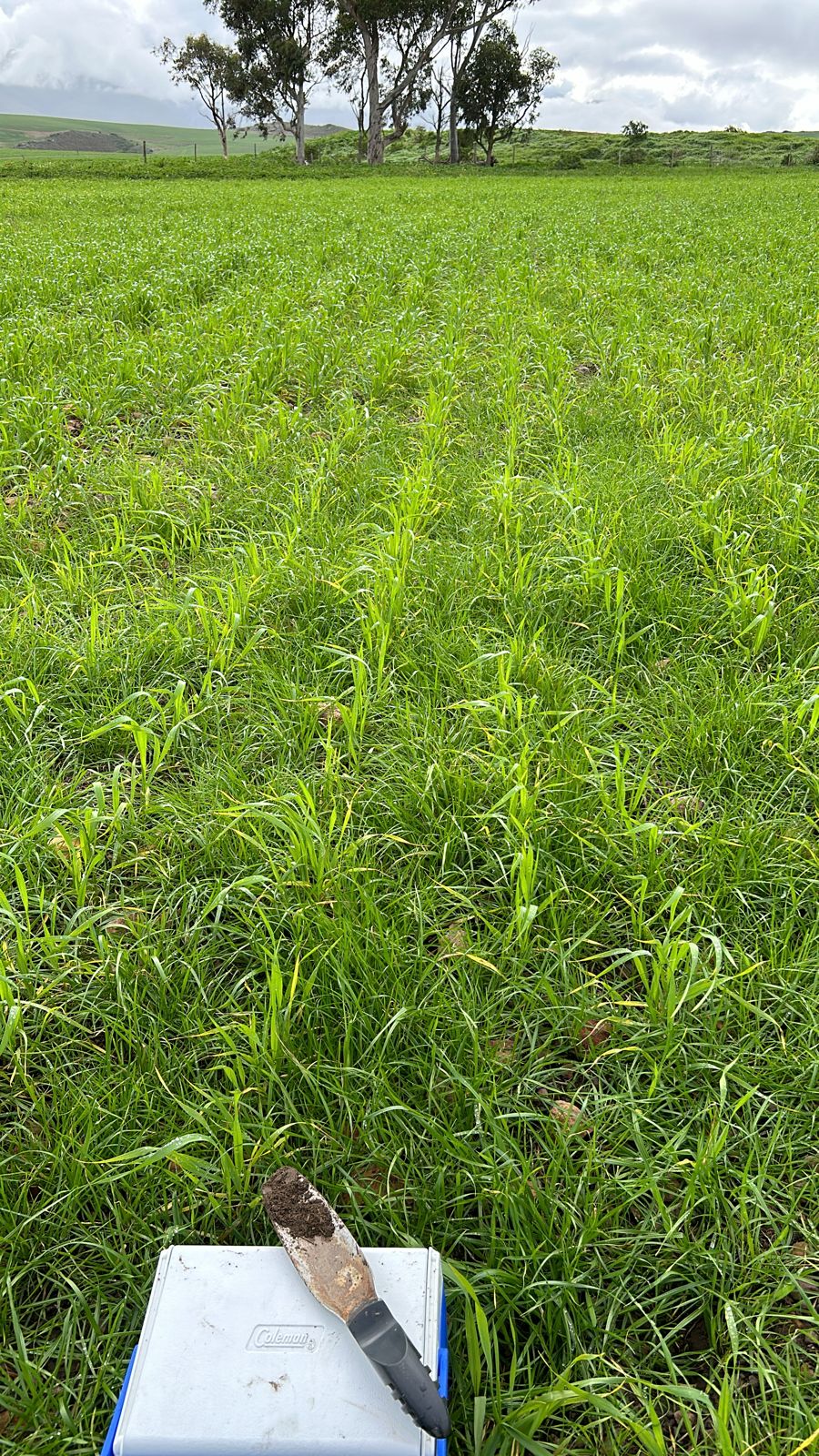
Abnormal Ear Development (AED) is a common phenomenon in South Africa. Although these abnormalities occur worldwide, the best-documented literature originates from the United States.
For that reason, I will mainly use the English terminology for those who wish to study the subject further. In any case, these American descriptions are commonly used when working in the field. Abnormal maize ear development is widespread in South Africa.
Ear rot diseases can also be classified as abnormal ear development, but this article focuses primarily on physiological disorders.
Physiological abnormalities result from a complex interaction between genetics, environmental conditions and management practices such as planting date and chemical spray applications.
Maize researchers have been studying ear abnormalities for more than 100 years, yet many questions remain unanswered and no definitive conclusions have been reached. The most critical stages for the development of these abnormalities occur between the V8 and V12 growth stages. During this period, the primary and/or secondary ear may fail to develop normally.
-
- Photos: Purdue Universiteit
Common AED symptoms
- Arrested Ear Syndrome (AES)
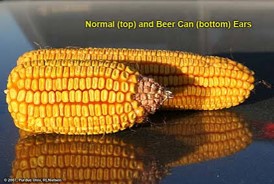
Also known as “Beer Can Ears”, “Blunt Ear Syndrome”, and “Stunted Ears”.
Symptoms
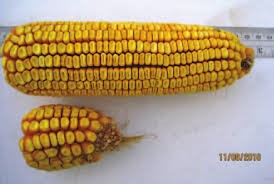
Overall reduction in ear length. Significant reduction in the number of kernels per row. At maturity, ears are noticeably shorter and smaller, contain fewer kernels and end in a sharply pointed cob tip.
The husks are also pointed and may restrict silk emergence.
Causes
A specific stress event during the early development of the primary ear causes the ear to remain abnormally small and partially developed. This stress occurs before ear development is fully determined.
Possible causes include foliar fertiliser applications or herbicide applications after the V8 growth stage. These stress events generally occur several weeks before tasseling (VT), mainly during the V8 to V12 growth stages.
Research has shown that the use of non-ionic adjuvants increases the occurrence of AES. Purdue University has demonstrated that the more products mixed in the spray tank, the greater the risk and severity of AES.
- Barbell Ears
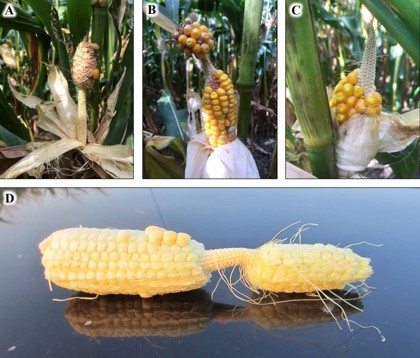
Photo: Timothy Vargo, Ohio State University
Symptoms
Kernels develop only at the base and tip of the ear, while the middle section consists only of exposed cob tissue with no kernel development.
Causes
Ovule abortion caused by stress and/or susceptible genetics. Stress factors include extreme temperatures and the application of ALS-inhibiting herbicides during the V7 to V10 growth stages.
- Incomplete kernel set
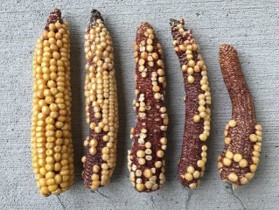

Also known as “Incomplete Kernel Set” and as “Missing the Nick”.
Symptoms
Kernels develop unevenly and are scattered along the ear. Complete rows of fully developed kernels are absent.
Causes
Incomplete pollination caused by interrupted pollen shed or insufficient pollen availability.
Periods of high temperatures, low humidity and inadequate soil moisture may cause silks to dry out and become unreceptive to pollen.
These stress conditions may also delay silk emergence, causing pollen to be shed before the silks are fully developed. The result is poor pollination and incomplete kernel set.
- Multi-Ears
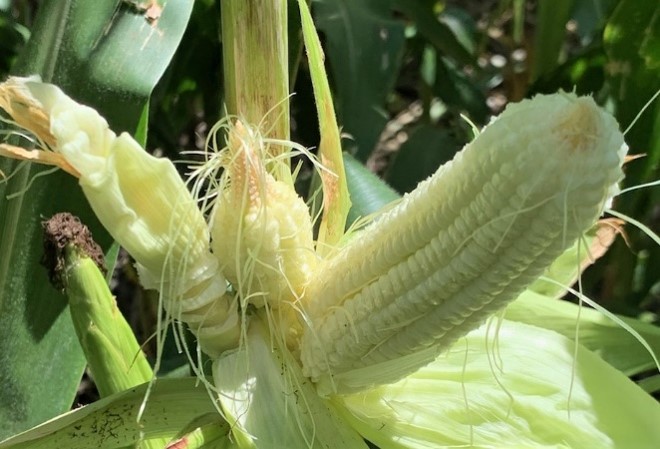
Photo: Golden Harvest Seeds
Also known as “Bouquet Ears”.
Symptoms
More than one ear develops from the same ear shank. These ears are usually smaller, incompletely pollinated and contain few or no kernels.
Causes
Genetics (hybrid characteristics) are believed to play the biggest role, as some hybrids are more prone to developing this condition.
This phenomenon has received relatively little research, and its exact causes remain uncertain. The current hypothesis is that chemical activity during a sensitive early developmental stage, combined with genetic susceptibility, may contribute to Bouquet Ears. Heat stress during early ear formation and development (V5 to V14), as well as improper application of herbicides, fungicides and micronutrients, may also play a role.
Any factor that reduces or disrupts the apical dominance of the primary ear can stimulate the development of multiple ears.
- Zipper Ears
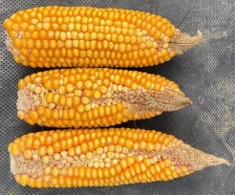
Photo: Golden Harvest Seeds
Also known as “Banana Ears”
Symptoms
One or more rows of kernels are partially or completely absent. In some cases, two or more adjacent rows are missing. The ear is often banana-shaped, bending toward the side where the rows are absent.
Causes
Poor pollination and kernel abortion after pollination, usually resulting from environmental stress.
Stress may also result from competition between plants for sunlight, nutrients and moisture – in other words, when plant populations are too high for the seasonal growing conditions.
Defoliation is believed to be one of the major contributing factors.
- Translucent watery kernels
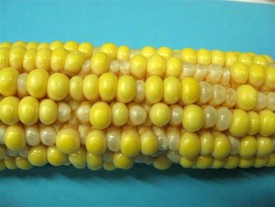
Photo: RL Nielsen, Purdue University
Also known as “Translucent Kernel Syndrome”
Symptoms
Scattered fertilised kernels appear across an otherwise normally developed ear, but the affected kernels have a translucent appearance. Individual rows may also be partially or completely missing.
As the ear reaches physiological maturity, these translucent kernels become small, shrivelled kernels scattered across the ear.
Causes
The most common cause is late glyphosate applications, typically after the V8 growth stage.
- Pinched Ears

Photo: Bayer Crop Science
Symptoms
Pinched Ears are characterised by a normal ear length, but the number of kernel rows at the base of the ear is typically double the number of rows at the tip.
Causes
The number of kernel rows is determined between the V6 and V12 growth stages, with row doubling typically occurring around the V9 stage.
Any stress during this period – especially late post-emergence applications of ALS-inhibiting herbicides – can significantly reduce the number of kernel rows. Sulfonylurea herbicides and organophosphate soil-applied insecticides may also result in row loss.
Conclusion
Of all the symptoms discussed above, Arrested Ear Syndrome is the best documented. Research has confirmed that improper timing of non-ionic adjuvant applications is a major contributing factor (Nielsen, R.L., 2008, ‘Arrested Ears Resulting from Pre-Tassel Applications of Pesticide and Spray Additive Combinations’).
The most sensitive application window during maize development is between the V8 and V14 growth stages. Most crop protection products already contain adjuvants in their final formulations and may therefore respond similarly to non-ionic adjuvants.
Remember that the purpose of any adjuvant is to help the active ingredient reach its target site within the plant more effectively, according to the product’s mode of action.
Non-ionic adjuvants carry no electrical charge that would hinder movement across the cell membrane. They also have excellent water solubility and compatibility, helping the active ingredient reach its intended target within the plant.
Under ideal conditions, this represents the optimal environment for adjuvant performance. However, if the plant is under stress due to extreme heat, hot winds, moisture stress, cold injury or hail damage, hormonal changes occur within the plant as it attempts to survive.
Applying chemicals during these stress periods – particularly while the crop is in the critical V8 to V14 developmental stages – can increase the risk of abnormal ear development. Growers may experience several seasons without problems, but they should remain cautious on the one occasion when all unfavourable conditions occur simultaneously.
For more information, farmers can contact Pioneer by emailing info.rsa@pioneer.com or by visiting www.pioneer.com/za
Sources
- http://www.kingcorn.org/news/articles.08/ArrestedEars-1209.html
- http://www.kingcorn.org/news/articles.08/ArrestedEars-1209.html
- Golden Harvest Seeds Agronomy
- RL Nielsen, Purdue Universiteit
- Ohio State-Universiteit, Agronomie