The sustainable success of any agricultural company lies in the strength of its partnerships. For Pioneer and Corteva Agriscience, this truth has been the cornerstone of their operations, both globally and locally, for decades. In March of this year, Pioneer celebrated a historic milestone: a century of innovation, scientific breakthroughs and an unwavering, farmer-centric approach. Everything the company does, from advanced research and development to market investments, places the farmer right at the centre of its operations.
Pioneer is the flagship brand of Corteva Agriscience and focuses relentlessly on advanced genetics and crop protection. Where many companies only plan from season to season, Pioneer is already looking to 2035 and beyond to ensure food security. Within this global vision, South Africa occupies a coveted position as one of the top 10 markets worldwide. That is why the company invests heavily in local research, trials and technology that is specifically tailored to the unique and often challenging conditions that South African farmers face.
The future of agriculture is driven by technology and innovation. Through genetic advancements and new biotechnology, such as gene editing and the development of resistance to multiple diseases, Pioneer is creating the building blocks for the next century. The focus is on six major challenges that keep farmers awake at night: insects, weed control, diseases, extreme weather, food safety and sustainability.
Pioneer Genetics has already achieved record yields on local soil, but the company believes the true potential is even greater. Hundreds of trials and models are conducted in South Africa annually, using artificial intelligence (AI) and predictive analytics to find the best cultivar combinations for each specific region.
Yet the road ahead is not without obstacles. Farmers are currently struggling under high input costs, political shocks and strict pressure. To address these challenges, Pioneer launched its 100 years of agronomy tour. This tour gave the company the opportunity to speak directly with South African farmers, answer questions and learn first-hand what is needed on the ground.
Gathering, strategy at Harrismith
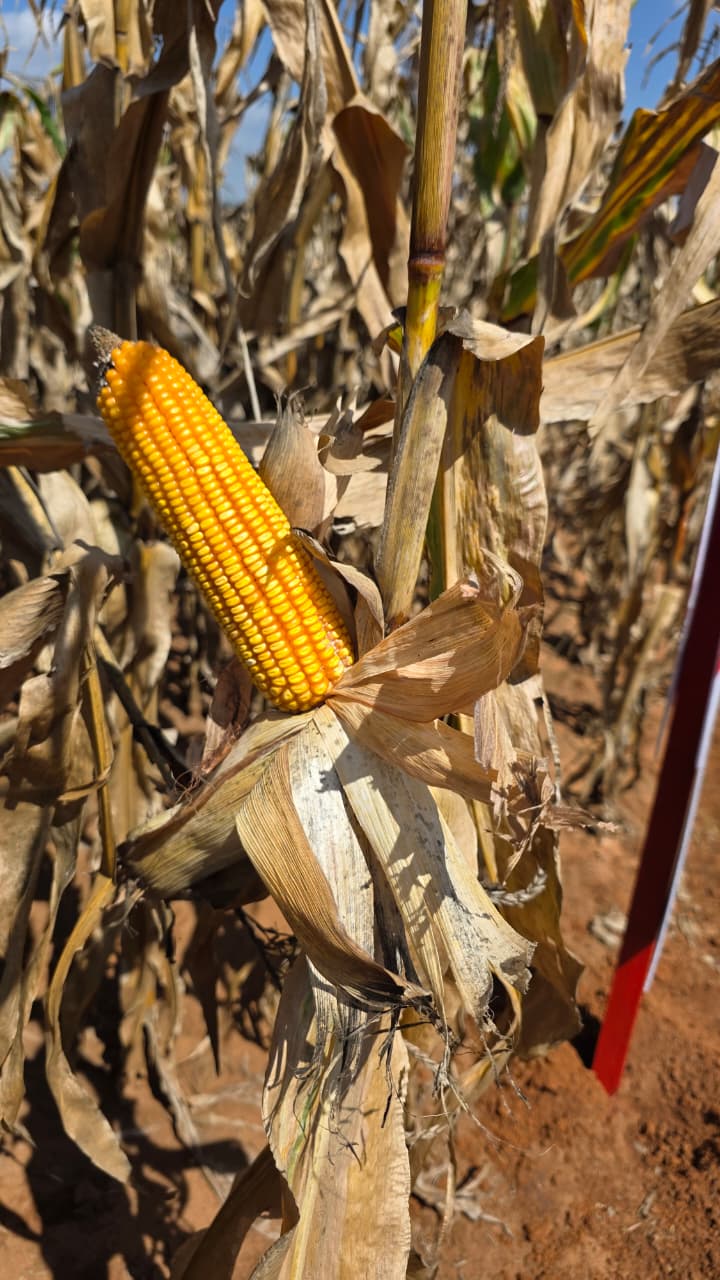
The third day of the agronomy tour took place at the well-known Bella Rosa farm in the Harrismith district, the farm of a local key farmer. This site serves as a central reference point where farmers from across the region can gather to see how different Pioneer packages perform under different planting conditions.
Des Cuff, Pioneer’s Area Manager in the Eastern Free State, emphasised the importance of the company’s local involvement.
“As Pioneer, we are very involved in this area. We have a strong involvement in all the farmers’ associations. We plant various trials on various sites with various farmers in order to be able to show the farmers what works and what doesn’t work on their farms.”
Des explained that the trials on Bella Rosa have been planted for several years and are critical for the region, in order for customers to see exactly what total package Pioneer can offer. For Des, the role of the sales team is much more than just transactional. The agents strive to be true partners on the farm, backed by the in-depth knowledge of agricultural experts. “For us, it is important to see that the farmer gets the best out of every hectare,” he said.
His wish for the next century is clear: growth in technology, stronger client relationships and a successful country that achieves its food security goals.
The conversation then shifted to the technical challenges of the environment. Gideon Knobel, who has been serving as a Pioneer agent in Bethlehem for 20 years, explained that the biggest headache in the Bethlehem, Ficksburg and Fouriesburg area is the enormous variation in soil types. Placing the right cultivar on the right soil is an art.
Pioneer is using unique digital agronomic trials to solve this puzzle.
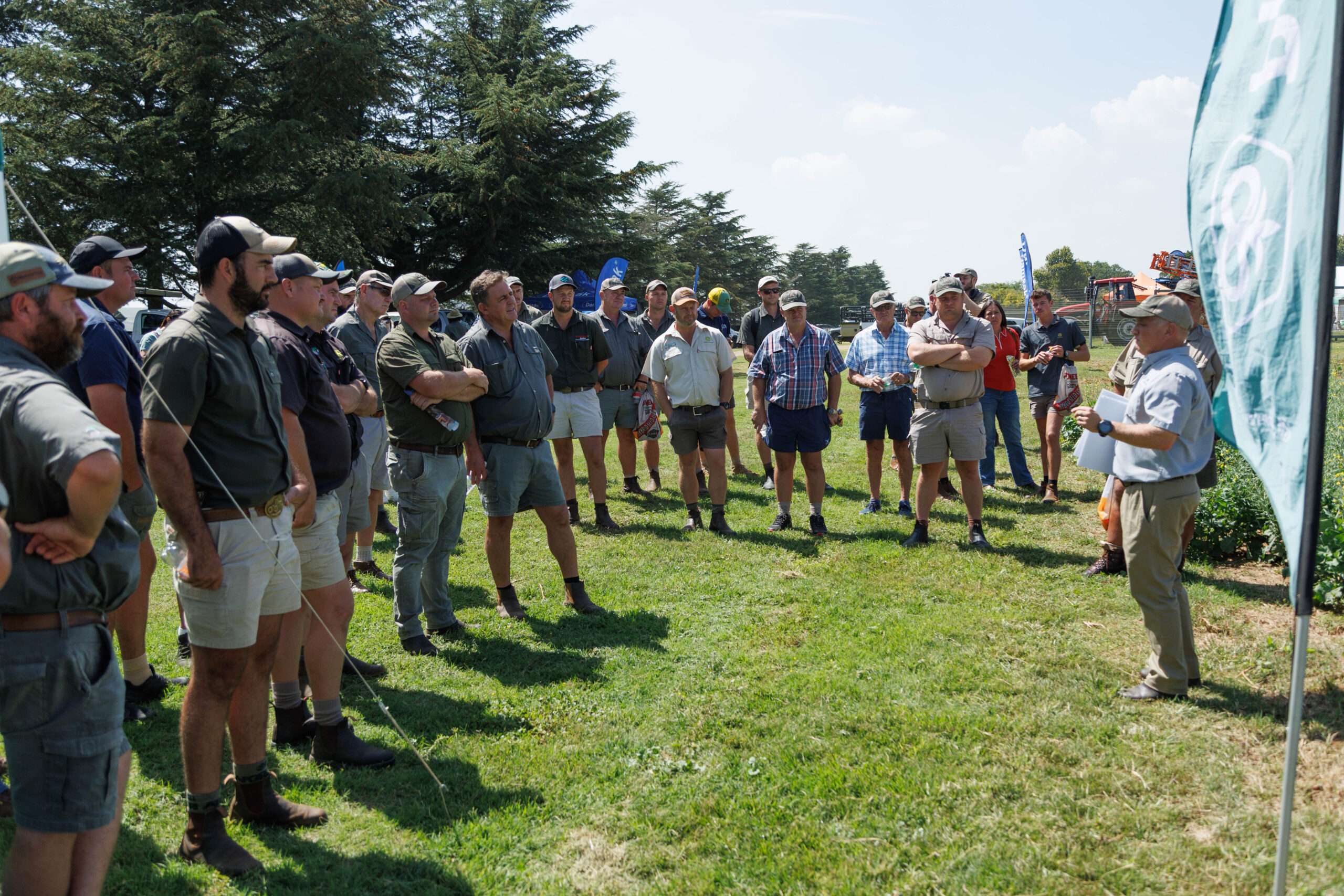
Gideon points out that the region varies from shallower soils to deeper, high-potential soils and rich red soils.
According to Gideon, there are currently three top cultivars that are king in that area: P18380 and P18380PW: A brand new, highly stable conventional yellow maize cultivar that performs excellently on high-potential soils. This cultivar is available in conventional and PowerCore™ versions.
P1975 and P1975PW: A yellow maize cultivar that has been known as an absolute stalwart in the region for many years due to its reliability.
P2362R and P2362PW: Another top performer that has proven itself over time in the area.
Gideon is optimistic about the future: “I’ve been at Pioneer for quite some time now and if we can continue like this… and with the training we receive and the research that is now expanding tremendously, I believe we will be able to leave a prosperous future for our descendants.”
Marchand van Rensburg, Pioneer agent in the Harrismith and Warden areas with 25 years of experience, highlighted the climatic challenges of his area. The weather in Harrismith is fickle; cold and excessive rains make for a very short and harsh planting window. As a result, short-grower cultivars are the best choice for this environment. Since the export market opened in the port of Durban, there is a great economic advantage for farmers to plant these short-growers early. This allows them to harvest early, load directly on the farm and capture the market due to their proximity to the port. Marchand’s wish for the next 100 years is simple but powerful: even better short-growers with even higher yield potential.

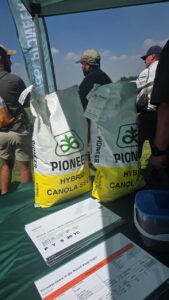
Stability, drought tolerance on Bethal
The fourth day of the tour moved to Schurvekop, the farm of Dewald de Water (Te Water Boerdery) in the Bethal area on the Mpumalanga Highveld. This region is traditionally the country’s maize and soybean region, although due to the lower maize price, farmers are increasingly experimenting with alternative crops such as sunflower and canola.
Gerhard Marais, Pioneer’s Area Manager in Mpumalanga with 20 years of experience, noted that while this annual farmers’ day usually yields impressive yields, this year’s crops were hit by an extreme drought at the most critical time. However, it provided a unique learning experience.
“What we see here this year is that some of the new cultivars that are also better against leaf diseases are also very good with stability. And this is important for us, because in the Highveld this year with have parts that have good yields, but there are also many parts that have experienced a lot of stress,” Gerhard explained.
Gerhard added that these lessons will help farmers spread their risk by deliberately directing their cultivar choices towards newer, disease-resistant and agronomically stable platforms. He reaffirmed the critical role of the agent as the link on the ground, someone who walks with the farmer in the fields, identifies diseases or deficiencies and makes the right recommendations based on local trials.
Gerhard concluded with a straightforward plea to the farming community: “Farmers have not always understood the new genetics so well, and that those genetics also have stability at high plant levels. So, I would like the integrity of agricultural experts and traders to be respected a little more by farmers… So, if you don’t want to go all-in with a new product or practice, just try it.”
Pieter de Wet, an Agronomist for Pioneer in the Eastern Free State and parts of the Highveld, joined the theme of extreme soil variation.
It is common to find multiple soil types on a single field. Pioneer tests their products across this wide range of locations and fertilisation and management practices to ensure that the crop can still achieve its Agricultural Development Objectives (ADO) or higher, even in difficult seasons.
The trial site at Bethal experienced extreme stress during the critical flowering and grain filling stages. The trials ranged from the P1517WR platform (a fast short grower) to the P2927WYR (a full-season white maize cultivar that utilises the entire growing season for maximum yield). Under these dry conditions, the medium to short growers still managed to produce good heads, while the full-season cultivars struggled greatly. This, says Pieter, proves that a farmer should never bet on one single horse, but should plant a balanced cultivar package.
Pieter was particularly excited about a new standout on the tour: P18011WPW. This is a brand new, highly adaptable maize platform that is available in both a conventional version and a PowerCore™ option.
Despite the severe drought stress on Bethal, this cultivar produced very good, sturdy heads. What makes it unique is its extreme stability across different climate areas and plant populations. In the far Eastern Free State it can be planted at lower populations of 25 000 to 45 000 plants per hectare, but it can just as easily be brought to the Highveld where it thrives at densities of 45 000 plants per hectare and more. This makes it one of the most exciting new products to watch for the coming season.
Pieter believes that the foundation has been laid firmly with the current genetics, and that the combination of conventional breeding and the emerging Generation 3 BT technology places Pioneer in an unbeatable position.
A sustainable path forward
The Pioneer 100 years of agronomy tour of 2026 once again proved that success in agriculture does not happen by chance; it is bred in laboratories, tested in local soil and established in practice through close partnerships. By combining scientific stability with the practical wisdom of agents and farmers on the ground, Pioneer shows that they are ready for the challenges of the next century.
For the South African farmer, this continuous innovation means only one thing: the peace of mind that even in the most challenging seasons, they have a partner walking in the fields with them.