SGS NviroCrop will once again make its mark at NAMPO Harvest Day this year – and for farmers looking to improve both their yields and profitability, this is one stand not to be missed.
As an independent agricultural services company, SGS focuses on supporting farming decisions with precise data and expert insights. By helping farmers optimise both yield and quality, SGS NviroCrop plays a key role in more sustainable and profitable production.
Visitors at NAMPO will be able to see firsthand how their solutions are practically applied on farms and the difference they can make.
Their core business is gathering information on your farm and processing it in such a way that they can advise you on how to manage your resources and get the most out of them, because not all the soil on your farms is necessarily the same.
They can assist you with:
- Soil analyses
- Leaf tissue, water, fertiliser, organic and lime analyses
- Soil classification
- GPS soil and leaf sampling
- GIS maps, valuations and fertiliser recommendations
- Independent agricultural advisory services for sustainability
- Crop scouting
- Economic viability of active farmland
- 24/7 monitoring of your crop growth and alert systems
Soil classification
Soil classification is not just a technical exercise; it is a core tool that determines how successful and profitable a farming operation can be. By correctly classifying your soil, you understand exactly what you’re working with, helping you make better and more informed decisions.
Firstly, it helps you determine the potential of your soil. It also plays a major role in water management and cost efficiency.
During soil classification, they map out the physical characteristics of the soil profiles on your fields. These characteristics are what your plant roots will experience and the environment in which your crops grow.
“The physical characteristics of your soil determine between 60% and 70% of your plant’s potential. That is why it’s very important to know what is happening beneath the soil,” says PD Koegelenberg, SGS NviroCrop’s agronomist in the Western Cape.
This classification can be done in various ways. PD explains that it’s expensive and time-consuming to use a front-end loader to dig up soil while a soil scientist follows behind conducting tests.
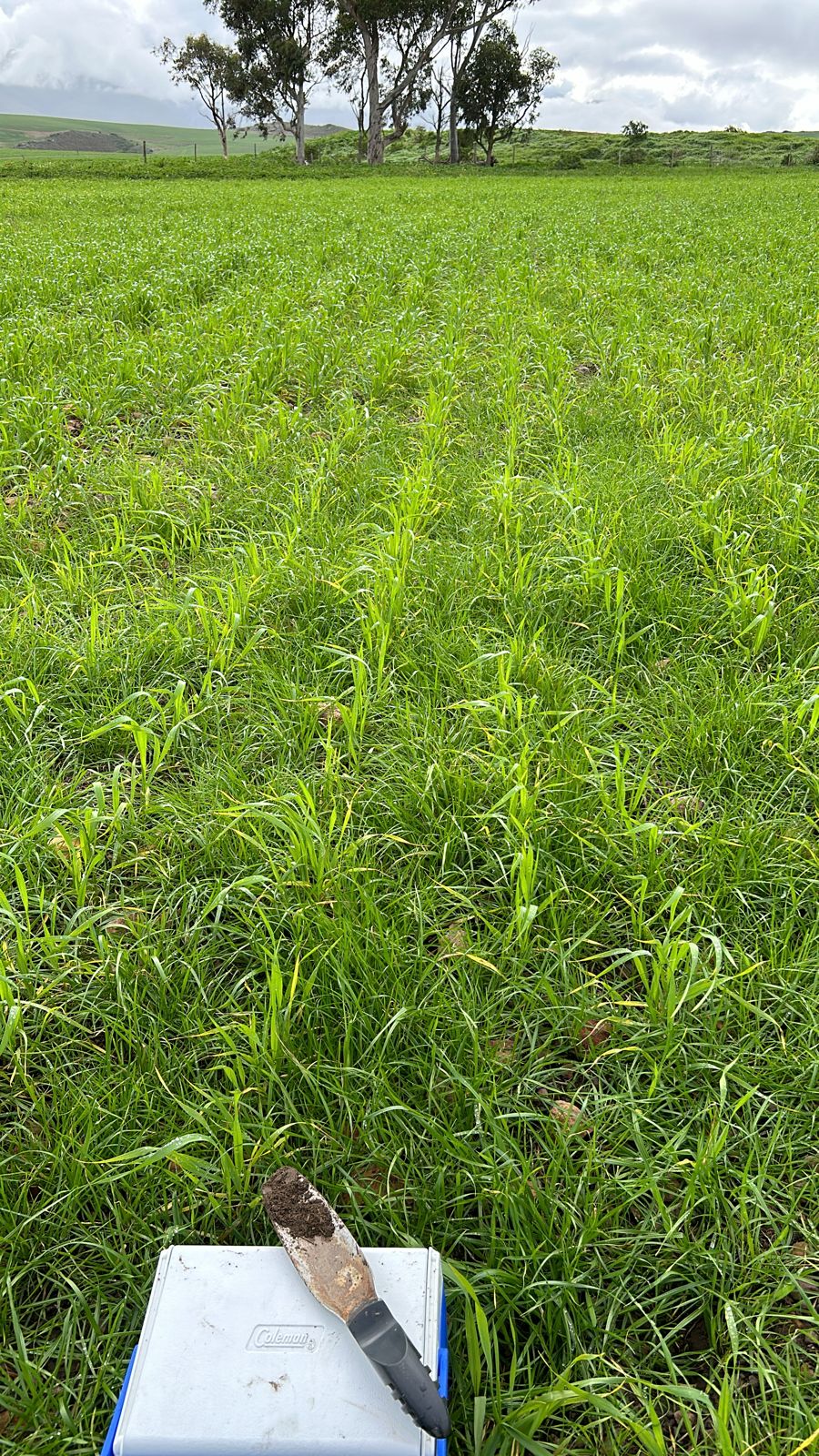
SGS NviroCrop has specialised augers that they use to extract undisturbed soil samples from the ground. The tubes containing the soil samples are then classified by a soil scientist at a central location. This process also allows them to take samples at different locations across your fields without disturbing the land, enabling them to build a complete picture of the soil types available in each section of your fields.
The information they gather from those tubes is incredibly valuable. “You can identify where a compaction layer is, how deep the soil is, how deeply the roots penetrate, and what the soil texture and structure are,” says PD.
This helps them determine what the farmer should do to make the most of those soil profiles.
There are also areas where they can identify lower-potential soil where further development would simply be a waste of time.
This type of classification is usually done on dryland fields, but it can also be extremely useful in areas where permanent crops need to be established.
The soil map is important for setting up your fertiliser and variable-rate planting maps so that a farmer’s profitability can be further improved by applying less where the potential is lower and more where the potential is higher, while still staying within the farmer’s average budget.
Most importantly, after harvest, it enables profitability to be evaluated in relation to the product choices made. All of this is possible with SGS NviroCrop.
Visit their website at www.sgs.com for more information on how to increase your yields by managing your soil more effectively, or contact their agronomists.