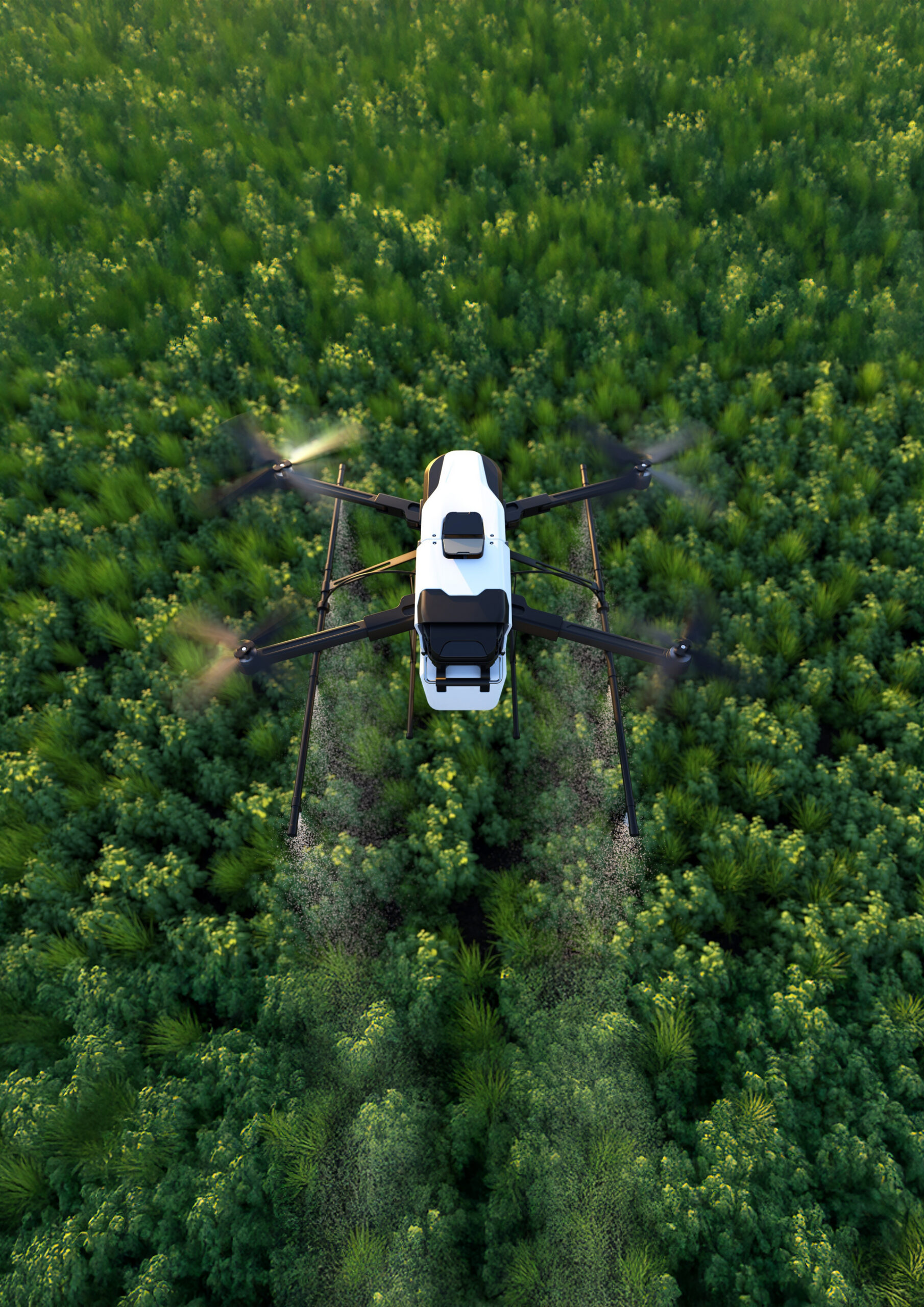
Drones are uniquely fascinating devices. Many people have seen these small flying gadgets used to capture excellent videos and photos. Drones film everything from rugby fields to sea dunes. However, for a farmer, a drone means much more than that.
Drones fly over fields monitoring crops and plant growth, checking on livestock safety, spraying fertiliser and pesticides, and conducting many other tasks. On a farm, drones are working equipment that must be efficient and reliable.
It is therefore extremely important to know what to look for before your drone takes off and before it returns to land.
Your checklist before the drone takes off
- Check the drone and equipment.
- Ensure all batteries are fully charged.
- Ensure the controller connects to the drone.
- Ensure that all propellers are functional and can rotate freely.
Ensure everything is loaded onto the drone
Whether you are going to spray or simply inspect certain parts of the farm, make sure that the drone is properly equipped with everything it needs for the task.
Check the take-off and flight area
There should be no low-hanging wires or branches. Also ensure that there are no other aircraft or drones in the area.
Test the take-off and landing
Before the drone flies away, switch it on and allow it to take off and land again. This confirms that all systems are functioning correctly.
Issue a warning
Various warning phrases are used, but in South Africa, the most common warning before the drone takes off is “Clear Prop”.
Warning phrases before spraying
Before the drone begins spraying, the final warning words used are “Clear Spray”. This warns anyone in the field about the drone and the spraying.
Interesting fact: Drones control their direction by individually adjusting the speed and torque of their propellers. These differences in rotational speed allow the drone to take off, land and change direction.
Your checklist before the drone lands
Ensure the landing area is safe
Before the drone flies back, ensure that there are no equipment, other drones, or people in the area through which it will fly. Farm drones often fly at head height to spray effectively.
Keep the landing area clear
Ensure that the ground, bakkie, or platform on which the drone is meant to land is clear and free of wires, tools, and people.
Warning words when the drone returns
There are two stages during which a warning is required. When the drone begins flying back, use the warning “Coming Home” or “Drone Returning”.
Warning just before the drone lands
When the drone is ready to land, use the warning words “Drone Landing” or “Clear Ground”.
Wait before anyone approaches
Before you or anyone else approaches to refill the drone with spray, for example, everyone must wait. Switch off the drone and make sure that the propellers come to a complete standstill.
Final confirmation
The drone pilot gives final confirmation before anyone is allowed to approach. The words used are: “All Clear”.