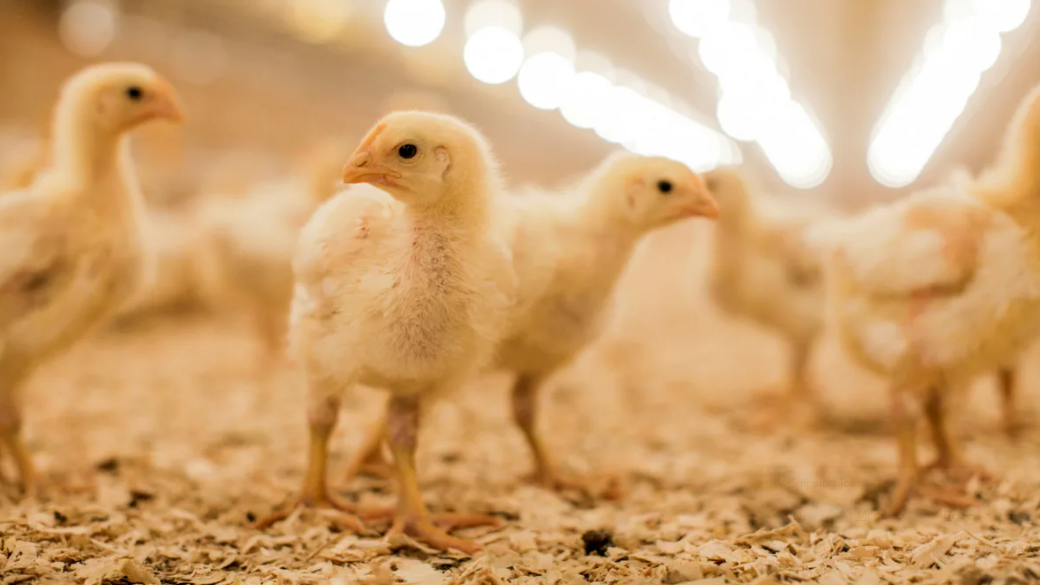
Body weight is a factor that is often overlooked by poultry producers who purchase pullets, and sometimes by those who produce replacement pullets. The two most important criteria for pullet quality are uniformity within the flock and proper body weight at a specific age. Almost anything that adversely affects a pullet will usually be reflected in lower body weights and poorer flock uniformity.
The poultry producer should always be aware of the body weight, flock uniformity, vaccination schedule, feeding programme, lighting, environmental conditions during growout, and the general management of his pullets. Without the basic knowledge of the flock grow-out, it is virtually impossible to understand and possibly solve problems that may later occur during the laying period. Remember that once egg production begins, it is too late to solve problems resulting from poor grow-out nutrition or management.
Pullets are grown to attain a certain body weight at a certain age. During this growing period, the tissues and
organs develop at different rates and therefore feeding to the nutritional demands for these various tissues and organs is imperative. For example, growth during the first six weeks of a pullet’s life is not in fat, but in high protein organs such as the heart, liver and kidneys.
“Critical periods” exist during the growing period and simply feeding to body weight while ignoring these critical periods of development, may have a detrimental effect on performance in the laying house. It is essential to have the correct amount and balance of amino acids, other nutrients, and energy in the diet at various stages of the growing period.
Underweight pullets approaching peak egg production will not be able to consume enough energy each day to maintain or even attain peak production. The bird, at this point, will use her body stores of fat and protein to provide the energy in an attempt to produce eggs at her full genetic potential. Small pullets reaching peak egg production will usually experience a decline in egg production at or shortly after peak production.
This is often referred to as the “post-peak” production drop. In addition, a flock of pullets exhibiting non-uniformity of body weight will result in a lower, flatter production peak. Many of the problems that occur
during the early part of lay can be traced back to insufficient or improper types of body weight attained during the various stages of the growing period. In order to avoid these problems, pullets must be fed in a manner that allows full expression of their genetic growth potential during the growing period. Because each strain of egg-type bird available today is the result of intense genetic selection by a particular breeding company, each strain is different.
The desired body weight of the flock is usually the weight the breeder recommends at a given age. Being above the recommended body weight at any age should not cause as much concern as a pullet being underweight, especially in hot weather.
In summary, the main goal in feeding pullets is to produce a flock of birds which, when placed in the layer house, will attain optimum performance. At point-of-lay, the highest quality pullet will usually be a profitable laying hen throughout the laying period. The genetic potential of the pullet is fixed prior to hatch.
From the day of hatch onward, successful performance in the layer house is influenced by factors to which
the pullet is exposed both before and after the onset of lay. Body weight and uniformity are extremely important, and many of the problems resulting in reduced profitability from a commercial layer flock could have been eliminated if the correct pullet body weight and condition at the desired age of sexual maturity had been achieved.
Remember, although feed is the major cost in the rearing operation, it does not pay to try to cut costs in this area, especially in the critical first 12 weeks of age. This error may result in losses in the layer house.