


The Namibian government has allocated N$4 million in the 2015/2026 financial year to support 40 small-scale farmers in the Erongo and Omusati regions.
The selected farmers will each receive 20 ewes and one ram, bringing the total to 800 ewes and 40 rams in the two regions.
The allocation of livestock forms part of the Ministry of Agriculture, Water and Land Reform’s Small Stock Distribution and Development in Communal Areas (SSDDCA) programme.
This is the second round of the programme that started off in 2009 and will benefit all 14 regions. To date the SSDDCA has distributed 15 580 ewes and 779 rams to 779 farmers nationwide.
During the 2024/2025 financial year, the programme was allocated N$6 million, which was used to distribute 840 goats to 20 farmers each in the Otjozondjupa and Omaheke regions.
Under the revolving model, every participating farmer will return ten young animals after fifteen months. These animals will be distributed to future farmers in the region.
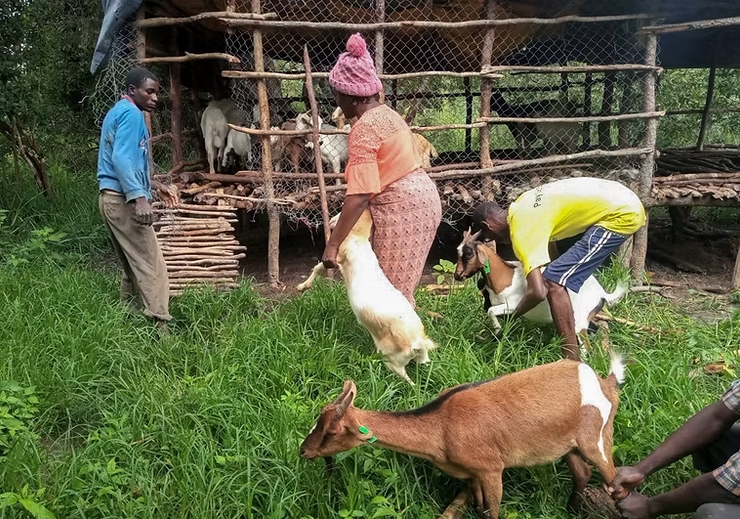
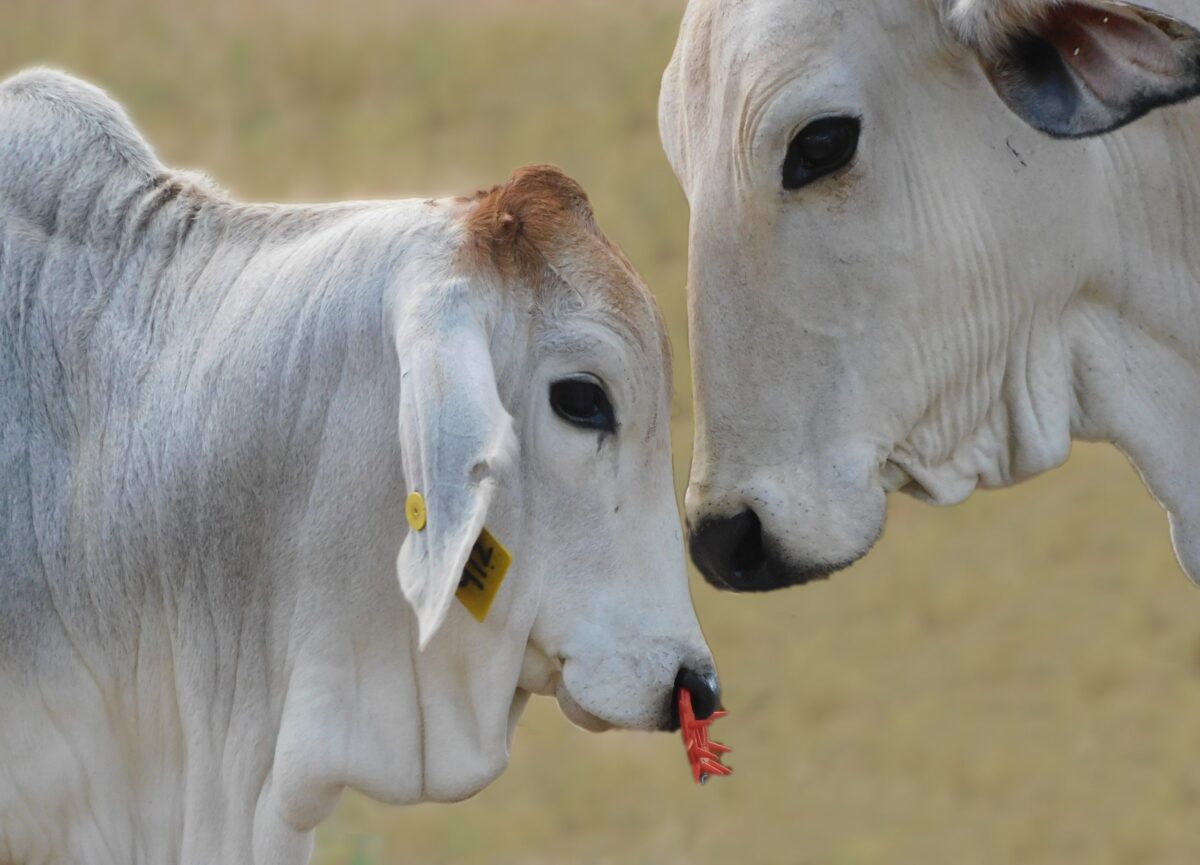
Goat farming build communities as they share knowledge and economic growth. (Source: https://www.zamgoatgroup.com/post/the-benefits-of-goat-farming-in-africa)
Hope Farm Project
The goats were handed over by Agriculture Minister Inge Zaamwani-Kamwi during the inauguration of the Hope Farm Project that was launched on the farm Daweb in Usakos to empower Erongo farmers and build sustainable livelihoods.
The project, with an initial investment of N$ 3 million, was initiated by Swakop Uranium Foundation in partnership with the Ministry of Agriculture, the Office of the Governor of Erongo Region, and the Erongo Regional Council. It is regarded as an important milestone in public-private collaboration for sustainable development.
For many of the beneficiaries, the handover of livestock is the beginning of their journey towards financial independence and sustainable agricultural productivity. This is in line with the Hope Farm Project’s aims to build resilient livelihoods, support generational farming knowledge, and reduce dependency through practical support.
The programme is expected to boost food security, stimulate rural enterprise, and strengthen local economies across Erongo.
“This investment not only empowers farmers but also supports the national goals of reducing poverty, enhancing food production, and uplifting rural communities,” the minister said.
She also said the ministry is working with partners including the Swakop Uranium Foundation and regional authorities to provide veterinary support, training and follow-up services.
“Together, we are ensuring that beneficiaries not only receive livestock, but also the necessary training, veterinary support, and follow-up monitoring to make sure they succeed.”
“This initiative aligns with the ministry’s mandate of enhancing food security and import substitution through the acceleration of livestock and food production capacity in rural and under-served communities,” she said.
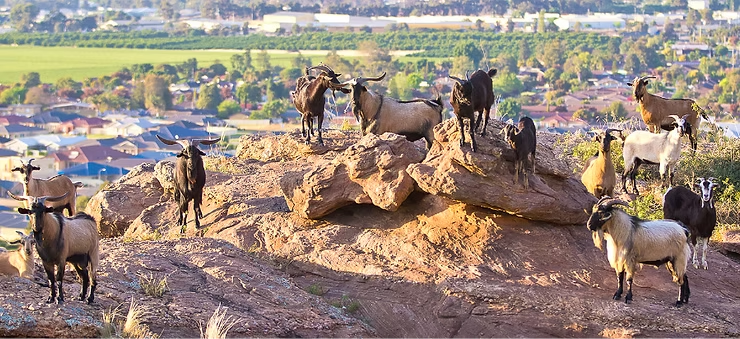
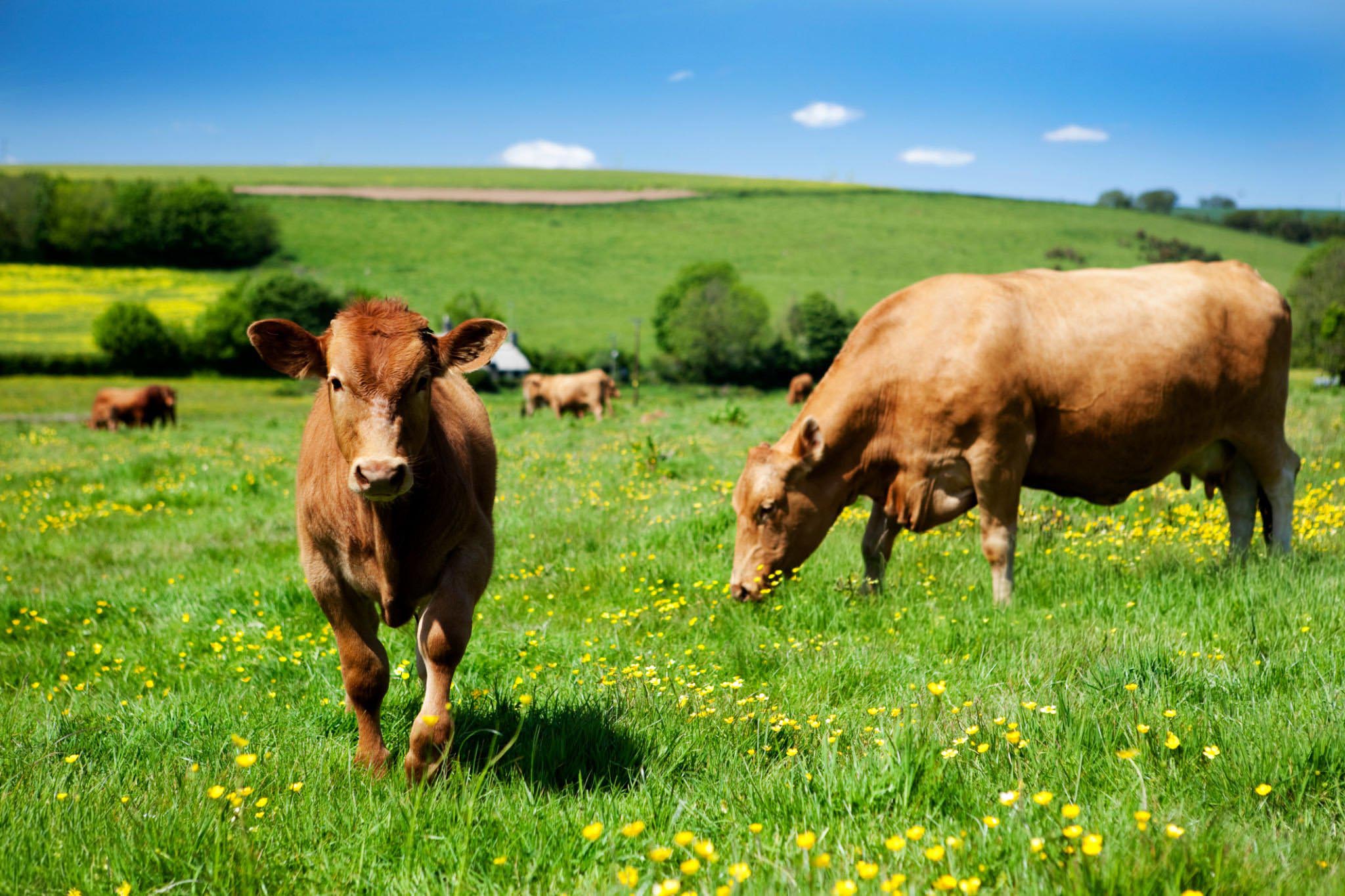
Goats are adapted to arid and semi-arid regions and can graze on marginal lands. (Source: https://www.zamgoatgroup.com/post/the-benefits-of-goat-farming-in-africa)
Advantages of goat farming
Goat farming in Africa offers an all-inclusive solution to several socio-economic and environmental challenges.
- Goats provide a source of income as farmers can sell their offspring, meat, milk and skins.
- Goats contribute to food security by diversifying diets. The meat is high in protein content and low in fat, while the milk is rich in essential nutrients and easier to digest that cow’s milk.
- Goat farming can empower marginalised groups, aid inclusive growth and provide resilience for smallholder farmers. It also creates employment along the whole of the value chain, from breeding and husbandry to processing and marketing.
- Goats also serve as a form of financial security and investment. Farmers can sell them during financial crises or when cash is needed for emergencies, school fees, or medical expenses.
- Goats are adapted to arid and semi-arid regions and can graze on marginal lands. They also require less water compared to other livestock. Goats also play an important role in managing vegetation, like such as bush encroachment, thereby balancing the ecosystem, promoting biodiversity and reducing the risk of wildfires.
- Goats have a smaller carbon footprint than other livestock as they emit less greenhouse gas.
- Women often manage goat farming, which provides them with a source of income and some economic independence. Thus empowered, women can improve the welfare of their families their children’s education.
- Goat farming build communities as they share knowledge and economic growth.
- Goats also have cultural importance, as they are used in rituals, festivals and as dowry, thereby reinforcing social bonds and cultural pride.
Challenges
Goat farming has many advantages, but is also faced with disease, and lack of market access and suitable infrastructure.
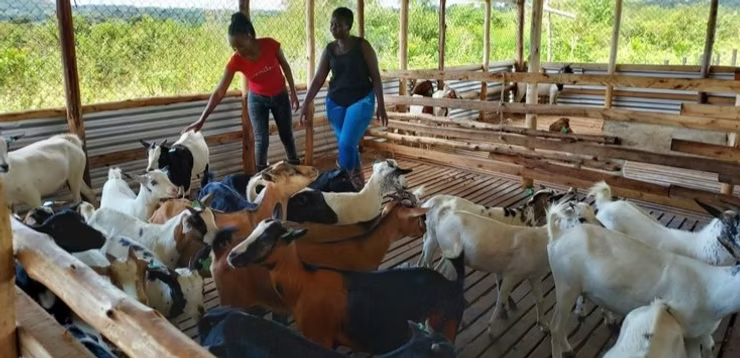
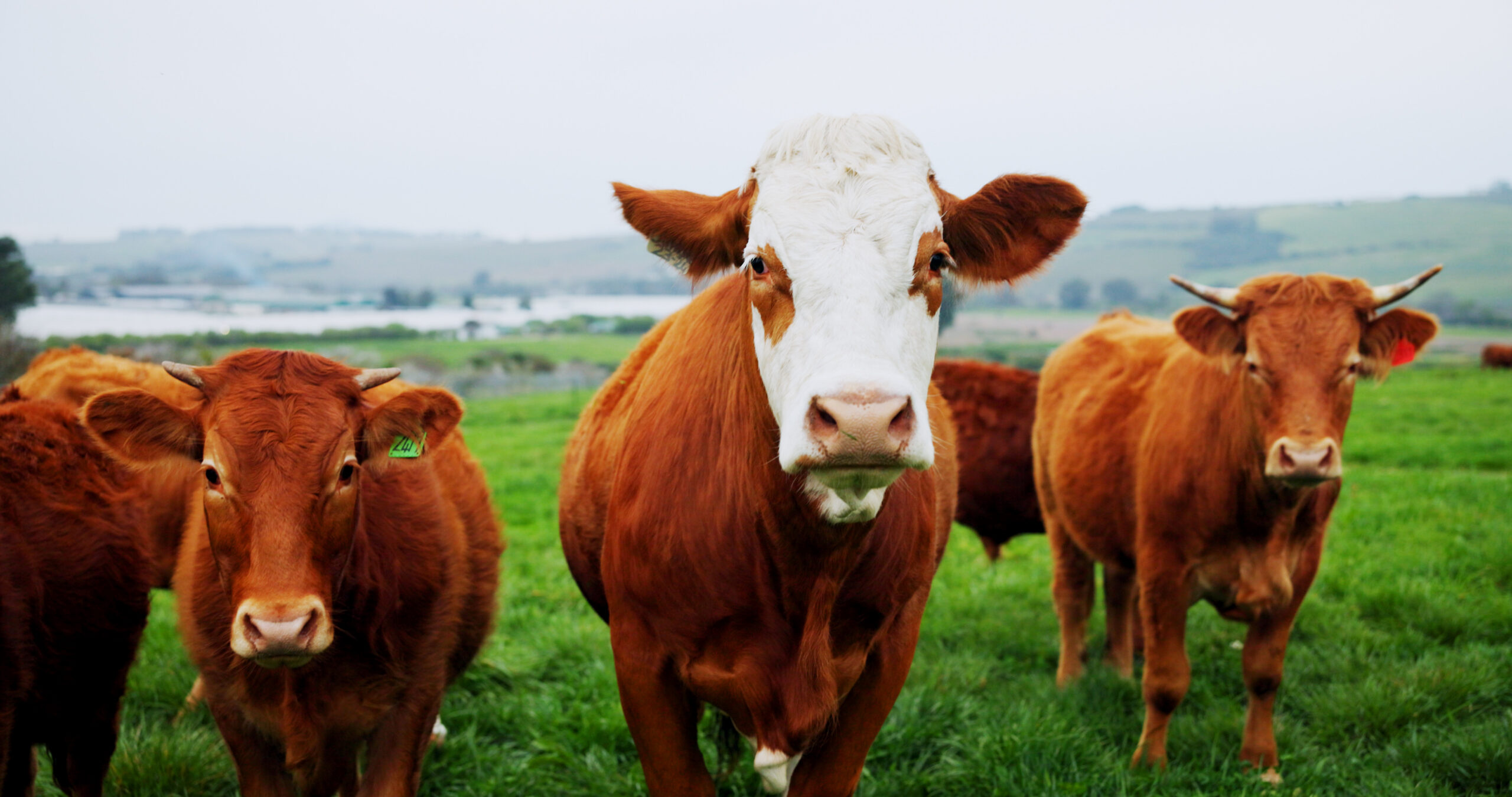
Women often manage goat farming, which provides them with a source of income and some economic independence. (Source: https://www.zamgoatgroup.com/post/the-benefits-of-goat-farming-in-africa)
Resource references
Dlamini, M. (2025) Goat project boosts Erongo farmers The Namibian
https://www.namibian.com.na/goat-project-boosts-erongo-farmers/
Forty farmers to benefit from N$4 million small stock initiative (2025) The Brief
https://thebrief.com.na/2025/07/40-farmers-to-benefit-from-n4-million-small-stock-initiative/
Hope Farm Project Launched in Usakos to Empower Erongo Farmers and Build Sustainable Livelihoods (2025) Namibia Today
Kaoma, K. (2024) The Benefits of Goat Farming in Africa Zamgoat Group
https://www.zamgoatgroup.com/post/the-benefits-of-goat-farming-in-africa

Good day
Will this also be available for farmers around Windhoek (Khomas)? I am based in Groot-aub and is very much interested in this.
Hi Niclaas
Thanks for your enquire. I think only for farmers from Erongo and Omusati regions.
Kind regards, Editorial Team.