Amid ongoing civil war and unbearable hardship caused by floods, forced relocation and food shortages in Sudan, it may be a good idea to remember that ordinary citizens just yearn for peace so that they can get on with their lives, plant their crops, graze their herds and have food to share with their families.
Geography
Sudan, the third-largest country on the continent of Africa after Algeria and the Democratic Republic of Congo, is situated in Northeast Africa. It has an 853 km coastline bordering the Red Sea, and also borders the East African countries of Ethiopia, Eritrea and South Sudan, Egypt, Central African Republic and Chad.
The country consists of generally flat plains with several mountain ranges. The Blue Nile and White Nile meet in Khartoum, the capital, where it becomes the Nile River that flows northwards through Egypt to the Mediterranean Sea. The Blue Nile runs about 800 km through Sudan and is joined by tributaries the Dinder and Rahad Rivers between Sennar and Khartoum. There are several dams on these rivers and the water is used for irrigation for agriculture, which employs about 80% of the population and plays an important role in the country’s economy.
Rainfall increases towards the south, where the rain season lasts for up to six months between May and October. Agriculture includes mechanised, large-scale irrigated farming near the rivers and dams. Peanuts, wheat, sugarcane and sesame are major crops.
The central and the northern parts have arid semi-desert areas in the northeast and the east, while the south has grasslands and tropical savannah. In these parts, the rainy season lasts about four months from June to September. Rain-fed mechanised farming produce mostly sorghum, as well as sesame and cotton.
The country is rich in mineral resources, of which crude oil is the most important source of revenue, a position previously enjoyed by agriculture.
Agriculture employs about 80% of Sudan’s population and remains a pillar of its economy.
The dry regions are troubled by sandstorms, known as haboob. In the northern and western semi-desert areas scarce rainfall prevents basic agriculture and many farmers are nomadic, travelling with their herds of cattle, sheep and camels. Desertification is a serious problem, as is soil erosion and low soil fertility.
Crops
Sudan is the largest sesame producer in the world. Gum Arabic is the most important forest product which accounts for 80 percent of the world’s supply.
Peanuts are one of the major cash crops. Sorghum is the Sudanese staple food crop, along with wheat and millet. Sugar and cotton are also important crops, while vegetables such as onions, tomatoes, potatoes, okra, cucumbers, sweet potatoes, yams
and watermelons are also produced. Fruit includes bananas, mangoes and mangosteens (Mangosteen (Garcinia mangostana) is a tropical fruit with a slightly sweet and sour flavour and a purple colour), guavas, dates, lemons, oranges and grapefruit.
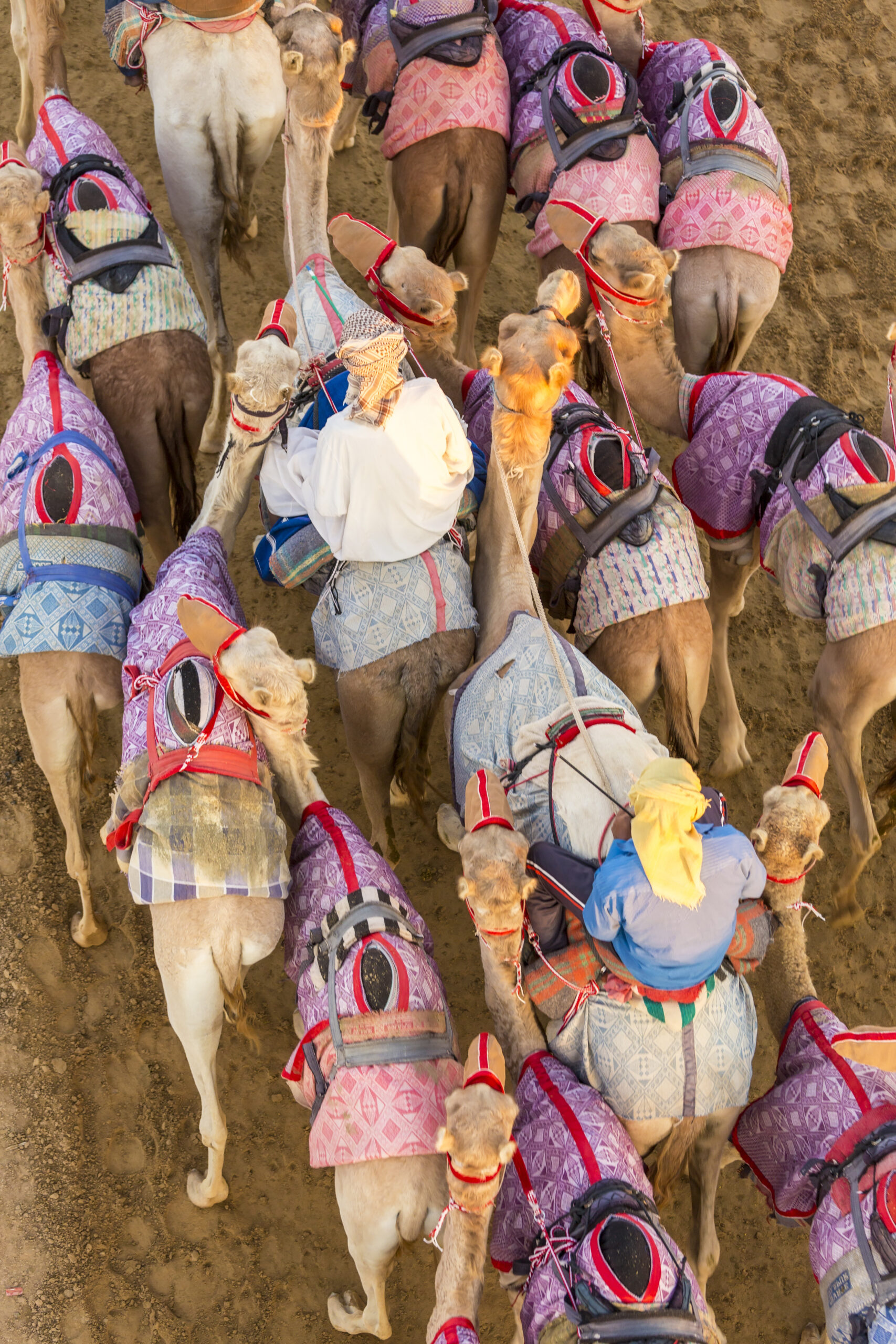
High angle view of people riding on camels with colourful saddles along a dusty road.
Livestock
Livestock, including cattle, camels, goats and sheep, provides a livelihood for nearly half of Sudan’s population throughout the country except in the extremely dry areas of the north. The government encourages commercial livestock production for export of live animals, meat, hides and skins and dairy products.
In addition, donkeys and horses, and a small number of pigs are kept by non-Muslim peoples. Small-scale farmers and villagers raise backyard poultry, but there is also a government drive to farm poultry on a commercial scale. Beekeeping has also been introduced.
Cultural influences on cuisine

Sudan’s cuisine is shaped by the food crops grown in the country. It is also influenced by the cultures and cuisines of North Africa, East Africa and Sub-Saharan African nations, as well as Middle East and Arab countries, as well as Turkish and British culinary traditions. After South Sudan’s secession from Sudan in 2011, many of the staple foods in Sudan that originated in South Sudan, remained on the menu.
Sudanese cuisine consists of bread and porridge, stews of beef, camel, lamb, goat, chicken and fish, as well as cooked and raw vegetable dishes, fruit and desserts.
Besides meat, the best-loved and most common ingredients include peanuts, rice, fava beans, maize or sorghum porridge, okra and sesame. Cumin is probably the most popular spice among a range of others. Dill and coriander are used as garnish.
01 Breakfast dishes
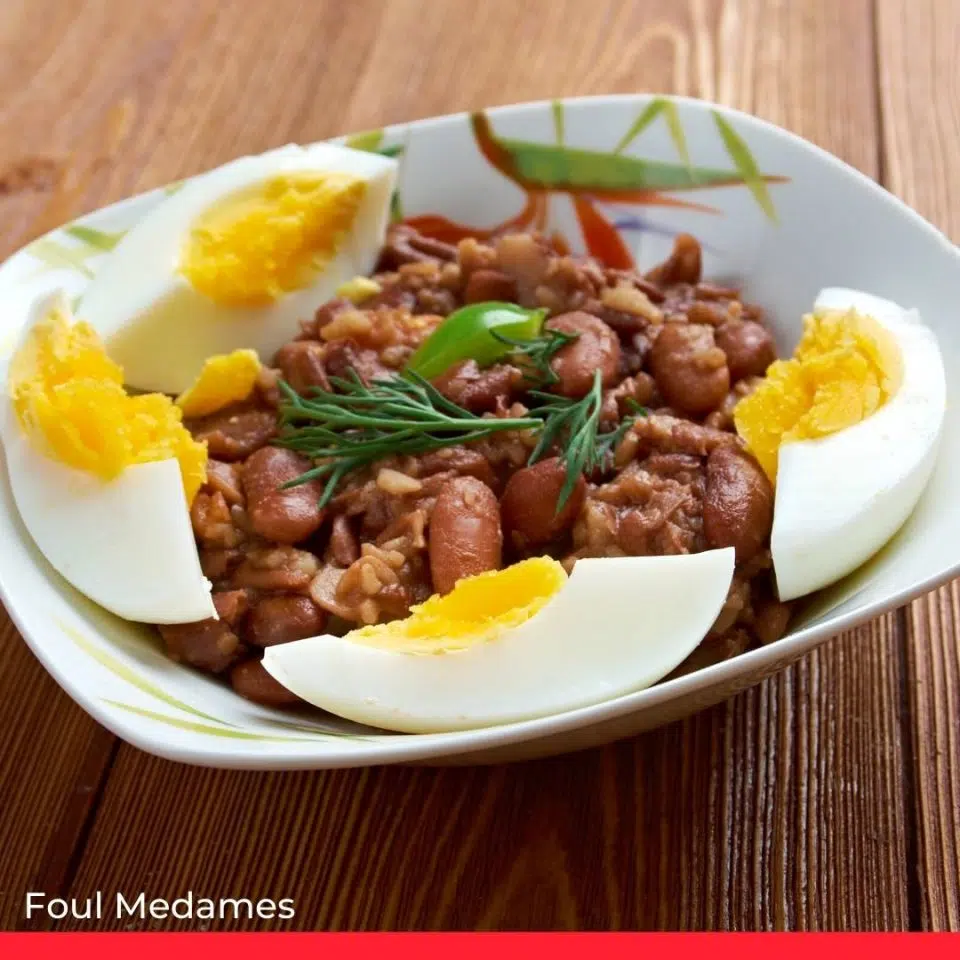
Foul medames is a common breakfast that is sometimes also eaten as lunch or dinner throughout the country. It is a stew consisting of fava beans mixed with spices, garlic, lemon juice, a bit of chili pepper, vegetable, sesame or olive oil, tomatoes, arugula, feta, and a hot sauce called shata. It is topped with onions, spring onion, and boiled egg. It is often served with tomato salad and accompanied by flatbreads.
Asseeda or porridge is a dumpling made with wheat flour stirred into boiling water and topped with salt and melted butter or honey. Asseeda is often served at weekends, religious holidays, and to celebrate weddings or births. It is paired with meat and vegetable dishes such as mullah.
02 Lunch dishes

Kissra is a bread made with either durra (sorghum) flour or wheat or dukhun flour. It is cooked on a large flat heated metal tray. It is enjoyed with meat stew called mullah, which is richly flavoured with potatoes, onion and garlic, tomato, black pepper, oil and peanut butter.
Gourrassa is a soft and fluffy flatbread made with wheat flour, baking powder, salt, and yeast and baked in a circular shape. It is often eaten with a Sudanese beef stew known as dama’a, which is flavoured with tomatoes, onion and garlic, cardamom, cinnamon and oil.
Kamounia is prepared with beef or lamb, liver, cumin, garlic, lime juice, parsley, oil, and a rich peanut butter dressing. It is served with tomato salad, gourrassa or rice.
Shaiyah consists of panfried beef, lamb or goat, with bones and fatty pieces included to add extra flavour. It is served with homemade onion and lemon and shata, a hot sauce made with red pepper flakes, lemon juice, garlic, salt and pepper. Like many other dishes it is served with bread and tomato salad.
Kajaik is a fish stew made with dried fish and fresh water and served with vegetables, porridge and margarine.
03 Dinner dishes

Mullah is a rich meat stew flavoured with onion and garlic, peanut butter and tomato, and sometimes okra or yogurt. Sometimes it is blended to a smooth consistency and is eaten with kissra.
Kawaari is a soup made with sheep or cattle hooves that are cooked until tender with black pepper, cardamoms, cinnamon, cloves, coriander, garlic and onion powder, salt and vinegar. It is served with bread and tomato salad.
Kofta consists of minced beef mixed with minced garlic and chopped onion, black pepper, coriander and cumin powder, dried mint, chopped tomatoes and tomato paste, fennel leaves, salt and oil. The mixture is rolled into balls and fried and served with bread.
Tamayya are similar to falafel. These chickpea or fava beans are rehydrated and ground to a paste, and then spiced with cumin, coriander, garlic, salt and lemon juice. The mixture is rolled into small balls or patties and fried until golden. They are often served in a sandwich or with dips.
04 Sweet treats

Besides dried fruits such as dates and apricots, delicate pastries are also on the sweet menu.
Basboosa is a sweet cake made with semolina, while the Sudanese enjoy delicate fried pastries shaped into diamonds and triangles using a plain dough, deep-fried and sprinkled with sugar like a doughnut.
Kuindiong is made from semolina, butter, milk, sugar, and yogurt.
Moukhbaza is made with ripe bananas mashed with breadcrumbs and honey, lemon juice and hot peppers. Unlike most other Sudanese dishes, this dish is eaten with a spoon.
05 Drinks
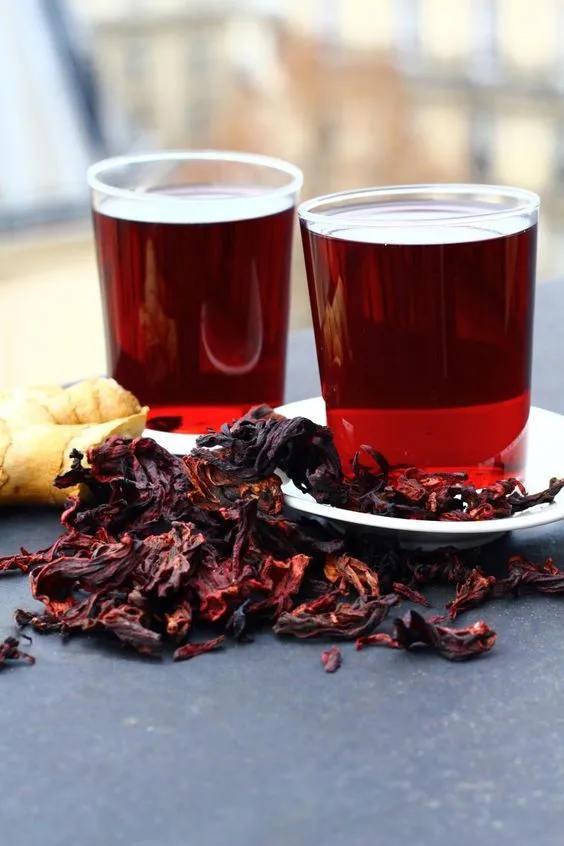
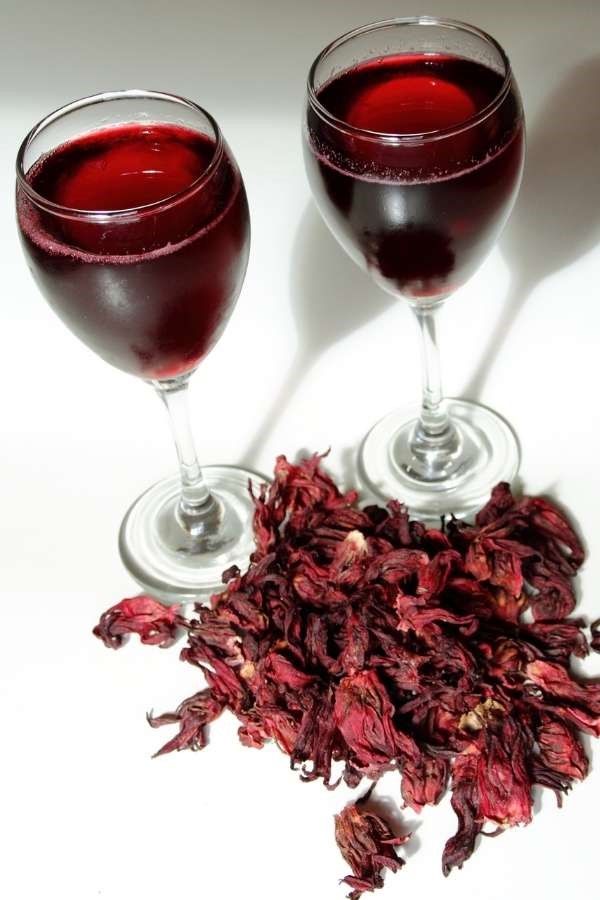
Karkade is a popular hibiscus tea that exists besides aradaib, a sour Sudanese drink that is made with tamarind pulp, sugar and water, as well as tea made with cinnamon and sugar, and coffee.